Portable battery packs, are they worth having, and how to use?

Joined
27 Jan 2008
Messages
28,381
Reaction score
3,452
Location
Llanfair Caereinion, Nr Welshpool
Country
United Kingdom
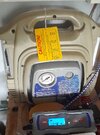
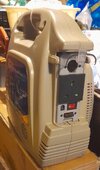
I have had one for years, Battery pack and charger.jpgBack-up-power.jpg but the 300 watt inverter built in, is very different to the modern units. At £400 not cheap
1775223558310.png
but it will power a lot more, it would, I think power a kettle
1775223659882.png
as shown (750 watts) however, it may also have some uses at home as well, like transferring off-peak to peak times.
EPS: Emergency Power System.
Once you have connected the mains and the AC input port of the product via the AC charger cable, you can use the AC output port of the product to power your unit (at this point the AC power comes from the mains, not the battery of the product). In the event of a sudden loss of mains power, the product can automatically switch to battery mode within 20ms.
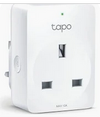
so add a smart socket, 1775224865618.png and one can charge it off-peak, and once the smart socket turns off, all will be powered from the battery.

I found the manual here seems there are loads of options, including adding with direct connection of a 100W or 200W solar panel. So all in all seems a reasonable unit.

But there are 100s of these units, and to read every user manual to find which is best, would be a long job. I looked at another type here
1775226222813.png
slight differences like 50 or 60 Hz, second battery, etc. But very similar. I likely used the wrong google phrase (balcony solar inverter/battery pack) I had expected to find grid tie devices, but having solar panels on the balcony does not need a grid tie inverter, that's a completely different function.

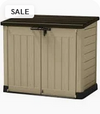
I am a little short in winter of battery capacity, and my thoughts were, if I could shed some of the load to a portable battery, rather than fixed, it would have a second use in the summer. I looked at a 287 litre chest freezer and noted Annual Energy Consumption Kwh : 285. So working from that it needs 620 watt/hours for 19 hours a day (peak time and off-peak direct) So I have three freezers in the same area, so nearly 2 kWh used just for freezers, so it would not be much of a job to have a 2 kWh battery pack for just freezers, which would extend the time the main battery will last in the winter, a small unit just outside 1775227318829.pngand it would not even take up room in the kitchen. At the moment just a thought. Started by reading about grid tie units used for balcony solar, but no real need for balcony solar with grid tie, one of these units will extend my existing battery life in winter quite well.
So have I missed anything? Has anyone already done this? So many times on reflection I realise my idea is daft, if not, why are not 100s of other people doing the same, so what have I missed?
 
Just my thoughts.

Plug-in solar panels often called balcony solar has become popular in Germany and uk government are looking at them for UK DIY market.
You install yourself.
Plug in your mains.
They also come with battery packs I think?
For emergency power an inverter is cheap enough and you can use your car as a generator to power 240v appliances.
As for your question.
I've seen these packs but I can't think of a use for it.
You mentioned outside. Battery pack needs to be room temperature as if it gets cold the power drops.
 
Most balcony kits only have grid-tie inverters and don’t come with batteries I think, the ones with batteries are more expensive.
 
The balcony grid tied solar, would clearly generate revenue, but not sure if enough to be really worthwhile? And as yet not permitted, so was more looking at the battery, as mine are not big enough in winter, so a third battery will help in winter.

The debate is fixed or portable, the fixed, also fixed size of 3.2 kWh on my system, and around £1200, but the portable one can select a smaller model, likely better as lighter.

I looked at base load, and considered what causes the base load, and in the main it seems the freezer account for most of the base load. I have three in a block together, including the central heating, they are all powered from the existing batteries, a pair of double sockets in the kitchen, with a junction box outside, so splitting the supply into a plug and socket, would allow a battery pack to be inserted, and a simple timer could turn off the supply so forcing it to go into UPS mode, and removing some load from the main batteries, those extending how long the main batteries last.

Cheaper due to being smaller, so kWh to the £ no real gain, but they offer as secondary use in summer. The answers from @Wayners and @Ragnar_AT but assume talking about grid tie, I was not really talking about grid tie. None of the units shown are grid tie. The new units will allow solar panels, and I had considered installing a part roof over the balcony to hold solar panels, I looked at the balcony railings,
1775387286377.png
and not sure if the fixing are good enough to counter wind resistance on the solar panels, so safer not to use to hang solar panels. On the wall above the living room window would catch the morning sun, but the time of the year when I need the extra, don't get much morning sun, the hill opposite 1775387874920.png means it is nearly midday in winter when we see the sun, yes I know it is light which generates power, but the solar would be so low in winter, and in summer the existing solar produces enough. At the moment exporting 4.7 kW, at 11:20 UTC (12:20 BST) I have already exported 3.2 kWh. I do not really need extra solar, but extra battery capacity may help.

It was the plug-in grid-tie which got me thinking about a portable rather than static battery, I looked at the plug-in grid-tie, and the problem ignoring the law, is to get it to discharge only when required. OK for me with a MPAN export number, I would get paid, but to set it to export any fixed amount, is rather hit-and-miss. And once you look at some energy meter and CT coils, it is no longer really plug and play. So I see very little benefit with plug and pray solar panels, I have already found, without a battery, solar panels don't really help much.

They may help the grid system? With some extra power in daylight, but yesterday solar was 7 am to 7:30 pm, but with the battery, no grid power used 5:30 am until 0:30 am the next day. So the battery reduces cost as much as the solar, they compliment each other. Having solar without a battery is like having a cart without a house.
 
For those who are interested.
Few months these plug in solar panels should be legal
This is what started the discussion on small solar panels. The point to remember in Germany where this is popular, they have a much larger rented sector to us, and so being able to move solar panels home to home is far more important.

In the main they have 16 amp sockets on radials, so the circuits are shorter to our ring finals, and far less change they can be overloaded.

There are problems, clearly one does not want to export power not used, but the government would not mind if you give away solar power, but if one has bought a solar array clearly one wants to get money back for energy exported. So there are two methods, one is a second MPAN number, so one is paid for solar, or a battery, but then looking at quantity and control methods, a battery powered CT coil used with iboost+ units to allow solar to be used to heat domestic hot water, do not cut in until 100 watts is being exported. This is not really a problem with 6 kW of solar panels, but with only 800 watt, any device which switches after 100 watt is not going to use a reasonable percentage of the total.

So the big question is why grid tie? Can panels or batteries be used without grid tie? The answer seems yes, and this was what I was looking at, and how it can or can't help.

Much it seems depends on what the home already has. If a home has storage heaters, and so peak and off-peak already, so no question as to if charging a battery overnight and using it during the day, is going to save money. But if not already using an off-peak supply, the question is how much must be moved night to day to break even.

The smart meter is useless to work out what is being used in my case, and the consumption I only have because I already have solar.
 
So the big question is why grid tie? Can panels or batteries be used without grid tie? The answer seems yes, and this was what I was looking at, and how it can or can't help.

The answer seems to be no....

If the system fails to 'see' mains voltage, and frequency, they are designed to shut down on safety grounds. You wouldn't want it back feeding, or exporting, if mains was lost, because the mains might well have been deliberately isolated, whilst an engineer is working locally.
 
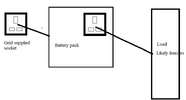
Seems I am not being plain in describing system without grid tie. 1775473463024.pngThe load for example freezers plugs into the battery pack not a grid supplied socket. The solar, if any, can also plug into the battery pack, there is no way it can back feed.

What I am saying is a freezer which has an energy rating of 350 kWh/year is going to use 760 watt/hour in 19 hours, an 800 watt solar panel will likely produce 2.5 kWh per day in summer, in my case three freezers in the kitchen so they would just about run off solar and battery in the summer. Other household may find other items which can run from solar.

The battery packs will work as an UPS, so using a simple timer each night to recharge in case not enough sun, hence 19 hours not 24 hours, the grid supply will work direct for 5 hours.

But it will only work with off-peak, without the off-peak + peak being same price or less to a single tariff, the system could backfire. And the extra cost of peak, could result in a net loss.

My solar panels will likely pay for themselves in 6 years, but without the off-peak, looking more like 12 years, the whole system relies on split tariff and payment for export, and for that to work there is a minium size, if the battery or solar is too small, it will not move enough off-peak to peak times.

What it needs is someone without solar or battery to use their details,
1775475044535.png
Green = Solar, red = grid, and orange = consumption, and you can see how the solar and the consumption follow each other for a time. This is where the iboost+ is using the solar to heat the domestic hot water, but it also means my graph is no good to work out what would happen in a household not already set up for solar.

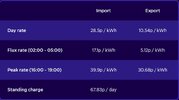
If the goverment required a tariff where there is peak and off-peak but peak no more expensive to standard rate, then small scale solar would work, but it is the tariff which kills small scale solar. This was this time last year, Oct Flux end April.jpg but it shows the problem, 39.9p/kWh from 4 pm to 7 pm, one has to be really sure you have enough battery to cover that time, the EV charging tariff was better, the peak rate was not so high, but the big problem was, they this time last year were changing all the time, and this year also changing all the time, so export went down 3p and off-peak went down 2p so there is still more paid for export as to what off-peak costs, so I can fully charge battery with off-peak and it does not matter if as a result I can't store solar. So I do not need to watch the state of charge of the battery like a Hawk, I can let it do its own thing.

My solar and battery are big enough, and I have the second MPAN number.

Now if everyone with a smart meter gets a second MPAN number, then grid tie solar starts to make sense. But when I started with solar, I did not even know one needed a second MPAN number to export, I spent 20 months trying to get British Gas to play ball, and it was not until I moved to Octopus I was told I needed that second MPAN number to get paid for export.
 
For an off-grid system you need a fairly substantially oversized panel array and battery, which makes the whole setup a lot more expensive. Other than that you can certainly have a setup like that. You could even have two inverters and an automatic transfer switch for a dedicated circuit that feeds items like fridge/freezer and boiler.
 
I would love to work out, what causes the base load? I must get my clamp-on out.

Clamp-on shows around 1.9 amps, on the leads into the consumer unit, this does not include freezers and central heating. And 19 amps on leads into the smart meter, it does not show direction, so assume export.

I will guess the iboost+ using power, but that's two floors up.
 
Last edited:

If you need to find a tradesperson to get your job done, please try our local search below, or if you are doing it yourself you can find suppliers local to you.

Select the supplier or trade you require, enter your location to begin your search.


Are you a trade or supplier? You can create your listing free at DIYnot Local

 
Back
Top