I must have missed the detailed price chart the last time I looked, seems like the price for one is 89p. For two it’s only 53p.

You are using an out of date browser. It may not display this or other websites correctly.
You should upgrade or use an alternative browser.
You should upgrade or use an alternative browser.
Back box screw
- Thread starter Abyone
- Start date
I must say that I thought it was a pretty common practice/'bodge'!Hm I will have to try it sometime John, ... by saying I had never considered it I meant that I had never given that one a serious thought.
As I've implied, I think you might be a little surprised. As I've said, it really does not need much 'strength' at all - indeed, I think that just 'the other screw' will usually be enough to hold a faceplate on "to a reasonable practical degree"!If I had and had actually tried it I might have been surprised by the result (or I might have still be apprenhensive about the strength or lack of it ) of being able to hold a switch or socket in place to a reasonable practical degree.
It ought not to be difficult to create a "suitable candidate", if you attach some old metal faceplate to a metal box and fairly vigorously 'over-tighten' one of the screws (maybe with an 'electric screwdriver' - which one should normally never use on such things!), you will probably fairly easily 'strip the thread' of the lug.I will put it on my bucket list of things to actually try and test, although now retired the opportunity to come across suitable candidates has diminished - a little test run with some metal boxes when I have a couple of hours spare though should suffice.
Kind Regards, John
Seemingly plus £5.25 for the cheapest p&p on offer.I must have missed the detailed price chart the last time I looked, seems like the price for one is 89p. For two it’s only 53p.
Yes, that’s what I wrote in my initial post, I just missed that the 7p price wasn’t for one piece.Seemingly plus £5.25 for the cheapest p&p on offer.
You did indeed. I was just reminding people what the 'total price' was likely to be.Yes, that’s what I wrote in my initial post, I just missed that the 7p price wasn’t for one piece.
That would, indeed, be another way to do it. However, it would only really make sense if one felt (I would suggest 'pretty bravely'!) that one could get the tool in and cut that slot with all the wires in it, with the box 'in situ' without damaging any of the wires. If one felt (as I probably would) that it was only safe to do as you suggest after removing the box, then one might as well put a new box in! To remind you of 'access' ...I possess a "Dremel" type tool, so would cut a slot right at the bottom of that lug, drill a clearance hole all the way through the back for the screw and glue a nut in the slot. If I didn't have a nut I'd salvage a lug from a metal back box (50p from Screwfix).

Hmm - I have an auto-dislike of "bodges" although yes I admit , sometimes it might depend on the extent and the what ifs. The one screw only I am totally opposed to - twin socket, pull plug out on the unsupoorted side is capable of not just pull but comparent leverage magnifying it, I would err away from it.I must say that I thought it was a pretty common practice/'bodge'!
As I've implied, I think you might be a little surprised. As I've said, it really does not need much 'strength' at all - indeed, I think that just 'the other screw' will usually be enough to hold a faceplate on "to a reasonable practical degree"!
It ought not to be difficult to create a "suitable candidate", if you attach some old metal faceplate to a metal box and fairly vigorously 'over-tighten' one of the screws (maybe with an 'electric screwdriver' - which one should normally never use on such things!), you will probably fairly easily 'strip the thread' of the lug.
Kind Regards, John
I might favour the ball bearing as being capable of sending some meat of the thread material (metal box) back into the whole say even half way for a bit of full circular thread if possible.
I imagine that the majority of us feel much the same as that - although, of course, there will be differences of opinion as to what constitutes a 'bodge' (with some regarding anything which is 'less than totally ideal' as being a 'bodge')Hmm - I have an auto-dislike of "bodges" although yes I admit , sometimes it might depend on the extent and the what ifs.
I wasn't suggesting that one should accept a 'one screw only' situation (as you say, particularly for a double socket) - I was merely pointing out that the task of holding the faceplate on is shared between the two screws.The one screw only I am totally opposed to - twin socket, pull plug out on the unsupoorted side is capable of not just pull but comparent leverage magnifying it, I would err away from it.
Kind Regards, John

You may find when you cut it open the original brass threaded insert is just pushed inside, they sometimes tend to just push in if screws forced, if you want a 3.5 thread buy a dry linjng box and cut the brass insert out of thatI possess a "Dremel" type tool, so would cut a slot right at the bottom of that lug, drill a clearance hole all the way through the back for the screw and glue a nut in the slot. If I didn't have a nut I'd salvage a lug from a metal back box (50p from Screwfix).
View attachment 414153
View attachment 414154
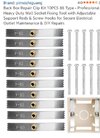
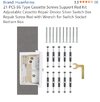
In the end I bought two sets of repair clips.
The first one with the bend and toothed ends wouldn't fit because the brass element was slightly too big to fit in the existing hole. Apart from that it would have worked fine I believe. I could probably have drilled out the hole slightly but this task was all about minimising work for me.
The second type with the adjustable threaded pointed ends was a bit fiddly to get snug and tight but it worked in the end.
The first one with the bend and toothed ends wouldn't fit because the brass element was slightly too big to fit in the existing hole. Apart from that it would have worked fine I believe. I could probably have drilled out the hole slightly but this task was all about minimising work for me.
The second type with the adjustable threaded pointed ends was a bit fiddly to get snug and tight but it worked in the end.
Attachments
- Joined
- 7 Sep 2022
- Messages
- 4,931
- Reaction score
- 1,437
- Country

How come you didn’t drill it out?the brass element was slightly too big to fit in the existing hole
(or drill the entire lug away; I think I suggested this might be necessary)
I could have and I am sure it would have worked but I had both sets of repair clips and the second type worked without any drilling so went with that.How come you didn’t drill it out?
(or drill the entire lug away; I think I suggested this might be necessary)

DIYnot Local
Staff member
If you need to find a tradesperson to get your job done, please try our local search below, or if you are doing it yourself you can find suppliers local to you.
Select the supplier or trade you require, enter your location to begin your search.
Please select a service and enter a location to continue...
Are you a trade or supplier? You can create your listing free at DIYnot Local
Similar threads
- Replies
- 13
- Views
- 11K

- Replies
- 25
- Views
- 4K

