Classic F.M

hmmmm, i wonder what point it is you're trying to make?:unsure:
That it is a good piece of music, as well as being Jewish, which is topical, which makes it worthy of posting. Why do you ask? Are you trying to infer some slanderous meaning? Are you falsifying quotes? Are you hallucinating on drugs? Will this bring down Trump?

 
That it is a good piece of music, as well as being Jewish, which is topical, which makes it worthy of posting. Why do you ask? Are you trying to infer some slanderous meaning? Are you falsifying quotes? Are you hallucinating on drugs? Will this bring down Trump?
alright-then-ace-ventura.gif
 
I've been listening to Classic F.M since it began 30 years ago and every now and then a piece of music will rattle around my mind that i didn't know til it played on the radio...so bearing that in mind, anytime y'all feel like listening to something instrumental before rock n' roll was born, feel free to play it here.:)
Use Shazam
 
A merrye tune celebrating our most glorious victory o'er the Frenchy foe:

forsothe to say...


In Agincourt feld he faught manly;
Throw grace of God most marvelously,
He had both feld and victory.
 
An epic piece of editing brings the Battle of Borodino to life with the 1812 Overture.


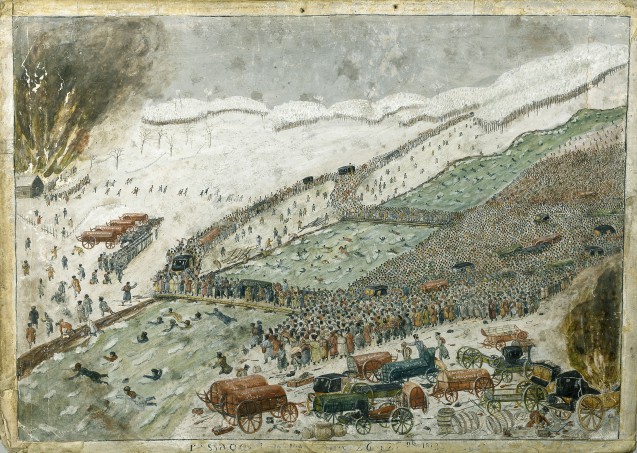
Technically, a draw, but the final scenes showing the retreat reveal Napoleon's strategic failure in the campaign. If Hitler's troops thought they had a hard time, they should've been happy not to endure the Battle of the Berezina River, as over 50.000 lives were lost in the freezing waters.

483059_1-tt-width-637-height-453-crop-1-bgcolor-ffffff-lazyload-0.jpg


This painting, which depicts the events very precisely, was probably painted by a witness or a veteran like general Langeron (1763-1831), a French émigré fighting on the Russian side, to whom we owe the following narrative:

“Wittgenstein’s light artillery rained bullets and shells on the multitude crammed in by the bridge; one can picture the awful disorder that reigned, the cries of the unfortunate valets, stretcher-bearers, the sick and the dying, women and children, French and foreigners, émigrés to Moscow who followed the army; crushed under the wheels of chariots, between carriages, mutilated by the strike of shells or perishing under the cossacks’ pikes, throwing themselves on the burning bridge, where they were devoured by flames and swallowed by the water”.
 
Back
Top