Installing an Earthing Rod

Joined
17 Aug 2010
Messages
5,116
Reaction score
2,136
Country
United Kingdom
Need to instal an Earth Rod so as I can use the EPS (Emergency Power supply) from my solar battery set up

What do I need to know about earthing rods, it will probably be the solar company installing it (they have to configure the inverter with their password access) and I want to understand Earthing rods before i am sold a load of stuff i don't need
 
NOTE 2:* The resistance of the installation earth electrode should be as low as practicable. A value exceeding 200 ohms may not be stable. So that's your upper limit. Assuming using a RCD.

The rod should not be so you can touch the rod, if your supply is TN-C-S then with a loss of PEN the house earth could get to 230 volts above true earth, unlikely as you have an earth rod, but should that happen, clearly you would not want to touch the rod, this 1788106766906.pngwould stop you getting too close, but this 1788106825005.png with a slab on top of it is all I have, the paving slab means you are reasonably safe.
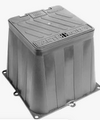
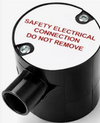
With 6 mm² cable you want the current not to melt the insulation so assuming it can carry 40 amps, 230/40 = 5.75Ω so really don't want the resistance less than 6Ω or with loss of PEN it could melt.

Since the inverter will likely with loss of power connect the earth and neutral together, your supply will be TN-S not TT, at least that is how mine works.

There are two methods to measure the resistance of an earth rod, one is you have two probes and a special meter and you have to put them in around 50 meters from the earth rod, and with most properties you can't get in the ground at the required distance, so second method compares it to the DNO earth, basic idea is you measure the resistance of both the DNO and your earth, and assume the DNO earth is very low, so you can ignore that, and assume the earth loop impedance is the resistance of your rod.

 
When I had a separate electricity supply installed to our workshop in around 1988, the LEB dropped me down a piece of bent plastic pipe and an earth rod about a metre in length. I had to dig my own hole from inside the premises, underneath the footings of the outer wall and drive this earth spike into the ground. I did that and then a mate that worked for the LEB at the time came and tested the spike. According to him it wasn’t good enough so he got me an internally threaded connecting piece and another earth rod. I screwed that onto the newly driven earth rod, screwed the earth rod extension onto that and drove that into the ground. He said it was just about alright!
 
I was required to get 8Ω for each earth rod, and in the sandy soil at point of Ayr gas terminal I needed 3 to 8 rods at 1.2 meters each, and needed a paddies motorcycle to knock them in.

But in most cases one earth rod will show around 60Ω which is well within what is required.
 
OOI, has anybody ever tried the installation technique of driving a length of steel conduit into the ground, then using a water jet to remove the soil inside the conduit (and if necessary allowing it to be driven deeper,) then dropping the rod in and removing the conduit?
 
OOI, has anybody ever tried the installation technique of driving a length of steel conduit into the ground, then using a water jet to remove the soil inside the conduit (and if necessary allowing it to be driven deeper,) then dropping the rod in and removing the conduit?
I have known drilling a hole when the ground is very hard but no I've not heard of that technique which sounds like a lot of effort and time for no obvious gain that I can see.
 
Apparently if you have a mains pressure water hose that can attach to say some 12mm copper pipe (tube) then it can be helpful to water drill apparently, never tried it though, very few earth rods installed by me, I do tend to fit two at two lengths apart and then teste them seperately then join them together with a bit of 10.0 earthwire, If required I have made some conrete earth pits to suit unless I have a bought one.
Around here about 60 ohms each rod is usually achieveable and one timeonly I had to drive rods in quite diagonally not horizontally to get depth for contact before hitting hard bedrock (Malham N Yorks) .

I do have two lengths of screwable rods and a couple of couplers but never needed to use them.
 
I don't really see what my earth rod will ever do? It, I suppose, is required so in a power cut, my RCD will still work, but the RCD sockets, are other end of house to the earth rod, it does seem OTT for 4 sockets and on FCU.

It is in real terms, a tick the box exercise, the chance that my freezers will become faulty just when we have a rare power cut seems very slim.
 
the bit that i find highly unlikely is that your main house earth would somehow become disconnected in a power cut ? what scenario could cause that to happen ?
 
what scenario could cause that to happen
Supply cable ruptured.

So I suppose the earth rod is to protect workers on the supply. But distance matters, I remember in high winds, seeing inch long arcs between the tower crane hook and the steel they wanted to lift, and the steel of that tower crane was well and truly in the earth so earthed.

It was a build up of static electricity which was causing the arcs.

I know with narrow boats we don't want copper coated earth rods, we want steel earth rods, so in the same place on the electrochemical series, as the boat hull, and even then is can cause the zinc lumps to be eroded so common to have large diodes in the earth cable, to stop the zinc being eroded.

After all the boat is a large metal lump in water, however, with a fault in fresh water a swimmer could be electrocuted, but not the same problem with salt water.
 

If you need to find a tradesperson to get your job done, please try our local search below, or if you are doing it yourself you can find suppliers local to you.

Select the supplier or trade you require, enter your location to begin your search.


Are you a trade or supplier? You can create your listing free at DIYnot Local

 
Back
Top