1930's Detached Damp Hearth

Joined
20 Jun 2024
Messages
7
Reaction score
0
Country
United Kingdom
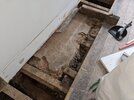
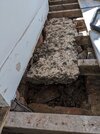
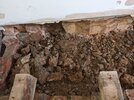
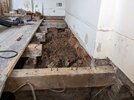
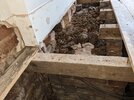
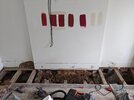
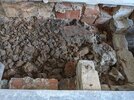
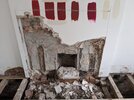
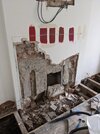
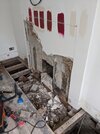
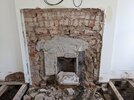
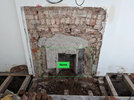
Pulling out a 1930's hearth due to the chimney being unused and the hearth is damp causing issues in the surrounding walls and joists. I've gotten this far which has been to remove the tiles on top, some sort of firebrick layer, then a black pebble concrete like screed, and now I'm down to the clay and rubble infill which is where the damp is present.

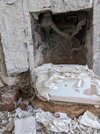
However, I don't like the look of the support for the bricks which I assume were installed to cover the fireplace and also the firebox(?) just seems to be sat on the rubble. I only just bought the property so have next to no history on what has been done behind the plaster to block off the fireplace. Do you think that the rubble could be anything structural, or am I fine to keep going? I don't really want to take down the plasterboard on the chimney breast but I'm not thinking this might be a good idea just to see what's actually been done?

This just started off as running some speaker cables :cry:

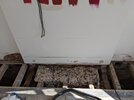
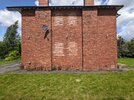
Attached are photos of firebricks, into screed into a now partially disturbed rubble mix before I got too nervous about proceeding. Then finally a photo of the external chimney stack if that makes any difference, thanks!
 

Attachments

  • PXL_20240611_134828690.jpg
    PXL_20240611_134828690.jpg
    413.9 KB · Views: 142
  • PXL_20240618_165414136.jpg
    PXL_20240618_165414136.jpg
    456.3 KB · Views: 107
  • PXL_20240618_165259972.jpg
    PXL_20240618_165259972.jpg
    257 KB · Views: 106
  • PXL_20240620_085337016.jpg
    PXL_20240620_085337016.jpg
    564 KB · Views: 110
  • PXL_20240620_085359885.jpg
    PXL_20240620_085359885.jpg
    371.5 KB · Views: 107
  • PXL_20240620_085411892.jpg
    PXL_20240620_085411892.jpg
    465.6 KB · Views: 102
  • PXL_20240620_085316873.jpg
    PXL_20240620_085316873.jpg
    242.9 KB · Views: 109
  • PXL_20240620_085347751.jpg
    PXL_20240620_085347751.jpg
    673.1 KB · Views: 123
  • PXL_20240605_121433445.jpg
    PXL_20240605_121433445.jpg
    672.6 KB · Views: 139
OP,
1. The last pic shows both chimney breast's have their GF fireplace flues ventilated with external air bricks.
2. It also shows nine air brick(s) ventilating the suspended floor(s) - thats OTT, I wonder why so many?
3. Four window openings have been bricked up.
4. Its safe to Continue to dig out the soil & rubble from inside the fender wall. Go, say, 300mm deep.
5. Its also safe, & best practice, to remove the plasterboard & open up the fireplace for investigation.
6. Some of the joist tails on the fender wall appear to have a little rot - probe them with a screwdriver.
7. Come back when your ready.
 
Pulling out a 1930's hearth due to the chimney being unused and the hearth is damp causing issues in the surrounding walls and joists. I've gotten this far which has been to remove the tiles on top, some sort of firebrick layer, then a black pebble concrete like screed, and now I'm down to the clay and rubble infill which is where the damp is present.

However, I don't like the look of the support for the bricks which I assume were installed to cover the fireplace and also the firebox(?) just seems to be sat on the rubble. I only just bought the property so have next to no history on what has been done behind the plaster to block off the fireplace. Do you think that the rubble could be anything structural, or am I fine to keep going? I don't really want to take down the plasterboard on the chimney breast but I'm not thinking this might be a good idea just to see what's actually been done?

This just started off as running some speaker cables :cry:

Attached are photos of firebricks, into screed into a now partially disturbed rubble mix before I got too nervous about proceeding. Then finally a photo of the external chimney stack if that makes any difference, thanks!
12, 9" x 6" Airbricks, really. :oops:
 
@ree thanks for the reinforcement that I'm on the right track. A few responses to some bits before I take a crack at this weekend.

A bit of back story is that they reworked the internals of the house around 8 years ago, including removing the side windows, making front/back windows bigger and into large bays, along with bifolds and knocking through the back into open plan.

2) I reckon they had damp issues once the work was done. A couple of the air bricks were blocked with panes of glass which had fallen down the cavity when removed. I assume they had the builders back and they just overdid it with airbricks to try solve the issue. A few are original, the others are obviously new. So rather than solve the root issue, which I believe is this damp hearth (and blocked airbricks which I've fixed). The drive is also tarmacked poorly and I don't believe a lot of air flow is actually getting to the airbricks in some places, it needs lowering a fair bit in some places.

4) That's reassuring, I'm going to take the plunge and open the plasterboard up so I can see what I'm doing; I might also build and alcove out of the fireplace depending on how it looks in there.

6) Yes, I've prodded around a little bit and luckily they seem solid, hopefully a bit of fresh air will keep them that way.

Thanks!
 
Keep going and make sure the joists are supported by new brick or block with a strip of dpc underneath. Dig out the entire constructional hearth including b3hind the plasterboard. That should remove the source of damp and any bridging of the slate dpc.
 
Ok, we're in, I'm not sure I like the look of it, there doesn't seem to be much support at the sides of the breast or is this looking normal? Ideally I'd hollow it out and we can use it as an alcove, but if you think it's best to just remove the "loose" debris and leave the concrete(?). The firebox in the middle will pull out and that should let me dig out underneath it so I think it's a plus in terms of moving forward?
 

Attachments

  • PXL_20240621_135741750.jpg
    PXL_20240621_135741750.jpg
    374.2 KB · Views: 92
  • PXL_20240621_140051346.jpg
    PXL_20240621_140051346.jpg
    365.7 KB · Views: 91
  • PXL_20240621_140110418.jpg
    PXL_20240621_140110418.jpg
    564 KB · Views: 92
  • PXL_20240621_140059967.jpg
    PXL_20240621_140059967.jpg
    353.5 KB · Views: 89
OP,
Your doing fine.
Leave the "firebox" / fireback alone for now.
Staying away from the c/b corners, knock off the grey render like mortar skim, and remove more of the lower plasterboard up to the line of the higher plasterboard.
You will then, hopefully, have the c/b brickwork exposed & more of the construction should become clear.

Your c/b projects about 150mm from the back wall - does the c/b in the FF room above also project 150mm?
FWIW: pull all the proud nails you can see. Then lay any old sheet of ply or similar across the joists to catch rubble and give a footing. Remove rubble as you work.
 
Could you explain what c/b and also FF is? The other chimney breast (ah c/b?, should have realised that earlier!) is also the same depth. It's currently got a kitchen fitted in front of it so may also have had work done. Would you mind explaining what you mean by staying away from the corners, Is there any of the motor/skim I shouldn't be removing?
 
OP,
google has all building trade terms eg. first floor.
Literally the outside corners of the c/b - dont disturb them.
Remove all the skimmed on mortar.
 
Understood, first floor has no chimney breast, flat wall but does have a hollow ring to it so could have been boarded flush.
 
OP,
That there's no chimney breast on the FF suggests that the 150mm of projecting GF chimney breast was possibly some kind of later effort ie. it was not part of the original build?
It might not have been very well constructed?
No matter, just carry on exposing whatever brickwork there is on the face of the c/b.

The upper floor flat wall most likely does have a boarded over fireplace opening. But so long as there's no signs of Hygroscopic penetration on the wall surface then just leave the FF alone.
 
I think it looks original as it's tied into the wall inner cavity wall if I look in the sub floor. I think they maybe just needed a bit more internal space as it's quite a shallow externally too. Upstairs definitely has a hollow knock on either side of where I would expect the breast to be so I imagine they've just sacrificed the space for a flush wall. Regardless, I believe the chimney is actually dry and it's just the clay/rubble filled in the fender wall which is wet.

Please see attached photo for where I've now knocked off some of the skim to reveal the brickwork.
 

Attachments

  • PXL_20240622_102332311.jpg
    PXL_20240622_102332311.jpg
    408.4 KB · Views: 80
unhelpful content removed
OP,
Yes, you are right, and my assumption was wrong - that arch would typically only be in an original build.
More of the render can be hacked off - but now what would you like to do next?
Much infill can be seen around the fireback and up to the arch.

The RH side of the c/b seems to have supporting brickwork behind the remaining leg of plasterboard.
So its now clear that you have the original fireplace opening LH & RH c/b jambs & the arch.
The RH backwall shows signs of some kind of chemical or damp damage?

(Ed.)
 
Last edited by a moderator:
So I think the final plan is that I want to dig out the hearth to remove the source of moisture being so close to the joists/plasterboard. I believe the mold that can be seen on the back wall is from the dab of plaster bridging moisture into the plasterboard or maybe bridging the heat of the room and condensing the water causing a high moisture spot. I'm hoping with the hearth infill removed and airbricks cleared out there will be enough ventilation to stop any issues. The current setup has been in place for 8 years and it's not _that_ bad so I think just these few tweaks will remedy it.

The second plan is to open up the fireplace to allow for an alcove. The issue I have here is that the brickwork in the c/b is very loose in places. The arch you can see the top row is pretty solid, the second row could just be pulled out if you so wished. The bricks below, half of them are just sat as all the mortar has deteriorated or they were never done properly in the first place. I believe this is one reason why the skim was in place before boarding over. See the photo for where I want an alcove, I believe I'll need to put in some sort of base and then a lintel, please see where I am now and annotated photo.
 

Attachments

  • PXL_20240622_165212592-mh.jpg
    PXL_20240622_165212592-mh.jpg
    445.6 KB · Views: 78

If you need to find a tradesperson to get your job done, please try our local search below, or if you are doing it yourself you can find suppliers local to you.

Select the supplier or trade you require, enter your location to begin your search.


Are you a trade or supplier? You can create your listing free at DIYnot Local

 
Back
Top