2 Way Lighting - Lamps from both switches

Joined
5 Jan 2016
Messages
98
Reaction score
0
Country
United Kingdom
I seem to have confused the hell out of myself so looking for a little advice.

I have 2 x 2 way switches. I need to control 3 lamps as seen in the drawing below.

Screenshot 2025-12-21 at 10.15.44.png


I have:
2 core + E feed coming in to Switch 1
3 core + E from Switch 1 to Lamp 1
3 core + E from Switch 1 to Switch 2
3 core + E from Switch 2 to Lamp 3
3 core + E from Lamp 3 to Lamp 2

I want all 3 lights controlled by switches 1 and 2 ideally but I'm struggling to work out how to connect Lamp 1. (diagram below)


Screenshot 2025-12-21 at 10.15.57.png


Can't connect lamp 1 live to common as it will always be on. Any help much appreciated.

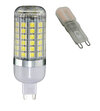
All 3 lights are Knightsbridge PWL1 plaster wall lights with live and neutral connectors and G9 bulbs https://www.mlaccessories.co.uk/products/4356202/datasheet.html
 
Ok - then you will either need a five core cable (4 core + E) between the switches or another 3 core +E cable from lamp 1 to lamp 2 (or 3).
 
Another solution would be to install a Kinetic switch/receiver in one switch location and a remote kinetic switch in the other.

Another could be to use 12V bulbs (which would all have to be of the same rating) wired in series and introduce a 36V transformer
1766359494609.png
 
Another solution would be to install a Kinetic switch/receiver in one switch location and a remote kinetic switch in the other.

Another could be to use 12V bulbs (which would all have to be of the same rating) wired in series and introduce a 36V transformerView attachment 402767

Thank you. I have a bunch of Quinetic switches elsewhere. The reason I have ruled these out is that switch 1 is a 3 gang 2 way switch. Using the Quinetic euro modules I'd only be able to get 2 gangs in a single back box.

I like the idea of the 12V bulbs but would struggle to fit in a transformer.

I think I am going to solve this with a couple of Shelly smart switches. 1 at switch 2 which would connect common to SW to read when lamps 2 & 3 have power, and another behind switch 1 (but not connected) which mirrors the on off state of the other Shelly.
 
The transformer can be anywhere between the consumer unit and the switch.
 
The transformer can be anywhere between the consumer unit and the switch.
The bit my brain is struggling with is why this would work with the 36V and not work with 230V. I might be missing something fundamental but would the below not work?

There's still only 3 cores (and earth) between the 2 switches. Lamps wired in series with the return to neutral from Lamp 1

Screenshot 2025-12-22 at 12.17.24.png
 
The bit my brain is struggling with is why this would work with the 36V and not work with 230V. I might be missing something fundamental but would the below not work?

There's still only 3 cores (and earth) between the 2 switches. Lamps wired in series with the return to neutral from Lamp 1

View attachment 402780
This will work if you can find 80V bulbs.

IE 230/3 = 76.7V
 
I use the two-way switches the other way around.
two-way-real.jpg
it means no junction in the switch back box, this method
two-way-school-boy-cables.jpg
the feed to light goes through the switch box, but connected to nothing, so needs a junction inside the box. I would have said use an isolator and smart bulbs, but don't think one can get G9 smart bulbs, they caused me problems, G9-comp.jpgto get the covers on, needs the small bulb, but that bulb would glow dim using electronic switches without a neutral, and needed a capacitor fitting in parallel to the bulb, and the larger bulb strictly speaking not UK legal, and made the lamp look very different, wife did accept the larger bulb, so got away with it. I have since found a battery powered smart switch TP-Link (Tapo) which can be used without a neutral and does not cause a problem with G9 bulbs. But the switch master
1766407118547.png
does not match the switch slave.
1766407220491.png
and they need a hub, so extra
1766407294667.png
I like them as lazy, and hey google turn on living room main is easier than getting up out of my seat, but you can see it costs, so hard-wiring is cheaper.
 

If you need to find a tradesperson to get your job done, please try our local search below, or if you are doing it yourself you can find suppliers local to you.

Select the supplier or trade you require, enter your location to begin your search.


Are you a trade or supplier? You can create your listing free at DIYnot Local

 
Back
Top