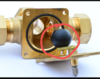
I've had the ball break off the end of its actuator and give the problems you described (of poor flow). Mine was discovered whilst powerflushing, but the rubber ball did not break-up, it was contained within the brass 3-port valve housing, and was easily discovered and removed/repaired on inspection.
If you're convinced that bits of it have broken away and are in the heating pipes then it's most likely these bits will be caught at narrowings of the pipe...radiator valves, pipe reducers, boiler waterways come to mind. To home in on which you must carefully think about the effect of such a (partial?) blockage.
Is it always the same radiator that stops working? Remove its incoming valve and flush several litres from the incoming pipe into a bucket, via an old stocking if you want to filter out the bits. Inspect and clean the valve before replacing it. Re-appraise and move on to the next worse case.
If the boiler goes into low flame too early, or short cycles, then you may have to reverse flush the boiler to drive out any particles.
Inspect the pump, they too have narrowing channels where solid particles can lodge.
Careful and methodical thinking can save a lot of unrewarding work. Ask yourself 'if it were blocked here what would be the symptoms?'. 'What couldn't it be, and why not?'. Attend to the most likely culprit first, working down to the less likely.