
• Looking for a smarter way to manage your heating this winter? We’ve been testing the new Aqara Radiator Thermostat W600 to see how quiet, accurate and easy it is to use around the home. Click here read our review.

Advice Needed on Preparing Exposed Opening for New Doors: Cavity Closer vs. Retaining Mesh

Joined
4 Feb 2023
Messages
247
Reaction score
8
Country
United Kingdom
Hi everyone,

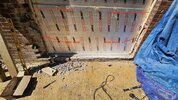
I’m working on a house built in the 1950s and have an exposed opening where French doors (with two side windows) used to be. The wall is currently a mix of cement-based products and exposed blockwork with a metal grid (likely from the old dwarf wall). The wall itself is 280mm thick, consisting of 102.5mm brick, 102.5mm block, and a cavity of 65-75mm.

Here’s the issue:
  • The opening does not have any cavity closer at the moment.
  • There’s some cement-based render covering the top half of the height, likely where the former windows sat.
  • The bottom part of the wall is exposed blockwork with a metal mesh/grid.
My plan is to order new doors, but I’m unsure how best to prepare the opening. Here are my thoughts:
  1. Do I need cavity closers?
    Given the dimensions of the cavity and the nature of the wall, is it essential to install a cavity closer before fitting the new doors, or can I proceed without one?
  2. Should I remove the old render and mesh?
    The existing mesh and render might not be in the best condition, so I’m thinking of removing it. However, would it be better to retain the mesh and render the bottom part of the wall?
Has anyone worked with a similar setup before? Any advice on the best approach to ensure a solid and secure fit for the new doors while properly addressing the cavity and wall conditions would be much appreciated!

See a photo attached (ignore the missing brickwork on the left as I am working on fixing that.)

Thanks in advance!
 

Attachments

  • WhatsApp Image 2025-04-05 at 20.13.27.jpeg
    WhatsApp Image 2025-04-05 at 20.13.27.jpeg
    466.2 KB · Views: 45
The old render wil be a cold and damp bridge. It was how it was done in the old days, but nobody had invented insulated cavity closers back then.

I'm wondering if the metal mesh may be behind the render, it's a strip as tall as the wall, they shoved it down the cavity, probably nailed the top before rendering the exposed top half ready for the window.

I'd clear out everything, put in an all new full height cavity closer.

Get the new door in, then put a nice full height strip of plasterboard down each edge.
 
Thanks for you post @Ivor Windybottom. That all makes sense and I was planning to go the cavity closer route so it reconfirms that.

On a separate note - with the botoom row of bricks now exposed and before the door sill comes in should I butt the DPC up the screed by 20-30mm? I was thinking of creating some sort of upstand from DPC so I would lay it level on the brickwork (with a tiny bit protruding outwards) and the rest of it I would just fold into an upstand.

I've read somewhere that it would stop water (e.g. wind-driven rain, or pooling water in the cavity) from creeping across the bottom of the door opening and act as a kind of low-level tanking detail, giving that back edge of the door threshold a barrier which would be preventing water from tracking from the screed area toward the internal face of the frame or floor.

Would it be necessary or is laying on the brickwork itself enough? I may as well fold it up as I've already got a 150mm wide DPC but if the screed was properly poured it would have a PVC/damp-proof membrane underneath so no water travelling up from screed/cavity should occur correct?
 
Last edited:

If you need to find a tradesperson to get your job done, please try our local search below, or if you are doing it yourself you can find suppliers local to you.

Select the supplier or trade you require, enter your location to begin your search.


Are you a trade or supplier? You can create your listing free at DIYnot Local

 
Back
Top