Advice on removing unused cable

Joined
17 Apr 2007
Messages
19
Reaction score
0
Country
United Kingdom
I need to remove a cable that was used for a light switch for some wall lights the previous owners of the house had installed, I have traced the cable back and it goes straight into the fuse box (old style one which uses fuse wire). As I don't want to leave the bare cable in the wall I was planning on removing it from the fuse box but i'm not sure how to go about it? I can see how to remove the cable (simply unscrew it) but is this a dangerous thing to be doing?? How do i isolate power to the fuse box? If i was doing work on a socket or light switch somewhere else in the house i would simply flick the switch on the fuse box and remove fuse to switch power off, but i honestly don't know if this will be enough and don't fancy blowing myself up?

I know i could get a sparky round to do this but don't really want to pay for someone to come round for 5 mins to pull out an old cable. Is this something i can realistically do myself or should i get a pro in??
 
In principle, if you turn off the main switch, then you can safely remove the cover of the fusebox. However, on older ones, including some Wylex Standard, there are exposed live parts when you remove the cover, even with the switch off.

If you can post a digital pic here, we can advise further.

At least please state the brand and colour (this is not a joke) of the fusebox, and anything printed or engraved on the case, switch, or fuseholders.
 
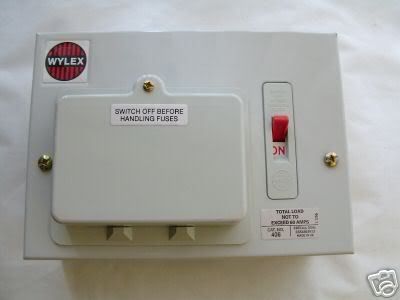
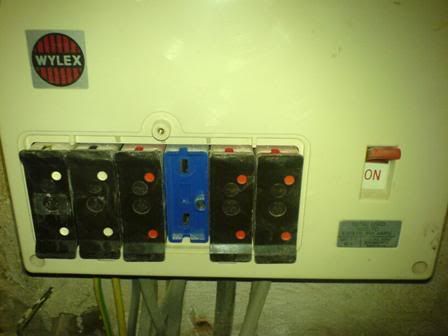
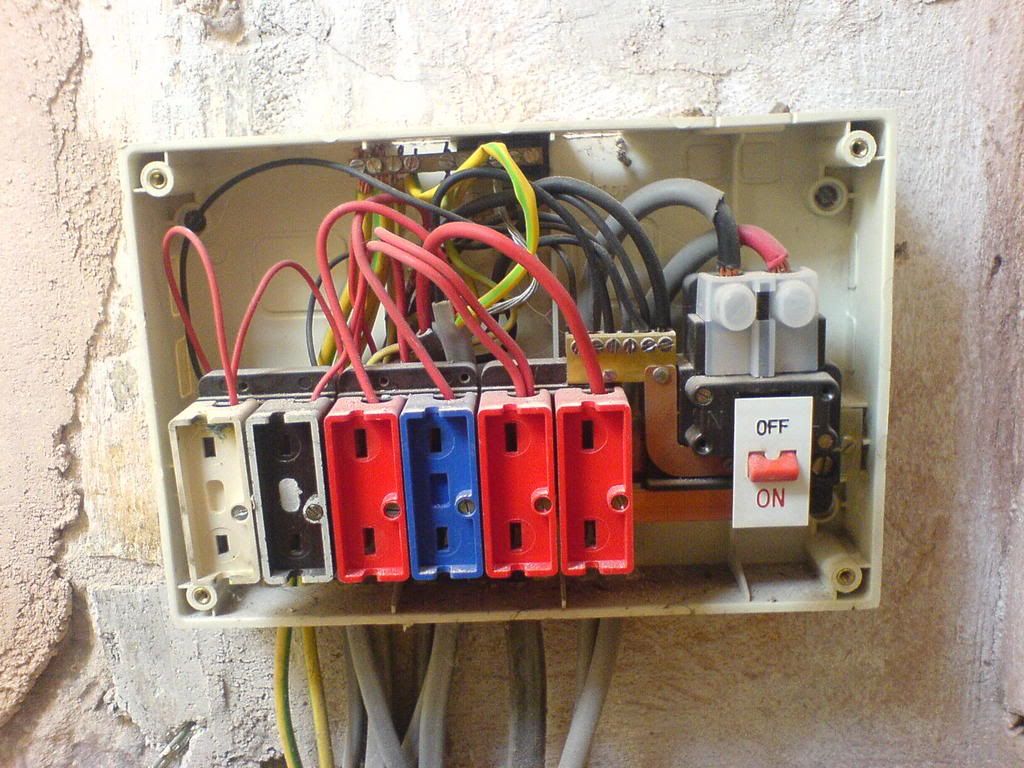
Thanks for the quick reply here is a pic of the fuse box (hope it works). Is this the Wylex Fuse box you were talking about??

PhotoAlbumBig.jsp
 
That is an Ivory Wylex Standard board.

You can turn off the main switch, remove all the fuses (but not the plastic shields) and the cover can be taken off, provided you are safe to do so.

Observe the top of the main switch, where two thick cables come into it. There should be plastic covers over the brass screws that grip the cables, and the terminals they fit in. This may be moulded brown plastic, or translucent white. If not, and the screws or terminals are visible, they are CONSTANTLY LIVE, even with the main switch off. They must not be touched. Keep skin and tools away from them.

Use a multimeter (not a neon screwdriver) to verify that the unit is not live.

The redundant wire will be held by screws at the top of the fuseway (red wire) and in a brass Neutral block at the top or side of the CU frame (black wire) and Earth block (green/yellow wire) at the side or top.

Do not allow the free copper wire to touch any live part while you remove it.

You need to keep a plastic shield over the redundant fuseway so that the brass holders for the fuse cannot be touched. You can buy white blanks but until you have one, leave the coloured shield in place. When fitting or removing shields the main switch must be OFF as the fixing screw could touch the live copper behind.

Use insulated screwdrivers and other tools and do not touch any metal part of the tools while you are working.

Put clear labels above each fuseway to say what they are for, with "disused" on the one you have removed the wire from.

If you are not safe to do all this, contact a local electrician.
 
Thanks for the quick reply again!

So if i have read this correctly you think i'll be ok to remove the redundant cable ok as long as i switch it off and do not touch the thick cables coming in??
 
Or any exposed metalwork round the switch.

Test between all the "live" and all the "neutral" metalwork to make sure it is all dead before you touch anything. You can buy a multimeter for about £8 in the high street.

If you see anything going into the top of the switch except the incoming tails, this is a bad sign as it indicates an amateurish use of permanent live, that is not isolated by the main switch. It is quite rare.

You will need a good torch as all the lights and power will be off while you are working.

If you want to post a pic of the inside of the CU after turning off the main switch and removing the cover, we can advise more.

Ensure that no-one else in the house touches it while you have it open.

If anything cracks or breaks while you are opening it, or you see signs of damage, or loose or repaired wires, post a pic.

Also, stand back and take a wider photo of the meter, incoming supply and main fuse, if you can.
 
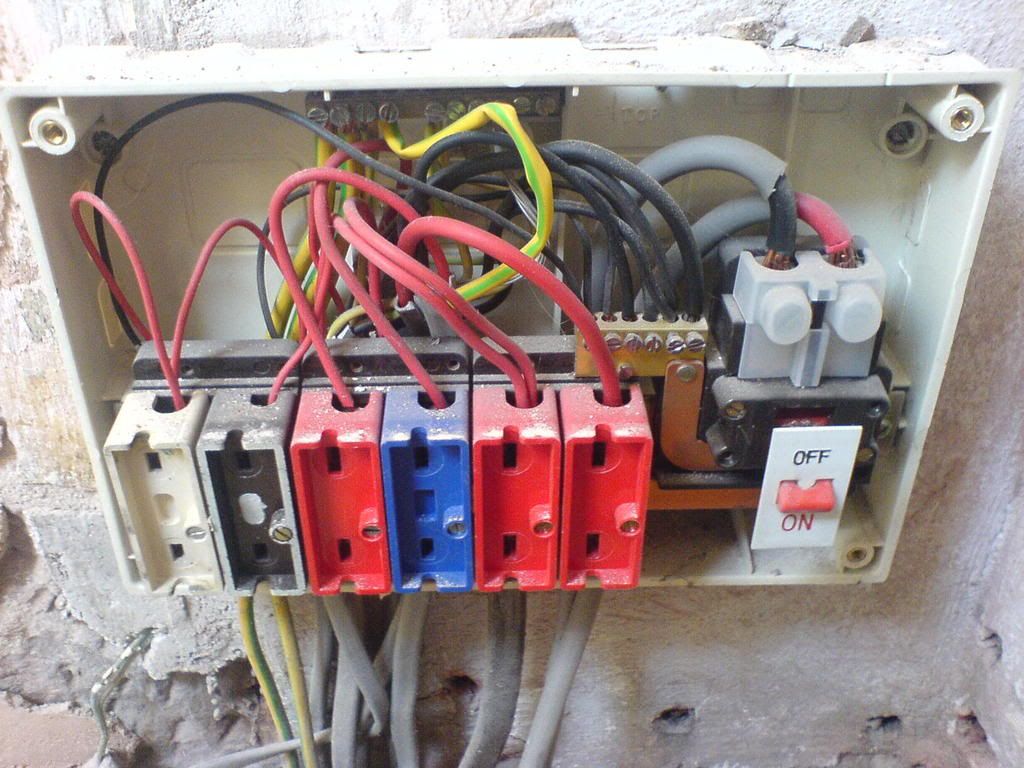
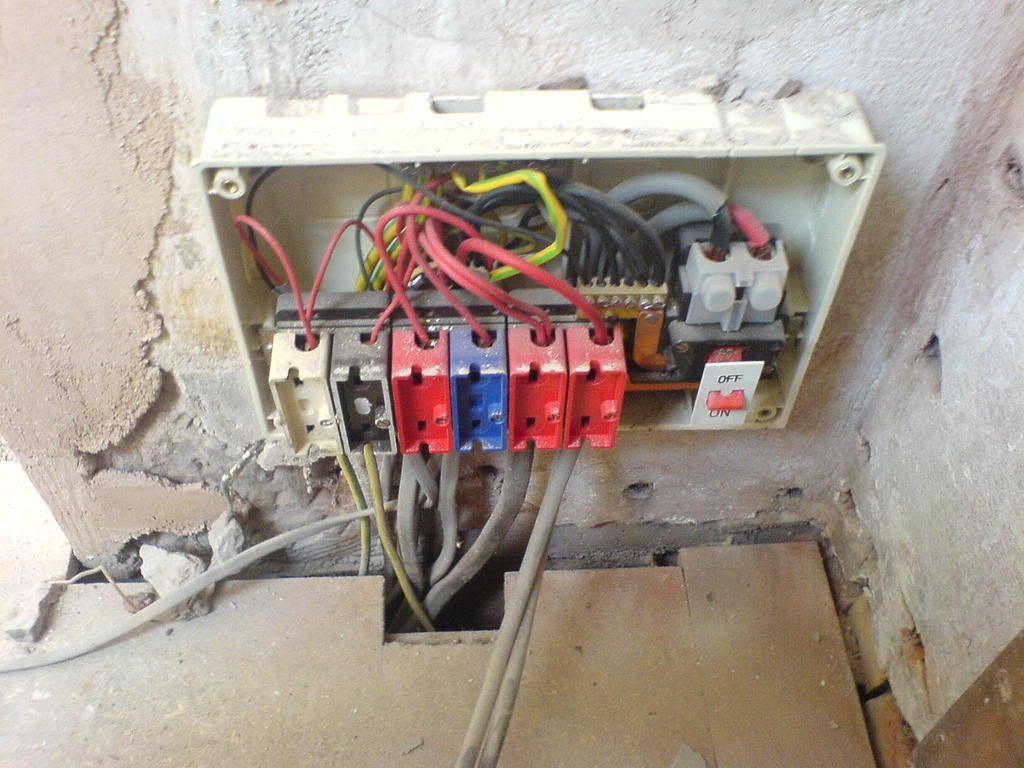
Here's a few more Pic's hope they make things a little clearer!

fuse4.jpg


fuse3.jpg


fuse2.jpg


Thanks again for all the help it's much appreciated!!
 
grrr, you have the plastic covers on incoming terminals, but the idiot who fitted it has left exposed copper on the incoming tails by stripping back the insulation too far.

Those bits of exposed copper (at the top of the main switch) are dangerous even when the switch is off.

The block next to the switch is the Neutral block.

the block at the top is the earth block.

You appear to have a bare earth wire with no G&Y sheathing on it. Buy a bit, and sheath that while you're doing the job.

You have some holes in the top of the case. You must block them to prevent anything falling in. You can use a silicone sealer. You can brush away loose dust and grit with a dry paintbrush.

p.s. I don't think I can see a main earth. you have two G&Ys coming out of the bottom, where do they go? Is it one to the incoming water main and one to the gas? Show us a pic of the incomer, meter and main fuse, please.
 
Just a quicky....
In the picture,if i follow the fuse holders from main isolator i see ..
1.Either a cooker or shower radial
2.Ring final
3.immersion or a 15/20A radial (blue colour i forget what amp it is)
4.That looks like 2.5mm phase RADIAL protected by a 32A

Just double check that no4 circuit is protected by a 32A and it is as i think 2.5mm cable, as if it is somethings wrong.
 
Yeah, that 2,5 32A circuit needs immediate attention, as does looking into the supply type & whether you have a main earthing conductor...
 

If you need to find a tradesperson to get your job done, please try our local search below, or if you are doing it yourself you can find suppliers local to you.

Select the supplier or trade you require, enter your location to begin your search.


Are you a trade or supplier? You can create your listing free at DIYnot Local

 
Back
Top