• Looking for a smarter way to manage your heating this winter? We’ve been testing the new Aqara Radiator Thermostat W600 to see how quiet, accurate and easy it is to use around the home. Click here read our review.

Buying house - ground level bricks worn

Joined
20 May 2012
Messages
55
Reaction score
0
Country
United Kingdom
Hi again,

Another post on house purchase - different topic, but same 90s house if you end up reading my other posts.

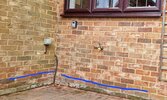
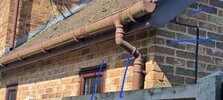
Ref attached images, under marked up blue line. There appears heavy staining and wear to bricks near ground level. I suspect this is due in one of the images, fall of patio, pooling of water and the tap, and in the other image with bay window in view, the same causes plus the fact that the bay window roof is slopped, but no guttering.

Is this serious that would need bricks replacing or more, or would solving water issues resolve?

I also note, none of the bricks are engineering bricks either, shouldn't they all be below DPC?

Welcome thoughts.
 

Attachments

  • 20250328_133128.jpg
    20250328_133128.jpg
    425.2 KB · Views: 82
  • 20250328_133134.jpg
    20250328_133134.jpg
    479.8 KB · Views: 79
Last edited:
Expect staining and wet bricks below the dpc. Get a survey
 
Thanks, that helps reassure for this at least.

Any concern with not being engineering bricks?

For those that have more heavily deteriorated, would chop and swap out be needed?
 
I don't see any damaged bricks. They're just a bit mossy. Presumably they're adequate, otherwise after 30 years they would have blown apart due to frost.

Engineering bricks are preferred below DPC, but often houses aren't (or weren't) built like this.

Personally I'd take away a course of blocks all round, re-lay the edging blocks one block further away and fill the gap with 20mm gravel. Then the wall should be able to breathe and dry out easier, plus it won't get as much splashing from the rain. But lots of people have paving up to the wall and it's fine.

Ensure there's a fall all round that takes water away from the building.
 
I don't see any damaged bricks. They're just a bit mossy. Presumably they're adequate, otherwise after 30 years they would have blown apart due to frost.

Engineering bricks are preferred below DPC, but often houses aren't (or weren't) built like this.

Personally I'd take away a course of blocks all round, re-lay the edging blocks one block further away and fill the gap with 20mm gravel. Then the wall should be able to breathe and dry out easier, plus it won't get as much splashing from the rain. But lots of people have paving up to the wall and it's fine.

Ensure there's a fall all round that takes water away from the building.
In terms of removing a course of blocks and then filling gap with 20mm gravel, is that a French drain? Would you say its as simple as filling with stone or does a pipe need laying to a soak away? I ask because I'd also read that sometimes this can cause problems with foundation if water goes down to an area in concentration.

Understood on fall, I think part of the problem here maybe that.
 
You aren't going to be able to install a french drain without pulling up the whole lot. It's a huge job, the sort of thing you only ever do if you find that you actually need it.

I've just dug out about a foot deep and put gravel in. Just make absolutely sure that nothing is tipping into it so it becomes a soakaway. Obviously rain will fall in, just as it would if your house adjoined soil. The soil can cope with a reasonable amount of rain, it only becomes a problem if you gather it up from a vast area and tip it all into one spot, sadly as some paving does.

When I did this I left it about six months before I put the gravel in - just have an empty trench around the house temporarily. Have a look after heavy rain, check it's not filling up. Mine did once, after exceptional rain - flood alert conditions, when the soil was utterly saturated so any hole anywhere would be full of groundwater. Once you're happy it's functioning then chuck the gravel in.
 
Useful responses, thank you.

Just coming back to pic ending '128.jpg'. Not specifically related to previous query, but more so it shows patches where mortar as worn alot. I've posted elsewhere about this, but wanted thoughts on why patches of this house may have mortar wearing so quickly, to extent where it's been patched in many places. Further examples attached here.
 

Attachments

  • 20250411_113853.jpg
    20250411_113853.jpg
    249.8 KB · Views: 30
  • 20250411_114350.jpg
    20250411_114350.jpg
    318.6 KB · Views: 35

If you need to find a tradesperson to get your job done, please try our local search below, or if you are doing it yourself you can find suppliers local to you.

Select the supplier or trade you require, enter your location to begin your search.


Are you a trade or supplier? You can create your listing free at DIYnot Local

 
Back
Top