
Bypass pipe ?

Joined
11 Jan 2020
Messages
6
Reaction score
0
Country
United Kingdom
Hope someone can help me with a real newbie question?
At some point in its history the house I just taken on has been replumbed (2 or 3 times) Im in the process of ripping everything out (lead included) that is surplus but have now come to take the central heating pipework on the first floor which was just screwed to the skirting and getting it back under the floor. However before i just reproduce what is above the floor underneath everything I know about CH tells me its wrong but it does seem to work.. The first floor has a 22mm ring circuit with reducing tee pieces to all the rads but the main flow continues under every radiator. Now I get that turning any individual radiator off upstairs would shut the whole floor down but to my simple mind there shouldn't be an easy option for the hot water to bypass the radiator or is that something to do with the pipe diameter??

cheers
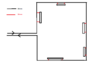
 

Attachments

  • plan.png
    plan.png
    12.2 KB · Views: 318
there shouldn't be an easy option for the hot water to bypass the radiator or is that something to do with the pipe diameter?
The radiator provides a water current path in parallel with the path through the pipe, so the flow rates in the radiator and the pipe will be in the inverse ratio of the flow resistances presented by the radiator and pipe. Normally the radiator resistance is much higher than the pipe resistance, so the majority of the flow is through the pipe.
 
You have a one pipe system.

upload_2020-1-11_16-55-14.png


Perhaps take the opportunity to change it if you are moving the pipework.
 
Thanks guys, so if I changed to the 2 pipe system would I still need 22mm pipe or could I do it all in 15 ?? And what do I gain by the upgrade ? is it cheaper to run etc. ??
Thanks
 
I’m no expert but you would gain the option to turn off individual rads without shutting the whole top floor off. Because of that, if you only need to heat one bedroom, it would be cheaper to run.
 
I’m no expert but you would gain the option to turn off individual rads without shutting the whole top floor off. Because of that, if you only need to heat one bedroom, it would be cheaper to run.


Is that correct? With the one pipe system I have would it not just bypass the closed radiator. I get that if i re piped without the bypass pipe that would be the case but as it is now....?
 
Is that correct?
Like I said, I’m no expert! Looking at the diagram, I might be wrong but there must be a reason why they use two pipes instead of one - it’s not just so they can use more copper pipe! Hopefully a heating engineer can come on and explain why.
 
Single pipe system's such as yours are more inefficient and difficult to balance than a two pipe system. This is because cooled water from the radiator output is mixed with hot water in the "bypass" pipe, as you referred to it.

If you have the opportunity, I'd replumb it to a 2 pipe system.
 
Fair enough thanks, and then the last daft question 22mm double pipe still choked with reducing tee down to 15mm for the in out of the radiator... Would that be best?? sorry for all the questions but as the whole of the upstairs floor is up, might as well do whats the best.
 
The pipe size needs to be chosen based on the system requirements. For a normal domestic dwelling, you'd usually have 22mm flow and return pipes with 15mm tees to radiators. That is just an educated guess, though. If the pipe runs are excessively long and / or the radiators are especially large, your requirements may be different. Pump sizing will also come into play here.
 
OK but I can likely bet that as that's the sizes I have now on a single pipe system it should be the same for two ??
 
You may need different radiators if you change from one-pipe to two-pipe. This is because the water temperature entering a radiator reduces the further you get from the boiler. So the radiator's output is less than the manufacturer states . This is compenstated for by installing larger radiators.

This problem does not occur on a two-pipe system as all radiators are fed with the same temperature water. (The furthest rad may be one or two degrees lower due to heat loss along the supply pipe.)
 
You may need different radiators if you change from one-pipe to two-pipe. This is because the water temperature entering a radiator reduces the further you get from the boiler. So the radiator's output is less than the manufacturer states . This is compenstated for by installing larger radiators.

This problem does not occur on a two-pipe system as all radiators are fed with the same temperature water. (The furthest rad may be one or two degrees lower due to heat loss along the supply pipe.)

Going from one pipe to two pipe means the radiators will be more efficient. Therefore, if anything, they will end up being oversized and able to heat the house at lower flow temperatures.
 

If you need to find a tradesperson to get your job done, please try our local search below, or if you are doing it yourself you can find suppliers local to you.

Select the supplier or trade you require, enter your location to begin your search.


Are you a trade or supplier? You can create your listing free at DIYnot Local

 
Back
Top