• Looking for a smarter way to manage your heating this winter? We’ve been testing the new Aqara Radiator Thermostat W600 to see how quiet, accurate and easy it is to use around the home. Click here read our review.

Cement matching advice

Joined
9 Jun 2009
Messages
1,043
Reaction score
65
Location
Yorkshire
Country
United Kingdom
Hi Guys,
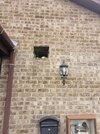
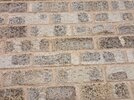
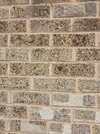
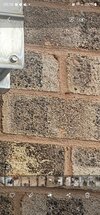
I hhave to brick up a flue and have managed to match the bricks but wouldn't know where to start with matching the cement, could you please advise as I have no clue where to start with this colour, it looks like there's a red or pink coloured sand in it

Cheers
 

Attachments

  • 20250801_100713.jpg
    20250801_100713.jpg
    768.3 KB · Views: 31
  • 20250801_100458.jpg
    20250801_100458.jpg
    878.1 KB · Views: 27
  • 20250721_151531.jpg
    20250721_151531.jpg
    891.2 KB · Views: 28
  • Screenshot_20250908_053810_Gallery.jpg
    Screenshot_20250908_053810_Gallery.jpg
    255.6 KB · Views: 25
Is it for you or a customer? If it's for you, you will probably have a bit more time to try some different mixes.
The sand is important to the colour. If you put a piece of the existing mortar in brick acid, it will leave you with a sample of the sand.
As mortar ages, it often changes colour slightly. This is because when you joint up with a metal tool it brings more cement laitance to the surface which forms a cement coloured skin on the surface. Over the years this weathers away and the sand colour shows through.
If you rub joints with a wooden tool you get more sand on the surface. You can also tap the surface with a churn brush when it's green hard to expose the aggregate a bit.
You can't really see the colour when it's still wet, so it can take a while if you are making up a few samples.
A rule of thumb for me has been, especially if adding dyes, to make the mortar slightly darker rather than lighter in colour. It lightens slightly as it ages, but even if it stays a bit darker, it shows up less in the wall than a light patch with most brickwork.
On really top class jobs you can get the mortar analysed and made up. They use brick acid to get the sand sample, as well as weighing some of the original pieces to get the exact mix by weight.

 
Really good advice above.

At the rough-and-ready end of the scale, I'd suggest it doesn't look dyed from the photos. It's probably a fairly weak mix using darkish sand. I reckon it would be worth a punt on a bag of B&Q's muddy-coloured building sand. Mix a sample 5:1 with cement and leave it for a few weeks to weather. Give it a rub with a brush or wet sponge on day 2. Perhaps wet the new and old to get a fair comparison. See whether it's near enough. You will never get a perfect match, new bricks definitely won't match even if the same make/model. It's unlikely anyone other than you will notice if it's somewhere close-ish.

Carefully cut/drill out all partial bricks, hopefully removing the cut parts will enable you to indentify them (LBC?). Then replace with only full bricks.

Also you have about 6 courses of staining below the hole to try and remove, gentle acid such as white vinegar might help but be careful.
 
Is it for you or a customer? If it's for you, you will probably have a bit more time to try some different mixes.
The sand is important to the colour. If you put a piece of the existing mortar in brick acid, it will leave you with a sample of the sand.
As mortar ages, it often changes colour slightly. This is because when you joint up with a metal tool it brings more cement laitance to the surface which forms a cement coloured skin on the surface. Over the years this weathers away and the sand colour shows through.
If you rub joints with a wooden tool you get more sand on the surface. You can also tap the surface with a churn brush when it's green hard to expose the aggregate a bit.
You can't really see the colour when it's still wet, so it can take a while if you are making up a few samples.
A rule of thumb for me has been, especially if adding dyes, to make the mortar slightly darker rather than lighter in colour. It lightens slightly as it ages, but even if it stays a bit darker, it shows up less in the wall than a light patch with most brickwork.
On really top class jobs you can get the mortar analysed and made up. They use brick acid to get the sand sample, as well as weighing some of the original pieces to get the exact mix by weight.
Thanks for the response,
It's for a customer, I'm bricking the old flue hole up I'm not going to be too critical as long as it's quite close, I have never made anything like that colour mortar before so really don't know where to start.
 
Really good advice above.

At the rough-and-ready end of the scale, I'd suggest it doesn't look dyed from the photos. It's probably a fairly weak mix using darkish sand. I reckon it would be worth a punt on a bag of B&Q's muddy-coloured building sand. Mix a sample 5:1 with cement and leave it for a few weeks to weather. Give it a rub with a brush or wet sponge on day 2. Perhaps wet the new and old to get a fair comparison. See whether it's near enough. You will never get a perfect match, new bricks definitely won't match even if the same make/model. It's unlikely anyone other than you will notice if it's somewhere close-ish.

Carefully cut/drill out all partial bricks, hopefully removing the cut parts will enable you to indentify them (LBC?). Then replace with only full bricks.

Also you have about 6 courses of staining below the hole to try and remove, gentle acid such as white vinegar might help but be careful.
Thanks for the advice, much appreciated.
 

If you need to find a tradesperson to get your job done, please try our local search below, or if you are doing it yourself you can find suppliers local to you.

Select the supplier or trade you require, enter your location to begin your search.


Are you a trade or supplier? You can create your listing free at DIYnot Local

 
Back
Top