
• Looking for a smarter way to manage your heating this winter? We’ve been testing the new Aqara Radiator Thermostat W600 to see how quiet, accurate and easy it is to use around the home. Click here read our review.

Central heating only coming on when thermostat sleepmode on/off activated

Joined
21 Jan 2025
Messages
8
Reaction score
0
Country
United Kingdom
Hi,

I have a Glowworm Flexicom 35hx on a Y plan with separate zone for UFH. 3 motorised valves for water, CH and UFH.
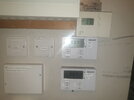
Basic wired on/off controls for water and CH (and RF thermostat) and another wired on/off for UFH (with wired room thermostat).

For the last few months, the CH ONLY has failed to come on when forced via the wired controls, or intermittently come on.
But I figured out it would send a signal to click on when I put the RF thermostat to sleep, then back on again - it would send a signal to click on; only via RF though. This then failed to work, which led me think it was the synchron motor on the motorised valve for the CH..I changed this. But it still wouldn't click on via the wired controls and again only via the RF sleepmode on/off.

It's mega odd. Any ideas?? Please and thank you!
 

Attachments

  • 20250121_205843.jpg
    20250121_205843.jpg
    158.2 KB · Views: 71
Inside the motorised valve is a microswitch. When the 3-port valve winds fully across to the heating only position it operates the microswitch and starts the boiler. It's not uncommon for the microswitches to become intermittent, sometimes they work and sometimes they don't. In such cases, sometimes deenergising the valve and reenergising it will get it to work.

If you are able to check it safely with a multimeter; when the valve is in the heating only position and under fault conditions, check for a live on the orange wire. No live and there's the problem.
 
Inside the motorised valve is a microswitch. When the 3-port valve winds fully across to the heating only position it operates the microswitch and starts the boiler. It's not uncommon for the microswitches to become intermittent, sometimes they work and sometimes they don't. In such cases, sometimes deenergising the valve and reenergising it will get it to work.

If you are able to check it safely with a multimeter; when the valve is in the heating only position and under fault conditions, check for a live on the orange wire. No live and there's the problem.
Hi thanks!

Can the microswitch be replaced without replacing the entire head?

Weirdly, I checked the it this morning by turning it on on the wired on/of control and it worked.
 
They are fairly standard microswitches, so you shouldn't have too much difficulty finding one. Possibly something like this. But check first.

Sometimes the switch doesn't operate because the motor is weak and doesn't exert the required pressure on it, but as you've already replaced the motor that shouldn't be the problem.
 
They are fairly standard microswitches, so you shouldn't have too much difficulty finding one. Possibly something like this. But check first.

Sometimes the switch doesn't operate because the motor is weak and doesn't exert the required pressure on it, but as you've already replaced the motor that shouldn't be the problem.
Hi again..
I've not changed the microswitch yet but I'm wondering if it really might be that..

Again, the wired control pictured didn't trigger the switch, but then after some fiddling it did. However, when I used the RF to trigger on/off, I could hear the RF receiver click but it wouldn't trigger the valve - again, after fiddling around it did.

It's almost like the controls are being weird. But do you still think it's a microswitch issue?
 
I've not changed the microswitch yet but I'm wondering if it really might be that..
The test will show if it is the microswitch or not. Personally I wouldn't go to the trouble of changing it without testing it first. And I've only changed a microswitch once on a two port valve, because I had an old valve on hand I could take it from. I usually assume that if the microswitch has failed then the rest of the valve, motor (not in your case though) mechanics and seals will also be ready for replacement, so change the whole lot.

If you are able to check it safely with a multimeter; when the valve is in the heating only position and under fault conditions, check for a live on the orange wire. No live and there's the problem.
And if it's not the microswitch, then it will be a matter of tracing the wiring back from the boiler to find out where it fails. Which will be more difficult.
 
The test will show if it is the microswitch or not. Personally I wouldn't go to the trouble of changing it without testing it first. And I've only changed a microswitch once on a two port valve, because I had an old valve on hand I could take it from. I usually assume that if the microswitch has failed then the rest of the valve, motor (not in your case though) mechanics and seals will also be ready for replacement, so change the whole lot.


And if it's not the microswitch, then it will be a matter of tracing the wiring back from the boiler to find out where it fails. Which will be more difficult.
test on orange and blue when switching on? Sorry, I'm not familiar with these components.
 
test on orange and blue when switching on?

Not when switching on, but when the heating only is set to be 'on' [make sure that the hot water switched off otherwise you may get spurious results] and the heating should be working, but isn't. (i.e. under fault conditions) I can't really be any clearer, I even underlined it for you. :giggle:

when the valve is in the heating only position and under fault conditions, check for a live on the orange wire. No live and there's the problem.

Then you would be looking for 230V between the orange wire, and a known neutral or earth required by the multimeter.

Also, as underlined check that the valve is wound fully across to the heating only position. If you can't tell, you can check for a live on the white wire to the motorised valve. Its presence would show that the controls are telling the valve to provide central heating. No live on the white wire means that the controls are not telling the valve to provide central heating.
 
Not when switching on, but when the heating only is set to be 'on' [make sure that the hot water switched off otherwise you may get spurious results] and the heating should be working, but isn't. (i.e. under fault conditions) I can't really be any clearer, I even underlined it for you. :giggle:


Then you would be looking for 230V between the orange wire, and a known neutral or earth required by the multimeter.

Also, as underlined check that the valve is wound fully across to the heating only position. If you can't tell, you can check for a live on the white wire to the motorised valve. Its presence would show that the controls are telling the valve to provide central heating. No live on the white wire means that the controls are not telling the valve to provide central heating.
Hi,
I've had some free time to mess about with the multimeter.

When checking the old synchron motor I changed, I'm getting resistance on it; this tells me it was actually fine.

I checked the microswitch, and when I manually press the switch in with power, it completes the circuit and fires the boiler. The only thing being that the manual latch doesn't reach far enough to keep it pressed in.

I then checked whether there's any voltage being supplied to the synchron motor from the wired controller (blue and brown). Nothing when clicking heating on both wired and RF controller.

I'm wondering if there's a return switch relay on the boiler itself?
 
If you're not getting any voltage across the brown and blue wires then the problem is with the controls and not the valve.
 
If you're not getting any voltage across the brown and blue wires then the problem is with the controls and not the valve.
So, I have a set of wired for ch and hw controls and one for UFH. When I switch the two and click the "heating" switch it still doesn't fire the ch valve.
The RF also doesn't trigger the ch "on".

So, I'm at a loss.. which is why I asked if there's a 240v return to the boiler from the controller/rf to the valve that's not triggering?
 
Last edited:
When checking the old synchron motor I changed, I'm getting resistance on it; this tells me it was actually fine.
You assumption is probably correct, but the reading you get just means that the windings aren't 'open circuit'. It doesn't necessarily mean the motor is working. For example you would still get that reading if the motor was seized. Although from what you say later it doesn't appear that the valve motor is causing the problem.

I checked the microswitch, and when I manually press the switch in with power, it completes the circuit and fires the boiler.
So the boiler is working fine. You now need to work out what's preventing the valve pressing the switch.

The only thing being that the manual latch doesn't reach far enough to keep it pressed in.
That's normal. The manual lever is primarily there to open the valve when the system is initially filled with water, or refilling after being drained. It wouldn't be good for the boiler to fire up during that process, so not triggering the switch is a good idea anyway.

I then checked whether there's any voltage being supplied to the synchron motor from the wired controller (blue and brown). Nothing when clicking heating on both wired and RF controller.
So as @Johnmdc says, it's likely that the controls are the problem. However, a 3-Port valve (Y-Plan) does have other internal components that could prevent a live reaching the synchron motor.

Reading your original post, I can't get my head around your system. You say it's a Y-Plan so that would have a '3-Port valve'. However, you then mention 3 valves in total? '3-Port valves' are normally installed on their own as they can never be fully closed off.

Anyway, the acid test is when the heating is calling heat, look for a live on:

Motorised valve white wire - If it's a 3-Port valve
Motorised valve brown wire - If it's a 2-Port valve

No live present when the heating should be calling for heat, then the controls are not telling the valve to open.
 
You assumption is probably correct, but the reading you get just means that the windings aren't 'open circuit'. It doesn't necessarily mean the motor is working. For example you would still get that reading if the motor was seized. Although from what you say later it doesn't appear that the valve motor is causing the problem.


So the boiler is working fine. You now need to work out what's preventing the valve pressing the switch.


That's normal. The manual lever is primarily there to open the valve when the system is initially filled with water, or refilling after being drained. It wouldn't be good for the boiler to fire up during that process, so not triggering the switch is a good idea anyway.


So as @Johnmdc says, it's likely that the controls are the problem. However, a 3-Port valve (Y-Plan) does have other internal components that could prevent a live reaching the synchron motor.

Reading your original post, I can't get my head around your system. You say it's a Y-Plan so that would have a '3-Port valve'. However, you then mention 3 valves in total? '3-Port valves' are normally installed on their own as they can never be fully closed off.

Anyway, the acid test is when the heating is calling heat, look for a live on:

Motorised valve white wire - If it's a 3-Port valve
Motorised valve brown wire - If it's a 2-Port valve

No live present when the heating should be calling for heat, then the controls are not telling the valve to open.
Hi thanks,

Sorry, I misspoke - S-Plan(plus?), not Y. I have three two port valves; one for hot water; one for heating and one for underfloor.

I checked the brown and blue coming from the controls (up to the 2 port valve) with a multimeter and wasn't getting anything when switching the heating on both on the wired control, and calling for heat via RF.

However, I switched the UFH wired controller with the CH/HW wired controller, as they're the same (as pictured above) to test if the CH controller was the issue but still wasn't getting anything - which is odd. It's as though something from the controller side leading back is causing a lack of voltage.
 
Not when switching on, but when the heating only is set to be 'on' [make sure that the hot water switched off otherwise you may get spurious results] and the heating should be working, but isn't. (i.e. under fault conditions) I can't really be any clearer, I even underlined it for you. :giggle:


Then you would be looking for 230V between the orange wire, and a known neutral or earth required by the multimeter.

Also, as underlined check that the valve is wound fully across to the heating only position. If you can't tell, you can check for a live on the white wire to the motorised valve. Its presence would show that the controls are telling the valve to provide central heating. No live on the white wire means that the controls are not telling the valve to provide central heating.
Hi,
So I've checked power to the valve, nothing. I've switch the valve with another working valve (from UFH) and still nothing.

I've also switched the wired controls around - UFH with CH and still no trigger voltage to the valve.

Anything else I'm missing? Return voltage/relay from the boiler?
 
Hi,
Anything else I'm missing? Return voltage/relay from the boiler?
The room thermostat / programmer control the motorised valve and then the microswitch inside the motorised valve controls the boiler. If the valve doesn't open then the boiler will not come on. That's a valve fault not a boiler fault. And after all, you tell us that the boiler is working when it gets a demand from the other valve.

If you're not getting any voltage across the brown and blue wires then the problem is with the controls and not the valve.

No live present when the heating should be calling for heat, then the controls are not telling the valve to open.

To trace the fault it will be a matter of following / tracing the live wire from the motorised valve that isn't opening, and finding out where the live has dropped out. I suspect that you may have to call a professional to do this for you.
 

If you need to find a tradesperson to get your job done, please try our local search below, or if you are doing it yourself you can find suppliers local to you.

Select the supplier or trade you require, enter your location to begin your search.


Are you a trade or supplier? You can create your listing free at DIYnot Local

 
Back
Top