

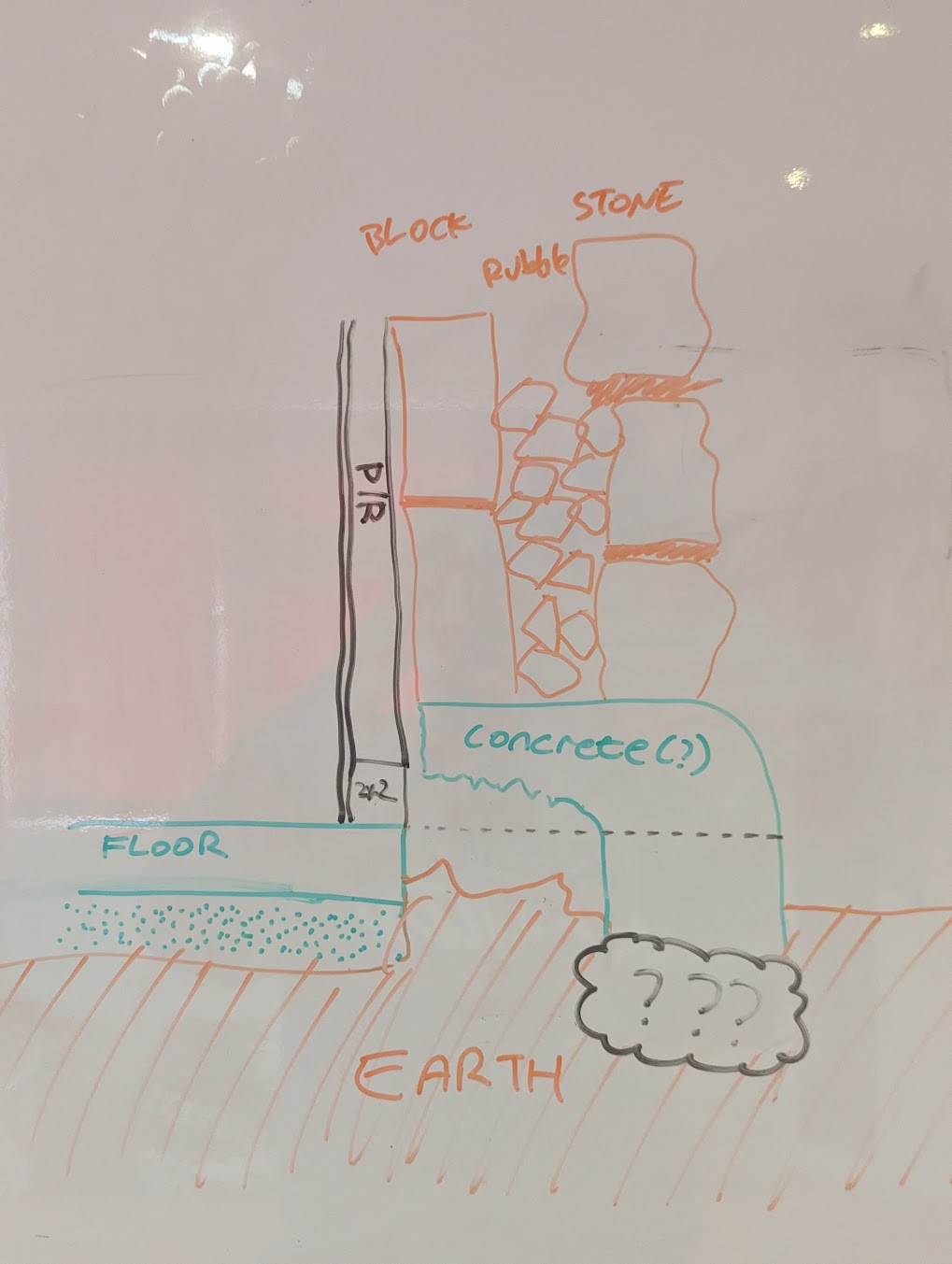
Howdy, I'm putting a doorway into a 19th century converted stone stable, unsurprisingly there's no proper foundation on the premises, and instead there's a concrete (ish.. honestly I didn't think buildings this old used concrete?) ring around which the original wall sits.
This ring was presumably originally a solid floor of sorts, of which the centre was removed and replaced with a habitable, insulated floor. For all intents and purposes the "home" is basically a wood and PIR box inside this structure.
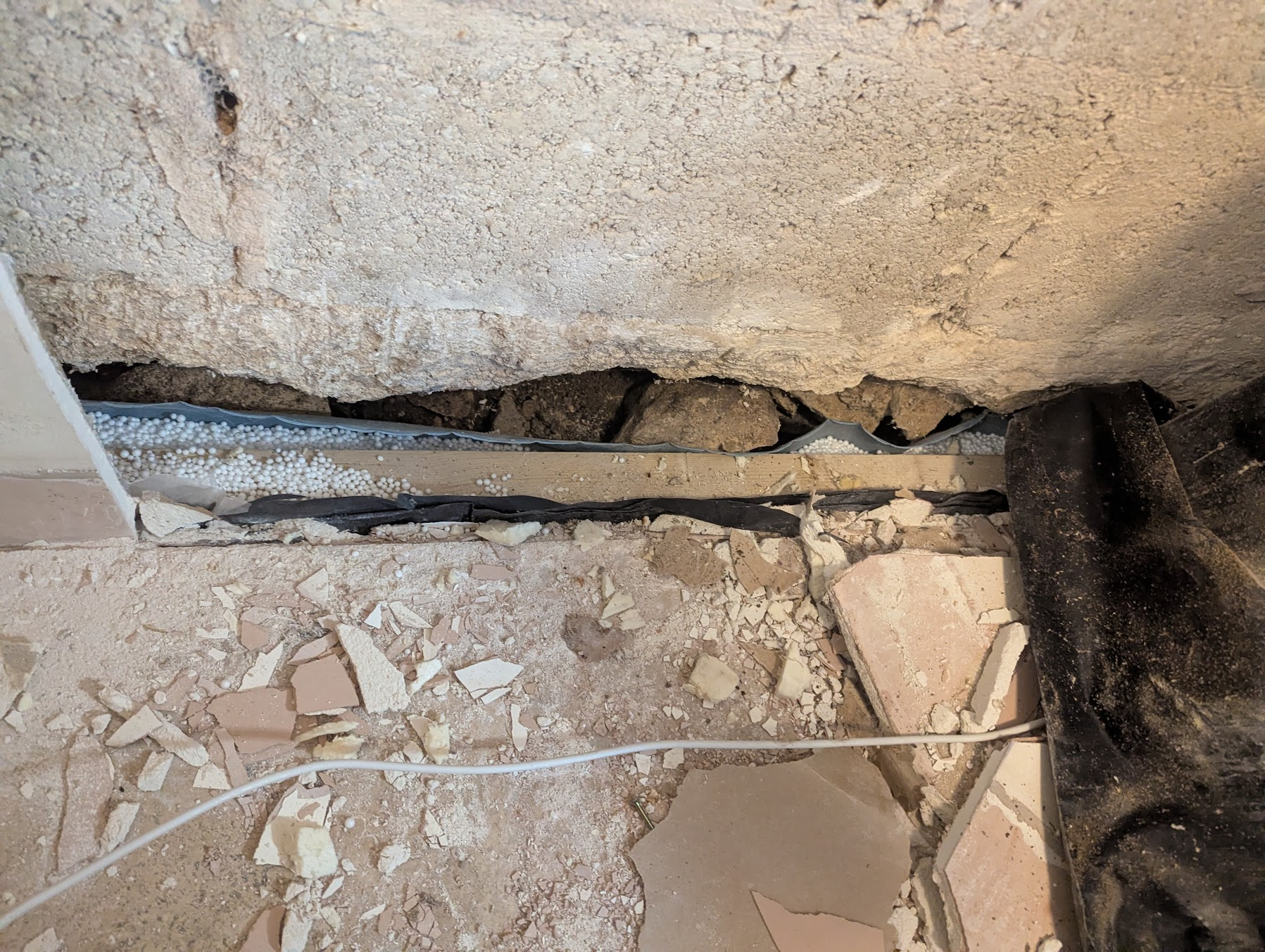
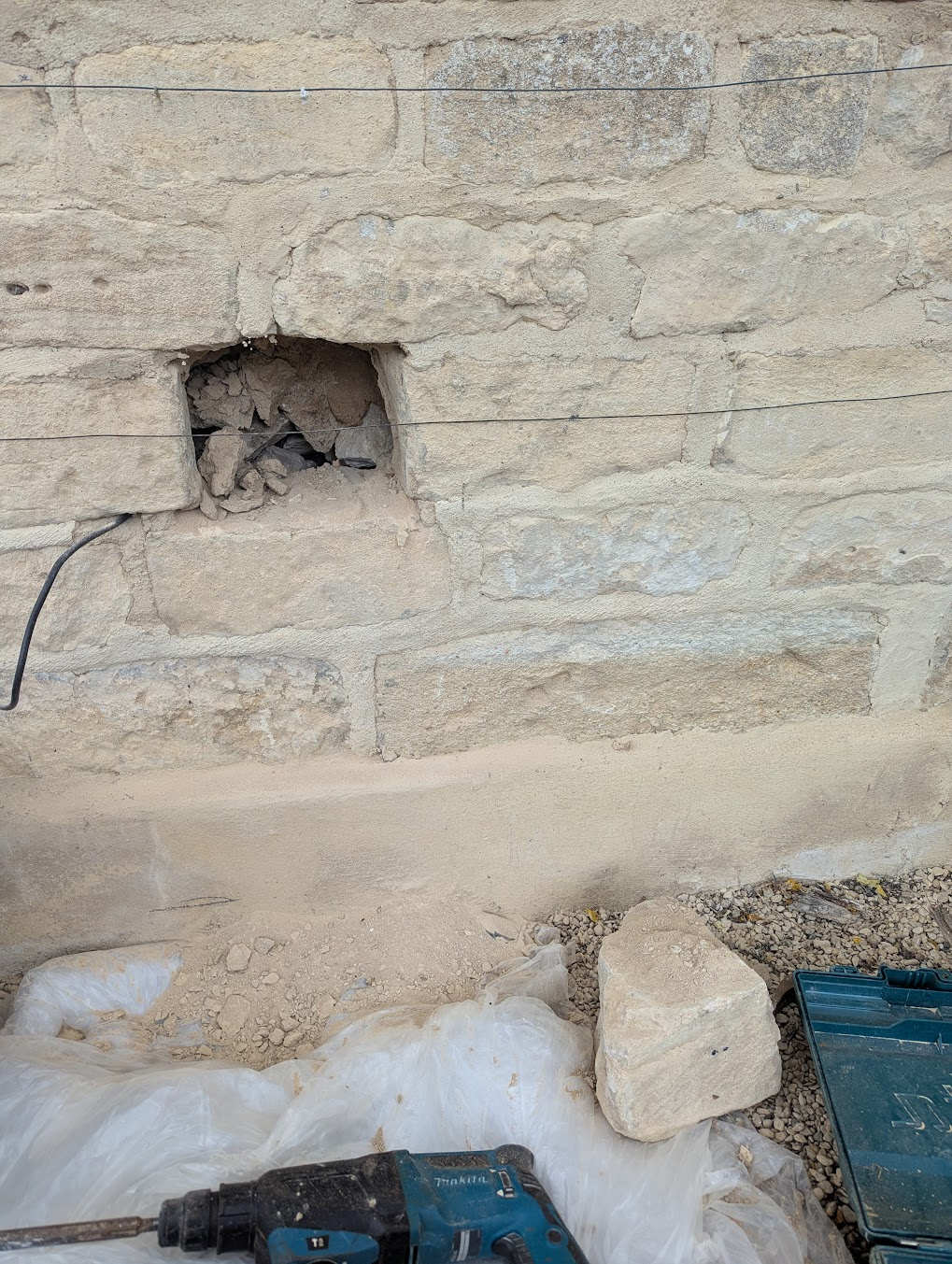
What's confusing / concerning me is that the inner layer of block work is apparently all resting on an "overhang" of concrete from the outside edge. Hopefully the photos and diagram below makes it make more sense.
And all's going well and clear in my head until I've come to look at removing the bottom section of the opening. I'm going to need to cut down into this non-foundation base to bring it down to floor level properly, and I'm just worried that there could be some form of risk to removing this concrete section.
Obviously the "floating" blocks in the doorway will go, so they won't be floating anymore, but to either side nothing is changing, and are still as heavy as ever, more so indeed given the change in weight distribution from the lintel I've already added.
I will of course have a whole at floor level, which I am expecting to fill with new concrete and keep it thermally connected to the stone, rather than the inside. It'd be something like a 2.5x1.5ft square, so thermally that's no huge problem, right? I could extend the insulated floor out, but that leads to less new concrete and less strength?
This extra concrete would be in a position to flow under the remaining overhang and fill the gap to a certain distance. Is this a good thing? should I try and push it down as far as I can? is it totally irrelevant and I should stop worrying about any of this? if it should be allowed to extend, should I be cleaning out as much as possible from the cavity? it's all damp soil and rubble down there.
This ring was presumably originally a solid floor of sorts, of which the centre was removed and replaced with a habitable, insulated floor. For all intents and purposes the "home" is basically a wood and PIR box inside this structure.
What's confusing / concerning me is that the inner layer of block work is apparently all resting on an "overhang" of concrete from the outside edge. Hopefully the photos and diagram below makes it make more sense.
And all's going well and clear in my head until I've come to look at removing the bottom section of the opening. I'm going to need to cut down into this non-foundation base to bring it down to floor level properly, and I'm just worried that there could be some form of risk to removing this concrete section.
Obviously the "floating" blocks in the doorway will go, so they won't be floating anymore, but to either side nothing is changing, and are still as heavy as ever, more so indeed given the change in weight distribution from the lintel I've already added.
I will of course have a whole at floor level, which I am expecting to fill with new concrete and keep it thermally connected to the stone, rather than the inside. It'd be something like a 2.5x1.5ft square, so thermally that's no huge problem, right? I could extend the insulated floor out, but that leads to less new concrete and less strength?
This extra concrete would be in a position to flow under the remaining overhang and fill the gap to a certain distance. Is this a good thing? should I try and push it down as far as I can? is it totally irrelevant and I should stop worrying about any of this? if it should be allowed to extend, should I be cleaning out as much as possible from the cavity? it's all damp soil and rubble down there.


