Hi all,
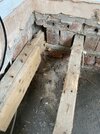
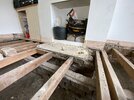
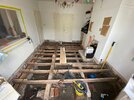
Made a big leap into renovation our dining room trampoline floor in my 1920s house. I mean suspended floor where the joists have bounce. However the more I see the more I wish I did not see.
Masonry bricks
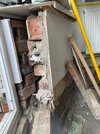
- Pretty much everything along the patio wall and into the alcove (predominately, facing externally, the area on left hand side) was damp to touch, not dripping. With what looks like hygroscopic salt.
Sleeper walls
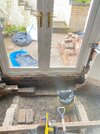
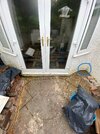
- timber plate - these are wet rotted as they meet the patio door. I have began to cut these back ready to be replaced. The original wall plate is 19 x 78 mm, and I have been struggling to figure out what is a suitable replacement. The following are thicker and I assume it can negate the difference with mortar thickness, but are these examples suitable? (1. https://www.wern-wood.com/products/...1&_sid=0314587bf&_ss=r&variant=55038974656836 or 2. https://www.wern-wood.com/products/...8980&pr_ref_pid=15018045899076&pr_seq=uniform)
- Brick work - As it meets the ratio area, I have began to take this down to re-mortar and place a new DPC.
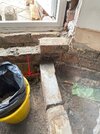
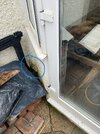
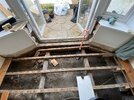
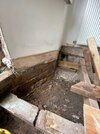
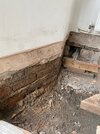
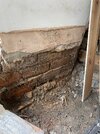
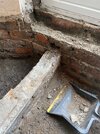
Patio door cavity & reveals (image 4)
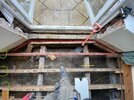
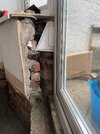
- The cavity space from left to right is completely full with build-up. I have taking the interior patio door wall down to the ground to clear out, and will re-lay these (post 3, image 9). The reveals are very clogged, and have only able to get half way into them.
- Bricks and mortar at the open lip of both the left and right cavity wall are weak, with a few bricks removable by hand.
- I plan to level off the face of the cavity opening, to better help when I come to cap the cavity with insulation along the edge, and not to block the cavity.
(image 6, post 2) Joist ends and party wall
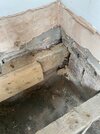
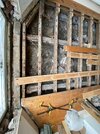
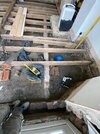
- 2 of 3 ends have fully rotted and failed
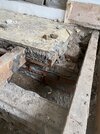
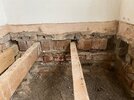
- Where I have truly hit the wall on this job, is the mortar failing on the party wall and really could do with pointing in the right direction.
- images 6a & 6a1, if you look closely, the mortaring of the bricks at joist level above the DPC have worn away and are essentially floating.
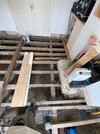
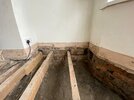
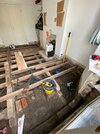
- I hope to build a new sleeper wall for the remedial of joist support, set in from the party wall in the alcove (see image 2), OR should i replaced the joists entirely and set them back into the original slots? (see post 2, image8)
The dimensions of C24 wood (47 x 100m is confusing me, as this differs to the original, older timber joist of 50 x 100.
- Could I go 47 x 125 and cut it down?
When re-mortaring, I plan to use lime or plasticiser additive where it has originally failed.
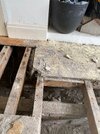
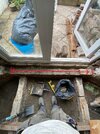
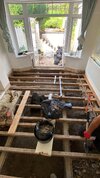
The crawl space was filled to the brim when I opened it, just over a tonne has been moved. One vent was blocked by build-up (image 3, left hand corner where recess meets alcove-party wall) and another was blocked intentional as part of historical work (see image 3, right hand side corner between recess and radiator) on the house prior to my existence.
Moisture is from poor ventilation and ground saturation from the outside, where water is draining poorly away from the exterior wall (will upload a picture tomorrow). I do plan to address the external drainage.
Air tightness and insulation
- I have 100mm mineral wool insulation to match the height of the joist
- Will utilise a breather membrane to stop wind washing and draughts. I know its a vented space below, where joists sit 340mm above the ground, however I want a degree of breathability for the hot summers as this has been the coolest room in the house for the past 3 years.
- 100mm PIR - planning to insulation below the radiator area for additional heat-loss prevention, and around however much along the patio-bay area as this would be the coldest area coming into the room.
Made a big leap into renovation our dining room trampoline floor in my 1920s house. I mean suspended floor where the joists have bounce. However the more I see the more I wish I did not see.
Masonry bricks
- Pretty much everything along the patio wall and into the alcove (predominately, facing externally, the area on left hand side) was damp to touch, not dripping. With what looks like hygroscopic salt.
Sleeper walls
- timber plate - these are wet rotted as they meet the patio door. I have began to cut these back ready to be replaced. The original wall plate is 19 x 78 mm, and I have been struggling to figure out what is a suitable replacement. The following are thicker and I assume it can negate the difference with mortar thickness, but are these examples suitable? (1. https://www.wern-wood.com/products/...1&_sid=0314587bf&_ss=r&variant=55038974656836 or 2. https://www.wern-wood.com/products/...8980&pr_ref_pid=15018045899076&pr_seq=uniform)
- Brick work - As it meets the ratio area, I have began to take this down to re-mortar and place a new DPC.
Patio door cavity & reveals (image 4)
- The cavity space from left to right is completely full with build-up. I have taking the interior patio door wall down to the ground to clear out, and will re-lay these (post 3, image 9). The reveals are very clogged, and have only able to get half way into them.
- Bricks and mortar at the open lip of both the left and right cavity wall are weak, with a few bricks removable by hand.
- I plan to level off the face of the cavity opening, to better help when I come to cap the cavity with insulation along the edge, and not to block the cavity.
(image 6, post 2) Joist ends and party wall
- 2 of 3 ends have fully rotted and failed
- Where I have truly hit the wall on this job, is the mortar failing on the party wall and really could do with pointing in the right direction.
- images 6a & 6a1, if you look closely, the mortaring of the bricks at joist level above the DPC have worn away and are essentially floating.
- I hope to build a new sleeper wall for the remedial of joist support, set in from the party wall in the alcove (see image 2), OR should i replaced the joists entirely and set them back into the original slots? (see post 2, image8)
The dimensions of C24 wood (47 x 100m is confusing me, as this differs to the original, older timber joist of 50 x 100.
- Could I go 47 x 125 and cut it down?
When re-mortaring, I plan to use lime or plasticiser additive where it has originally failed.
The crawl space was filled to the brim when I opened it, just over a tonne has been moved. One vent was blocked by build-up (image 3, left hand corner where recess meets alcove-party wall) and another was blocked intentional as part of historical work (see image 3, right hand side corner between recess and radiator) on the house prior to my existence.
Moisture is from poor ventilation and ground saturation from the outside, where water is draining poorly away from the exterior wall (will upload a picture tomorrow). I do plan to address the external drainage.
Air tightness and insulation
- I have 100mm mineral wool insulation to match the height of the joist
- Will utilise a breather membrane to stop wind washing and draughts. I know its a vented space below, where joists sit 340mm above the ground, however I want a degree of breathability for the hot summers as this has been the coolest room in the house for the past 3 years.
- 100mm PIR - planning to insulation below the radiator area for additional heat-loss prevention, and around however much along the patio-bay area as this would be the coldest area coming into the room.
Attachments
-
 2 WhatsApp Image 2026-05-31 at 21.50.46.jpeg399.4 KB · Views: 74
 -
 2a WhatsApp Image 2026-05-31 at 21.50.45.jpeg433 KB · Views: 75
 -
 3 WhatsApp Image 2026-05-31 at 21.50.50 (4).jpeg397 KB · Views: 57
 -
 4 WhatsApp Image 2026-05-31 at 21.50.51 (1).jpeg564.6 KB · Views: 72
 -
 4a1 WhatsApp Image 2026-05-31 at 21.50.48.jpeg413.5 KB · Views: 77
 -
 4a2 WhatsApp Image 2026-05-31 at 21.50.47 (2).jpeg646.4 KB · Views: 71
 -
 4a3 WhatsApp Image 2026-05-31 at 21.50.48 (1).jpeg709.1 KB · Views: 66
 -
 4b1 WhatsApp Image 2026-05-31 at 21.50.50 (3).jpeg772.9 KB · Views: 68
 -
 4b2 WhatsApp Image 2026-05-31 at 21.50.50.jpeg497.1 KB · Views: 76
 -
 1 WhatsApp Image 2026-05-31 at 21.50.46 (2).jpeg389.3 KB · Views: 76
Last edited: