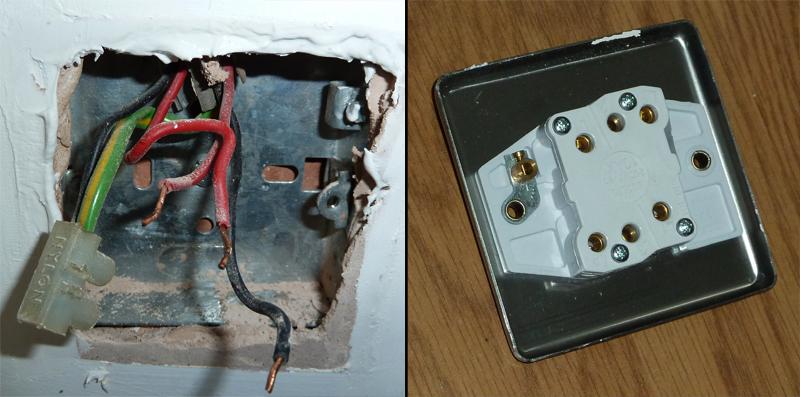
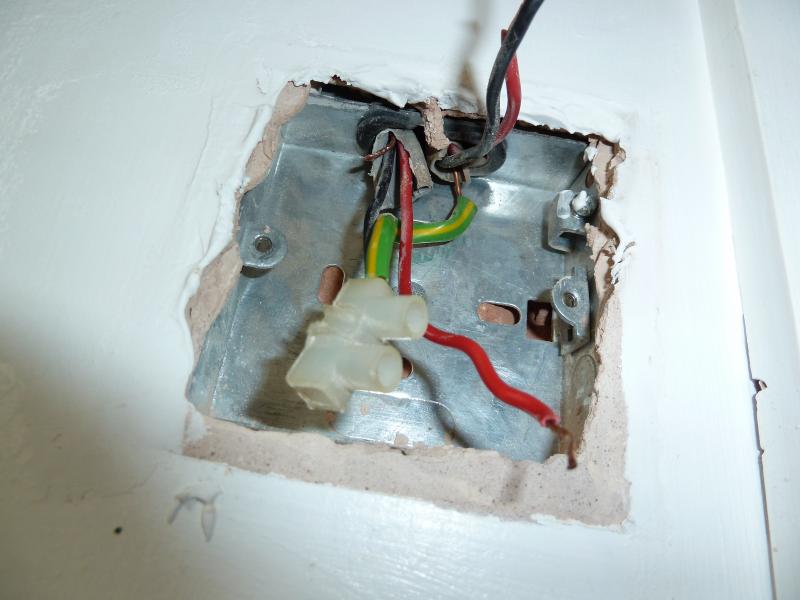
There was an additional wire connecting to two points on the original switch.
It sounds like you have one live and two switched live cores split across two cables. This is not uncommon, particularly when an additional light has been added to what was originally a one point switch. The additional wire connected across the switch was a strapper taking the live from one switch to the next. It will have been connected to the same point on the old switch as one of the cores - if you can remember which one that was then that is your live feed to the switches. That (and the strapper) would go into L1 on one of the new switches and the other end of the strapper into L1 on the other switch. The two remaining cores will be the switched lives and get connected to L2 on each switch.
If you can't remember which core is the live feed you can test for ~240V difference with earth with a suitable multimetre but don't do so unless you are confident in what you are doing. Given you have no neutrals at your switch you can also identify which core is which by numbering them and trying a pair at a time between L1/L2 on a single switch till you get a working pair, then swap one core for the one in the other cable and see if it switches the other light. Then reassemble all accordingly. (If you are confident enough to try that then make sure you terminate the core not being used in an insulated terminal/choc block just in case you have non-standard wiring or a fault in the cable. Obviously turn off the power between changes.)
If it was done properly to start with then it is likely the red core from the cable that had both cores and the earth terminated is the live feed, with the black core from the same cable the switched live for the first (original) light, and the second cable added later on to control the outside light. That is a guess though. If the outside light is DI and has no earth that might explain the cut off CPC on the same cable (although that is incorrect and should be rectified, I have come across that scenario before).
Whilst that black core that is connected to the CPC/earth of the other cable could be a neutral if the other light does not obtain it elsewhere, I would risk a guess that it is unused and has been tied to earth as it should be if a T&E core is unused. However it should be sleeved in green and yellow at both ends to show this, and it is not impossible that some incompetant fool has connected the other end of the CPC in the other cable to neutral as suggested above so you can't assume it is unused without testing.
The bare copper CPC that has been cut short on that cable must be connected to earth at both ends as well (or at least the supply end if the other end is a DI fitting). If you cannot safely pull more cable through and extend that wire then you may need to ask an electrician to extend it for you.
It needent cost much for a small call out by an electrician on their way home, and they could easily identify each of the cores and test that extra black core to determine if it just needs sleeving, or if it is actually a dangerous bodge. If you aren't confident you can test safely then don't take any risks - get an electrician to look for you.