
elv / lv afloat

Joined
24 Nov 2004
Messages
450
Reaction score
7
Country
United Kingdom
new requirements for fishing vessels.
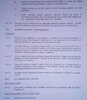
I am slightly perplexed, it seems that 4.8.2.3 indicates that we may be able to use eg a 48V test for a nominally 24VDC distribution arrangement as found on most fishing boats. or a 24V test for a nominally 12V vessel. But this would be in contradiction of 4.8.2.2 test shall use 500VDC.

My megger only goes as low as 250V for an insulation test. are there 24V insualtion testers?
 

Attachments

  • mca_DC.jpg
    mca_DC.jpg
    81 KB · Views: 103
The BS 7671:2008 said we needed RCD protection, it did not say except for SELV. It is clear there is no point having RCD protection with SELV some times we need to use common sense.
 
Fair enough, common sense.

I understand that "the possibility of damage" pertains to sensitive equipment such as computers, radio gear, radar, sounders etc that may well be permanently connected. In the case of a standard 24V DC workboat, I would expect older equipment to be rated max 32V (from memory, older wide-voltage stuff usually states 12-32V) and modern gear 10-40V.
twice 24V = 48V, so a possibility of damage to eqpt remains if testing at this level. (?)

I feel that it is common sense to disconnect the actual gadgets when making insulation tests, so why not just make that the damage caveat. just from hard experience I feel that pressurising a soggy 24V wiring at 48V is still not going to reveal any weak spots, which is why the Megger(tm) goes orders of magnitude higher.

maybe Im missing something?
 
Why do you IR test a 24v install?
What is the likely result of insulation failing at that voltage?
I doubt it's going to give anyone a shock?
 
new requirements for fishing vessels.
I am slightly perplexed, it seems that 4.8.2.3 indicates that we may be able to use eg a 48V test for a nominally 24VDC distribution arrangement as found on most fishing boats. or a 24V test for a nominally 12V vessel. But this would be in contradiction of 4.8.2.2 test shall use 500VDC.

My megger only goes as low as 250V for an insulation test. are there 24V insualtion testers?

It's saying test at 500VDC unless damage is likely, in which case it is acceptable to test at a lower voltage so long as it meets the alternate requirement for insulation resistance
 
Why do you IR test a 24v install?
What is the likely result of insulation failing at that voltage?
I doubt it's going to give anyone a shock?

Once in proximity to sea water, all bets are off. Remember we're just a bag of salty water and other bits, which has a low impedance. The skin is high enough impedance that we are generally protected from ELV electric shock, but if you are in sea water that no longer applies.
 
Once in proximity to sea water, all bets are off. Remember we're just a bag of salty water and other bits, which has a low impedance. The skin is high enough impedance that we are generally protected from ELV electric shock, but if you are in sea water that no longer applies.
must admit I hadnt really considered that. most people can certainly feel 24V if you are up to your waist in seawater but it's only uncomfortable, I wouldnt describe it as a shock. No idea what it would be like if you were up to your neck, I guess it could start to become dangerous then.
I thought this requirement was more of an anti-fire precaution, or simply a precaution against emergency equipment not working because of failing supply system.
 
must admit I hadnt really considered that. most people can certainly feel 24V if you are up to your waist in seawater but it's only uncomfortable, I wouldnt describe it as a shock. No idea what it would be like if you were up to your neck, I guess it could start to become dangerous then.
I thought this requirement was more of an anti-fire precaution, or simply a precaution against emergency equipment not working because of failing supply system.

Actually I had it slightly incorrect, the risk is higher with freshwater, since you apparently only need a voltage gradient of 6V/m to result in electric shock drowning. It's much more difficult to get that kind of gradient in salt water since it has a much lower impedance.

The usual effect is some muscle paralysis rather than cardiac arrest, so technically you don't die from electric shock.
 

If you need to find a tradesperson to get your job done, please try our local search below, or if you are doing it yourself you can find suppliers local to you.

Select the supplier or trade you require, enter your location to begin your search.


Are you a trade or supplier? You can create your listing free at DIYnot Local

 
Back
Top