- Joined
- 10 Mar 2025
- Messages
- 11
- Reaction score
- 1
- Country

My question pertains to ceiling insulation within Pitched & Flat Roof extensions, and downlights.
I bought an 80s house with a side extension (added ~8 years ago). The extension roof covers a dressing room (pitched roof, tiled) and en-suite bathroom (flat roof, fibreglass). Unfortunately didn't get any documents from the previous owners so I'm light on details regarding the construction. They seemed to think the planning/building regs sign-off was everything and that's all we got provided.
The dressing room has downlights (adjustable) that let terrible draughts through during winter storms.
The en-suite bathroom has proper IP-rated downlights (with gaskets) so no draughts, but it is BLOODY COLD in the winter (11c max).
I believe both are "Cold-roof" style (due to neighbour challenges to the height during planning).
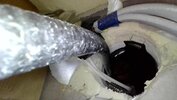
I stuck a boroscope up through the downlights to have a peek and take some pics. I'll add the second set of pics in the next post.
Extension 1, Dressing Room roof (pitched, tiled):
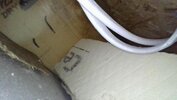
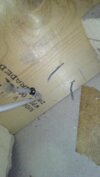
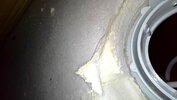
- It looks like this doesn't have much insulation, if any? Besides a thin layer of (foil backed?) foam(?) immediately against the ceiling, that the downlights attach through.
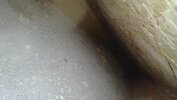
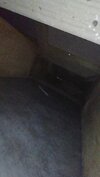
- The rest seems to be a void all the way through.
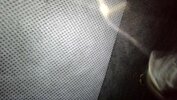
- The upper layer looks to be some sort of breathable membrane(?), then presumably the tiles above that.
Doesn't this need any sort of insulation at all up here? I know one needs to be mindful about moisture & leaving a void, but I'm concerned about heat loss, and the downlights have obviously breached what is there.
I'm planning on replacing all the downlights with fixed (non-adjustable) ones, (fire & insulation contact resistance rated, of course), that should at least help a bit. I need GU10 ones as we use smart bulbs, rather than the integrated LED type.
To prevent draughts, would that do, or do I need IP bathroom style ones (here in the dressing room), too? (As I know these have gaskets).
We'll be having some roofing work done soon, so presumably they'd be able to get at this from the top side, by removing the tiles / membrane, if needed.
I bought an 80s house with a side extension (added ~8 years ago). The extension roof covers a dressing room (pitched roof, tiled) and en-suite bathroom (flat roof, fibreglass). Unfortunately didn't get any documents from the previous owners so I'm light on details regarding the construction. They seemed to think the planning/building regs sign-off was everything and that's all we got provided.
The dressing room has downlights (adjustable) that let terrible draughts through during winter storms.
The en-suite bathroom has proper IP-rated downlights (with gaskets) so no draughts, but it is BLOODY COLD in the winter (11c max).
I believe both are "Cold-roof" style (due to neighbour challenges to the height during planning).
I stuck a boroscope up through the downlights to have a peek and take some pics. I'll add the second set of pics in the next post.
Extension 1, Dressing Room roof (pitched, tiled):
- It looks like this doesn't have much insulation, if any? Besides a thin layer of (foil backed?) foam(?) immediately against the ceiling, that the downlights attach through.
- The rest seems to be a void all the way through.
- The upper layer looks to be some sort of breathable membrane(?), then presumably the tiles above that.
Doesn't this need any sort of insulation at all up here? I know one needs to be mindful about moisture & leaving a void, but I'm concerned about heat loss, and the downlights have obviously breached what is there.
I'm planning on replacing all the downlights with fixed (non-adjustable) ones, (fire & insulation contact resistance rated, of course), that should at least help a bit. I need GU10 ones as we use smart bulbs, rather than the integrated LED type.
To prevent draughts, would that do, or do I need IP bathroom style ones (here in the dressing room), too? (As I know these have gaskets).
We'll be having some roofing work done soon, so presumably they'd be able to get at this from the top side, by removing the tiles / membrane, if needed.
Attachments
Last edited: