Fireplace / chimney stack

Joined
11 Nov 2019
Messages
443
Reaction score
22
Country
United Kingdom
Hi folks,

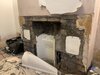
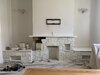
I had a terrible old 80s brick fireplace and I’ve just removed it (see pics)

the original 30s one was clearly removed before.

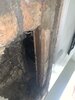
looking at it now, I expected to see a lintel or support above the hole for the chimney stack.

there are two massive bricks there.

can I check, this looks properly supported? I was just expecting it to look different.

also, I plan on cutting plaster board to cover the hole. Is this a good idea, any advice on best way to patch it up appreciated.

I would put a vent in it BTW

thanks
 

Attachments

  • 925A6414-AFAE-48C2-861F-F64CA796B8C4.jpeg
    925A6414-AFAE-48C2-861F-F64CA796B8C4.jpeg
    238.4 KB · Views: 283
  • 6B203225-B13E-4529-A7F8-36A10F98CC65.jpeg
    6B203225-B13E-4529-A7F8-36A10F98CC65.jpeg
    356.3 KB · Views: 265
I thought I could almost make out an angle iron lintel under those bricks, but maybe not. Yes You should put a lintel in if not
 
Is this a lintel? I was expecting something much more sturdy, this is only inch and a half by half an inch?
 

Attachments

  • D30831FC-F980-4C83-9DAD-F43D70D4C370.jpeg
    D30831FC-F980-4C83-9DAD-F43D70D4C370.jpeg
    286.6 KB · Views: 253
That’s your support, yeah. If it’s all still straight then I’d leave it alone. It’s only supporting a triangle of bricks above it, rather than any massive load. Otherwise known as a flat bar...
 
So, your idea is to remove the faux stone fire surround and the two wings?
And then block off the flue and make good to everything thats been disturbed?
You intend to use a piece of plaster board to cover the fireplace opening?

Whatever you block off with you must have a vent installed for through venting the flue from bottom to top.
It would also pay you to wire brush off all visible soot staining, and sweep the flue and smoke test it.

Whats happening with any other fireplaces or chimney breasts esp the fireplace in the room above?
 
So, your idea is to remove the faux stone fire surround and the two wings?
And then block off the flue and make good to everything thats been disturbed?
You intend to use a piece of plaster board to cover the fireplace opening?

Whatever you block off with you must have a vent installed for through venting the flue from bottom to top.
It would also pay you to wire brush off all visible soot staining, and sweep the flue and smoke test it.

Whats happening with any other fireplaces or chimney breasts esp the fireplace in the room above?

I don’t know about the flue, it’s as it was when I moved in and as it has been for probably 25 years.

it clearly allowed air up and down as soot would come out.

it seems dry in its current state.

when I took the faux bricks out a metal hatch fell out - very thin metal. I presume this was once meant to stop spot coming out but clearly wasn’t working.

so, given all seems well from damp perspective, the idea was just to board over the whole thing and put an air vent. It’s basically the same thing as now, but with vented p board.

Some soot May come down, but a lot came down when I removed the brick and nothing has come down since.

there is no fireplace upstairs there’s just a brick flue leading up to the chimney stack.

The idea is to board over the whole area - see the pic.

I’m planning on chipping off some of the ragged plaster up to a dog tooth line, boarding the whole thing and joining to the existing plaster.
 

Attachments

  • image.jpg
    image.jpg
    354.7 KB · Views: 254
So, your idea is to remove the faux stone fire surround and the two wings?
And then block off the flue and make good to everything thats been disturbed?
You intend to use a piece of plaster board to cover the fireplace opening?

Whatever you block off with you must have a vent installed for through venting the flue from bottom to top.
It would also pay you to wire brush off all visible soot staining, and sweep the flue and smoke test it.

Whats happening with any other fireplaces or chimney breasts esp the fireplace in the room above?

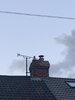
I don’t know if this helps but this is my chimney externally - it’s the one on the left.

I think that’s a cover isn’t it?
 

Attachments

  • 997E306E-4617-4C42-9FEB-48EC717DEFDC.jpeg
    997E306E-4617-4C42-9FEB-48EC717DEFDC.jpeg
    133.1 KB · Views: 241
fwiw: Is it possible that the upstairs fireplace has been totally blocked off?
Just seen the new pic - the chimney terminal on the roof stack is too blurred to say what kind it is but it seems to be doing the job.

The "metal hatch" was good building practice.
 
fwiw: Is it possible that the upstairs fireplace has been totally blocked off? Count the chimney pots on the roof stack?
The "metal hatch" was good building practice.


fwiw: Is it possible that the upstairs fireplace has been totally blocked off? Count the chimney pots on the roof stack?
The "metal hatch" was good building practice.

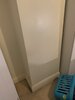
that’s what’s upstairs - I tapped it and solid throughout so assume heat was provided by the warmth of that rather an another fireplace.

I’m sure it was good building practice and I’m happy to fit another if it’s necessary.

I’m a novice and I haven’t got the dollar to pay professionals sadly
 

Attachments

  • image.jpg
    image.jpg
    107.1 KB · Views: 240
Well novice, your right, thats simply a chimney breast for a single flue.

thanks mate. I’ll clean it thoroughly with wire wool and make sure there’s a vent.

I’m still undecided on: can I adhesive the board on or does it need battens, or just battens for the hole?

also I’m not sure if it needs to be skimmed totally. The plaster above is sound. I was planning on taping and plastering the joins and then putting backing wallpaper all over (having sealed the plaster and the board) and then painting.

Any input appreciated.
 
.Adhesive will be fine for the boards . Only skim if you are confident plastering
 
Last edited:
OP,
Maybe i misunderstand you but dont touch the c/breast in the upper room, and only use a wire brush for soot cleaning.
Whether you use solid plaster or p/board - for a proper job you must skim and feather in to meet the old plaster.
 
Hi guys,

a little more help required on this one!

I now have 12.5mm plaster board

I am chipping away the surface of the unplastered chimney breast so it can fit the 12.5mm board as it has some humps current.

1. There are 2 bricks right at the top where the old plaster ends which jut out. I don’t want to mess around with it (it’s sitting on the lintel) so my idea is to cut a channel in the top of the plasterboard and skrim over

2. The surface below is uneven. I may get it back beyond 12.5mm but I doubt very much it will all be perfectly 12.5mm ready for the board - it’s going to be bumpy. I’ve been advised to use grip fill.

this is fine, but this board needs to be perfectly flush to the above wall. Is grip fill kind of flexible and can fill the gaps (ie if I bang a load in there, can it fill the gaps where the wall isn’t 12.5mm but maybe 13 or 15 mm deep? If so, what do you do, put a load of grip fill on it and then just wiggle it about till it’s flat?

I’ve never used grip fill and I’m worried the board will not sit level without a perfectly flat surface behind.

I’m considering using jointing compound to make the brick totally flat and as close to 12.5mm flat all the way.

or is gripfill maluable and easy to wiggle so its flat? If so, the amounts I see being used are small, I would need some serious lumps to make this happen.

some people have said dot and dab wall adhesive but many have said gripfil is better and does the same job.

help please!
 

If you need to find a tradesperson to get your job done, please try our local search below, or if you are doing it yourself you can find suppliers local to you.

Select the supplier or trade you require, enter your location to begin your search.


Are you a trade or supplier? You can create your listing free at DIYnot Local

 
Back
Top