
- Joined
- 20 Sep 2024
- Messages
- 10
- Reaction score
- 0
- Country

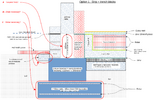
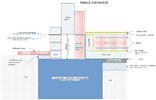
After being told my first idea was doomed to failure, I've come up with two alternatives, the first comprises a minimal strip and foundation blocks, and the second is a full fill trench. Building will be an unattached outhouse, non-Building Controlled, 3m tall brick-and-block home gym, with no drains or utilities nearby.
Could I have some opinions as to the designs? Does anything strike you as utterly wrong? What would you do differently, if you had a limited budget?
In particular, I'd appreciate some brief answers to the following :
A - the LABC says insulation should be suspended at least 225mm above the bottom of the cavity. How should I do that with batts? Is it safe to sit them on wall ties, or will they sag through over the years?
B - the top ~20 cm of the soil here is quite well drained. Do I need a French drain here, or is a trench of pebbles good enough? My goal is to reduce the water being held against the bricks.
C - for the first option only, would I need to reinforce the footings? The majority of the forces are compressive...
For a full-fill trench, how high should I fill? I'm considering 10cm below ground level, or 225-300mm below DPC. Is that sensible? In accordance with unofficial BC advice, trench will be at least 1m deep.
Insulation upstand - is 7.5cm too much?
I'm strongly leaning towards option 2; it'd be cheaper (additional 6M³ C30 is cheaper than 120 foundation blocks and rebar), easier and quicker (pour-tamp-wait versus laying 120 20kg blocks), and simpler (one pour versus mixer + cement + sand). Are there any good reasons to not trench fill?
Thank you!
Could I have some opinions as to the designs? Does anything strike you as utterly wrong? What would you do differently, if you had a limited budget?
In particular, I'd appreciate some brief answers to the following :
A - the LABC says insulation should be suspended at least 225mm above the bottom of the cavity. How should I do that with batts? Is it safe to sit them on wall ties, or will they sag through over the years?
B - the top ~20 cm of the soil here is quite well drained. Do I need a French drain here, or is a trench of pebbles good enough? My goal is to reduce the water being held against the bricks.
C - for the first option only, would I need to reinforce the footings? The majority of the forces are compressive...
For a full-fill trench, how high should I fill? I'm considering 10cm below ground level, or 225-300mm below DPC. Is that sensible? In accordance with unofficial BC advice, trench will be at least 1m deep.
Insulation upstand - is 7.5cm too much?
I'm strongly leaning towards option 2; it'd be cheaper (additional 6M³ C30 is cheaper than 120 foundation blocks and rebar), easier and quicker (pour-tamp-wait versus laying 120 20kg blocks), and simpler (one pour versus mixer + cement + sand). Are there any good reasons to not trench fill?
Thank you!
Attachments
Last edited:


