It can be toothed, but if the existing bricks are Imperial and the new are metric, the bed joints will probably be quite big.can the wall be toothed instead?

You are using an out of date browser. It may not display this or other websites correctly.
You should upgrade or use an alternative browser.
You should upgrade or use an alternative browser.
foundations yes or no?
- Thread starter richardmm
- Start date

Many builders refuse to tooth-in an extension. As it will move, and you'll then get a messy jagged crack and they'll get called back to sort the mess.
An extension starts life as some concrete poured into a trench. Then you add a couple of truckloads of materials on top so, inevitably, it will settle then usually stop moving. So you must allow this movement to happen. Also walls contain gallons of water initially, so can shrink as this evaporates. It's a tiny percentage but, over several metres of length this can add up to a few mm. Also, even years later, buildings do shrink and grow as the temperature changes.
Toothing in is for bricking up windows and doors, where the new brickwork sits on top of an existing old foundation or wall so won't move.
For an extension leave a clean vertical break, i.e. put the crack in deliberately from the start. Often a foam sheet is built in to ensure that nothing rigid bridges the gap. Fill with flexible sealant.
An extension starts life as some concrete poured into a trench. Then you add a couple of truckloads of materials on top so, inevitably, it will settle then usually stop moving. So you must allow this movement to happen. Also walls contain gallons of water initially, so can shrink as this evaporates. It's a tiny percentage but, over several metres of length this can add up to a few mm. Also, even years later, buildings do shrink and grow as the temperature changes.
Toothing in is for bricking up windows and doors, where the new brickwork sits on top of an existing old foundation or wall so won't move.
For an extension leave a clean vertical break, i.e. put the crack in deliberately from the start. Often a foam sheet is built in to ensure that nothing rigid bridges the gap. Fill with flexible sealant.
It’s not really recommended modern practice.can the wall be toothed instead?
An extension will be on its own foundation, separate to the house, so even though both might be stable, they may still move slightly, but not together. A wall starter has some degree of flexibility, toothed in brickwork does not.
It can as was on my extension on one side but wasn't on the otherside as the original brickwork sloped by about 40mm ( in 8m) so, either a poor level 70 years ago or a bad builder or perhaps the house has sunk??. Talking of sinking if the extension foundations settle slightly with toothing it will show up with visible cracks in the bricks at least with starter bars/joint its not so obviouscan the wall be toothed instead?

- Joined
- 13 Jan 2025
- Messages
- 114
- Reaction score
- 7
- Country

one question i posted this forum but i did not get much reply was on solid wall but it has small gap in middle why would this be? builder said not cavity but wall is solid but has very small gap in between
comparing to other old house i had it had solid wall but there was no gap in middle.
similiar thread i posted before but i still dont understand maybe someone here tell me thank you.

 www.diynot.com
comparing to other old house i had it had solid wall but there was no gap in middle.
similiar thread i posted before but i still dont understand maybe someone here tell me thank you.
Cavity wall damp
evening during the renovation we have decided to use external wall insulation as the house gets cold and it will create a nice texture from the outside. The builder has quoted around £9500. However I got questions People say ewi isn't suitable for cavity walls but my house is solid wall but...
www.diynot.com
When they built solid 9 inch walls in Stretcher bond, there would always be a 3/8 joint(known as the wall joint) in the centre. With English it was there on the stretcher course, but not on the header course.
The bricklayers made it easier for themselves when building a 9 inch wall with all stretchers by making the wall joint a bit bigger, around an inch. Was easier to get your fingers between the brick and face side when doing the back.
This type of wall was sometimes mistaken for a cavity wall. Some surveyors called it a finger cavity wall.
The bricklayers made it easier for themselves when building a 9 inch wall with all stretchers by making the wall joint a bit bigger, around an inch. Was easier to get your fingers between the brick and face side when doing the back.
This type of wall was sometimes mistaken for a cavity wall. Some surveyors called it a finger cavity wall.
- Joined
- 13 Jan 2025
- Messages
- 114
- Reaction score
- 7
- Country
hi again just wondering why is the bricks(on the left) bridged together in your picture? is it no bridging the dpc? thanks youDucting?
Most vents we fit today are telescopic and have to be extended down to the floor void as the vents sit just below the DPC....
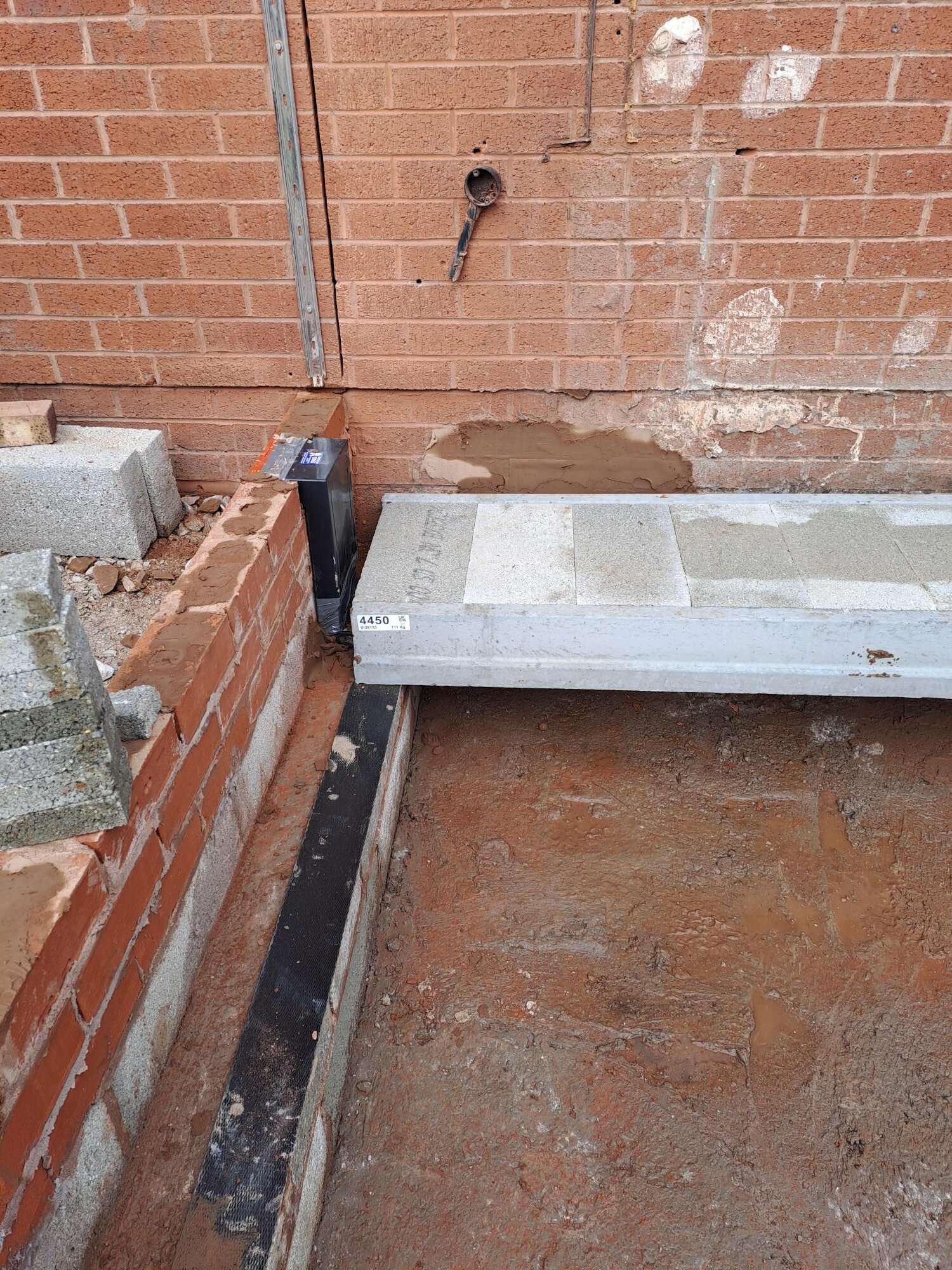

Cavities are usually filled solid up to within three courses of the DPC. Slightly different detail here with the B&B floor but still filled with lean mix concrete up to a given level.hi again just wondering why is the bricks(on the left) bridged together in your picture? is it no bridging the dpc? thanks you

DIYnot Local
Staff member
If you need to find a tradesperson to get your job done, please try our local search below, or if you are doing it yourself you can find suppliers local to you.
Select the supplier or trade you require, enter your location to begin your search.
Please select a service and enter a location to continue...
Are you a trade or supplier? You can create your listing free at DIYnot Local
Similar threads


- Replies
- 3
- Views
- 5K
