
incoming voltage is 288-291v

Joined
1 Mar 2011
Messages
1,002
Reaction score
23
Location
Telford
Country
United Kingdom
Hello

Inspired by recent similar posts i was surprised to read that 253v is near top of spec and cause for concern. It has aways been 245-254v at my house, but today i checked on two different circuits and it is fluctuating between 288v and 291v.

My multieter is not calibrated, but still...! I have access to another MM and i will take a reading with that later to verify.

So i guess i should i call my DNO?

Have had ccfl's failing lately also noticed that various transformers seem to be hotter than i remembered but thought nothing of it, until now!

Cheers
Mike
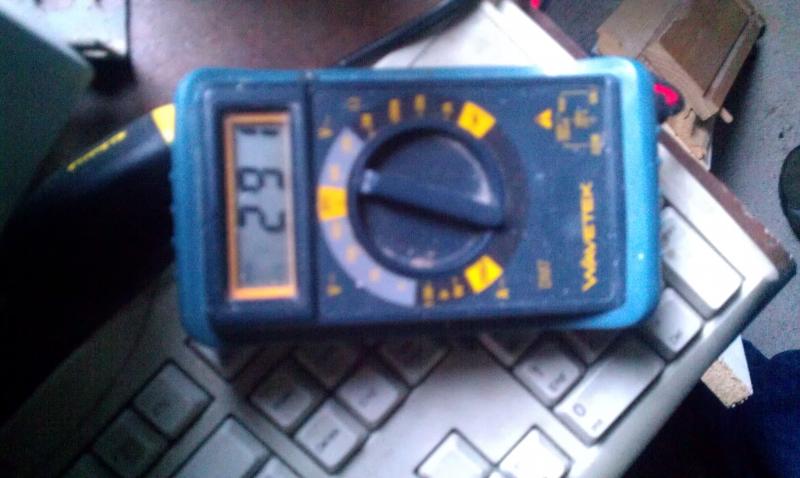


I have found cheapo multimeters gving readings in a similar range when the battery is running down
 
You will need to double check but if necessary get the DNO on board asap if you suspect that it is high as your electronic equipment will start failing pretty soon (and that could be the least of the problems if the fault lies with a neutral problem)
 
Yep be absolutely sure that reading is correct, check if neighbours are having problems, are you lights flickering a lot, if so you may have a neutral fault developing so must report that ASAP but be absolutely sure of that voltage reading to save on embarrassment if it's incorrect!
 
Thanks.. will get a 2nd meter and new battery - v good point.

Circumstantial but have noticed sparking /arcing sounds in last couple of weeks too, i.e. when switching lights and sockets off. MK gear and newish too.

Will update either way.

Thanks again.
 
as an aside
when the voltage was unified at 230v what actually happened to the 240v in the uk -----


--------nothing

they just moved the parameters from 240 + or -5%[228-252]to 230 -5-+10%[218-253
 
Erm 240V + or - 6% to 230V +10% -6% if you don't believe that check ESQCR

i do believe you the actual figures arnt important to the point :D
its more that nothing actually changed to any great extent just tinkering at the edges :lol:
 
its more that nothing actually changed to any great extent just tinkering at the edges

It was to provide harmonisation across the EEC at 230V (don't forget that some countries used 220V) It was recognised that to do this it would be a huge expense to change all the voltages to a base of 230 so the limits vary by country to keep, in effect, the status quo.
There were proposals at one time, since dropped, to allow the UK voltage to vary by +or-10%.
The upshot is that equipment purchased for use in Europe must operate over a large range with our 253 being the highest and I think 208 the lowest (230V -10% more or less). We have problems from time to time with imported equipment from the Far East that cannot operate towards the upper end of the scale so get high voltage complaints, often the purchasers get a shock when we point this out to them. (we had a huge issue with a group of schools that bought UPS equipment that tripped at 250V it was cheap but not CE certified)
 
Ok second multimeta cant be found but a brand new 9v battery fitted and i did a comparison reading at my mothers house, about 2 blocks away.

My house at 16:50 today was 249-251 (266 very briefly)

Mothers house was 233-235v

I think the multimeter is working ok, and at least the volts are lower than earlier now.

Am going to take a few readings throughout the day tomorrow but still seems kinda high

Cheers
Mike
 
My house at 16:50 today was 249-251 (266 very briefly)

249 - 251 is within limits and perfectly fine, as long as it does not go over 253v for more than 5% of the time when monitored over 7 days 266 is allowable.
As I asked on another thread have you or anyone near you got solar panels on the roof as they can drive the voltage up.
 
Time of the day will make a difference. To keep within limits during high demand means high voltage during low demand.

Induction controlled florescent units do take well over current with high voltage and fail to strike with low voltage. Where there is a big range using HF types will likely help.
 
My house at 16:50 today was 249-251 (266 very briefly)

249 - 251 is within limits and perfectly fine, as long as it does not go over 253v for more than 5% of the time when monitored over 7 days 266 is allowable.
As I asked on another thread have you or anyone near you got solar panels on the roof as they can drive the voltage up.

Thanks. Well funny you mention but a house at the other end of my street (probably 10 or so houses away though) has his entire south facing part of the roof covered in them, has done for about 18 months though.
 
249 - 251 is within limits and perfectly fine, as long as it does not go over 253v for more than 5% of the time when monitored over 7 days 266 is allowable.
As you probably realise, your recent mention ofbtheis "5% rule" came as somewhat of a surprise to a good few of us - who, maybe without having given too much thought to it, had rather assumed that 253V was an 'absolute maximum', regardless of duration. ... and this latest mention of "...when monitored over 7 days" increases the surprise, at least for me.

"5% of the time when monitored over 7 days" obviously alows the voltage to be >253V for 504 minutes (8.4 hours) during a 7-day period, on average 72 minutes per day. You now indicate that 266V 'is allowable' - so presumably 266V for continuous periods of 72 minutes every day would be regarded as OK - and (although seemingly unlikley), you would even accept 266V for a continuous period of 8 hours on one day per week.

Is there not some 'absolute maximum'? You say that 266V for up to 5% of the time would be allowable - but what about 270V, 280V, 290V, 300V or even 400V - would those all be theoretically 'allowable' provided those voltages were not, on average, supplied for more than 5% of the time? If there is no clear anyswer to that in rules/regulations/laws, then perhaps you could indicate was voltage you and your colleagues would consider 'unacceptable', even if it was only present for very brief periods (e.g. periods of a minute or two, or even just a few seconds) from time to time.

This must be somewhat of a concern because, particularly in this day of some much electronic stuff, equipment could be damaged with very brief periods of very high voltages - so consumers might be forgiven for expecting an 'absolute maximum', so that they knew what instantaneous voltages their equipment had to be specified to be able to tolerate.

Kind Regards, John
 
The 5% thing came as a total surprise to me when i was told of it a few months ago! Up till then I, as you, thought the 253V was the limit.

You ask what actually is the upper limit, a question I've not yet got answered myself. But as various parts of the industry seemed to have agreed to set the "tripping level" for UPS' and solar inverters at 266V I would work to that figure!

As for the time component we would still seek to have it over 253V for the shortest time possibly and certainly would not see a sustained voltage over a single period of time as acceptable. However for the occasional short time (up to me to decide when I look at a voltage recorder result) that did not add up to the 5% limit we would accept it!

The reference for this was BS 7697 which is now superseded by BS EN 60038:2011.
I did once find an explanation sheet for them but cannot see it now, and of course the good old UK wants to charge to download it!!
 

If you need to find a tradesperson to get your job done, please try our local search below, or if you are doing it yourself you can find suppliers local to you.

Select the supplier or trade you require, enter your location to begin your search.


Are you a trade or supplier? You can create your listing free at DIYnot Local

 
Back
Top