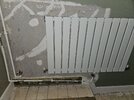
Inlet on radiator now on the opposite side

Joined
8 Dec 2008
Messages
235
Reaction score
1
Location
Kent
Country
United Kingdom
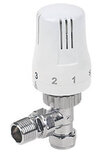
On my old radiator (probably installed 15 years ago) the trv was on the right hand side. The new rad has the inlet marked on the left. Before l cut and alter the pipework, can l assume the the flow pipe is the one that has the old trv on it, being it's fairly old?
Thank you.
 

Attachments

  • 20251030_103621.jpg
    20251030_103621.jpg
    411.1 KB · Views: 35
You can get bidirectional Trv valves.
Also you can swap valves around.

Normally the trv is on the inlet. Look for arrow on valve
 
You can get bidirectional Trv valves.
Also you can swap valves around.

Normally the trv is on the inlet. Look for arrow on valve
I have the trvs and it states they must be installed on the inlet.
Being quite old, l was thinking the old trv wouldn't be bidirectional meaning that is the flow/inlet pipe.
 
Not necessarily trv's have been bi directional for some time
Only way to be certain which is flow is to turn heating on and see which one gets hot first.
If your new rad is flow definitely marked it's important that's where flow goes in.
Probably a stupid question but do l need to open the valves and turn old trv up to max. The pipes are blanked off at the mo, but when the heating is turned on, both old pipes remain cold. Is that because the valves are closed? I thought the pipes would still get hot even with no rad connected.
 
In the main, radiators are plumbed in parallel, so turning one off, will not affect the others. The lock shield valve adjusts the speed the radiator can heat up at, which needs to be slower as to the speed at which the TRV can adjust the flow, or the room will over shoot causing a hysteresis in the temperature.

I found in my late mother's house, radiators with the TRV on the return needed the lock shield valve turning down more than when on the feed, as to why, is up for debate, it may have been due to the TRV heads fitted? It was claimed the heads have two sensors, one senses the water temperature the other the air temperature, the latter is the main control, the water temperature sensors will correct the air temperature one to allow for the heat direct from the radiators, I used the temperatures reported by the valve head, to set the lock shield valve. TRV_report.jpgThe current should not exceed the target, if it does, then the lock shield is too far open.
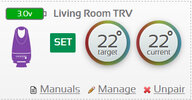
But when I started to use different makes of head, there was no reference to having two sensors, some only show target 1761823695414.png they were cheap at only £15 each in 2019, but most do seem to show both 1761824080662.png as you can see current has exceeded the target 1761824234852.png but because the set point has changed in the latter, no point heating a bedroom during the day. And if you set the lock shield too fine, it can slow how fast the rooms heats up. The 21°C is behind a settee which means it does get locally over temperature.

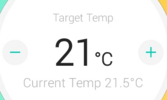
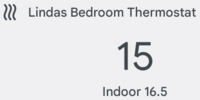
These TRV.jpgwork OK if the lock shield has already been set. But to set both TRV and lock shield when it does not show °C on the TRV is near impossible, one can use a differential thermometer on the in and out pipes, but an electronic head is likely cheaper, so easier to just move the electronic head TRV to TRV to set the lock shield valves.

 
but when the heating is turned on, both old pipes remain cold. Is that because the valves are closed? I thought the pipes would still get hot even with no rad connected.
No, if the radiator valves are turned off, with or without a radiator connected, there'll be no flow through the pipes or the radiator, so the connecting pipes will NOT get hot. How could they, when there is no flow through them?
 
If all the other radiators are the same type with the same valves and they all warm up TRV 1st, then chances are that one would be the same. That would have been the pipe layout the installer would have adopted when they were installed. If they are mixed then you would need to test that one.
 
Oh and do note - if the old rad was a convecting type, the new one probably won't heat the space as effectively as the new one. Unless the space is small and/or narrow.
 
As pointed out above, its important that the inlet is connected to the LH side if the RAD is labelled inlet here. I have all my (8) TRVs installed horizontally on the outlet as I think that will give a more representative room temperature than installed vertically on the inlet, also, even though all TRVs are bidirectional now, a unidirectional one would still be OK if installed in this manner, I had a unidirectional that lasted for decades before the actuator fell off after the plastic cracked.
 

If you need to find a tradesperson to get your job done, please try our local search below, or if you are doing it yourself you can find suppliers local to you.

Select the supplier or trade you require, enter your location to begin your search.


Are you a trade or supplier? You can create your listing free at DIYnot Local

 
Back
Top