• Looking for a smarter way to manage your heating this winter? We’ve been testing the new Aqara Radiator Thermostat W600 to see how quiet, accurate and easy it is to use around the home. Click here read our review.

Insulation above roof membrane

Joined
12 Oct 2024
Messages
6
Reaction score
0
Country
United Kingdom
Hi all,

We’ve recently moved into an 8 year old house and, as expected with the damp weather and snow, have noticed an issue where our property joins with the semi-detached neighbour.

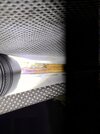
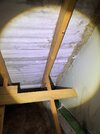
There seems to be insulation above the felt and below the tiles, and this area has become damp. I’m not sure if this is normal as I assumed there should be a gap.

Could this be a leak, ie a cracked tile, or is the insulation causing issues, meaning the whole area will need to be replaced? The rest of the felt is dry away from this area.

Any help would be much appreciated as we can explore the NHBC warranty if this is a defect. Apologies for the photos, it was tricky to try and describe what the issue is.

Thanks!
 

Attachments

  • IMG_4541.jpeg
    IMG_4541.jpeg
    340.8 KB · Views: 152
  • IMG_4540.jpeg
    IMG_4540.jpeg
    240.4 KB · Views: 107
Firstly you should forget about NHBC, they won't be interested in this in the slightest.

Anyway, you not normally have insulation above the membrane. I don't really understand what that second photo is showing?
 
It was tricky to try and get a photo under the felt given the lighting and tiny gap, but I was hoping to show the yellow insulation and dampness present on the roofing timbers.
 
Yes could be, difficult to tell. But then you'd expect a roof with the correctly specified tiles to have little rain getting through to the membrane anyway. Does this only occur in this single area or anywhere else? Is it wet to touch?
 
Only on the north side of the roof, near the dividing wall, where I can feel insulation above the felt.

The rest of the felt for the entire roof is dry, and all of it is of the same “tightness”.

I may ask our usual roofer to have look and see if there’s any clear breakage on the outside.
 
Where catlad is coming from is that when the membrane is pulled taught that leaves no gap between the membrane and the battens for rain to drain through, and when rain sits on a roofing membrane it can soak through.
 
This may better explain the issue:


It seems the builders have installed mineral wool (maybe) above the underlay, and this is possibly creating the damp? I’m just surprised as it is seems this is exactly what should be done.

Again will get a roofer to inspect outside to see if I can see the root cause.
 
That should only occur directly above the party wall, so if the party wall was say 300mm wide the insulation would also be only 300mm.
 
A bit late to reply to this, but we finally had a roofer inspect the outside with no cracks or issues present that they could see.

They lifted some of the tiles to see the mineral wool above the firewall but it wasn’t clear how the water was getting in. This wool was wet on the north side of the house.

Is it possible condensation is causing this wool to become wet, and this is where the dampness originates through the felt?

I do not want to remove the wool if this is required for fire regulations so maybe moving it so it exists only above the firewall, as freddiemercurystwin suggested?

Might be time to get a specialist roofing surveyor to take a look?

Thanks.
 
Warm air, passing from inside to outside is condensing within the insulation as it hits the colder air. Best to rip it out, you need a better system. Perhaps running a line of intumescent expanding foam over the party wall, but it doesn't need to come over onto your side, an inch at most.
 
We have experienced exactly the same problem on a house built in 2016. We Roofed it but unknown to us the builder had pushed in firewool against the membrane. The condensation mimicked a roof leak. We had never seen so much moisture, and at first did not believe the concept of so much moisture caused by the firebreak material touching the tyvek, even though there were overfascia vents and rafter trays present. We d coded to rip all the firebreak out, and so far the concentration of moisture in that area has diminished, so hopefully it will now be ok
 

If you need to find a tradesperson to get your job done, please try our local search below, or if you are doing it yourself you can find suppliers local to you.

Select the supplier or trade you require, enter your location to begin your search.


Are you a trade or supplier? You can create your listing free at DIYnot Local

 
Back
Top