Good question — the EN 12004 classification confuses a lot of people because the codes look similar but mean very different things.
C2TE means: cementitious (C), improved bond strength ≥1 N/mm² (2), reduced slip (T), extended open time of 30 mins (E). Quality general-purpose adhesive.
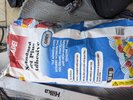
S1 / S2 means: deformability classification — S1 = 2.5-5mm transverse deformation, S2 = above 5mm. This is the FLEX class, completely separate from the C2TE designation. An adhesive can be C2TE without being S1, like the Mapei product you bought.
When does S1/S2 actually matter? Three situations:
1. Substrates with movement potential — plywood, OSB, suspended floors, thin screeds (yours: hardiebacker is rigid, movement is minimal)
2. Underfloor heating — thermal cycling needs flex tolerance
3. Large format porcelain above 40x40cm — rigid adhesive concentrates stress at edges
Tech support's advice — no flex needed on hardiebacker for porcelain — is technically correct IF: no UFH, format under 40x40cm, residential traffic only. The board is dimensionally stable enough.
simplesteve's "spend the extra fiver" advice is also valid because it removes the ambiguity. C2TE-S1 covers all bases — same product, slightly more expensive, no edge cases.
For your bathroom (porcelain on hardiebacker, no UFH, standard format) — C2TE works. For peace of mind on a job you'll only do once — use the flex.
One detail the data sheet matters for: open time. Mapei standard C2TE has 30 mins, fast-set has 10-15. Standard set is what you want for porcelain in a small bathroom — gives you room to adjust.
I write a weekly newsletter called Built by Chemistry — easy to find on Google.



 www.wickes.co.uk