
I've attached a picture of a damp problem I have in the roof of my property which has a flat roof. Can anyone tell me if the wood is infected and if so with what?

You are using an out of date browser. It may not display this or other websites correctly.
You should upgrade or use an alternative browser.
You should upgrade or use an alternative browser.
Is the joist infected with something?
- Thread starter boilerfrustration
- Start date

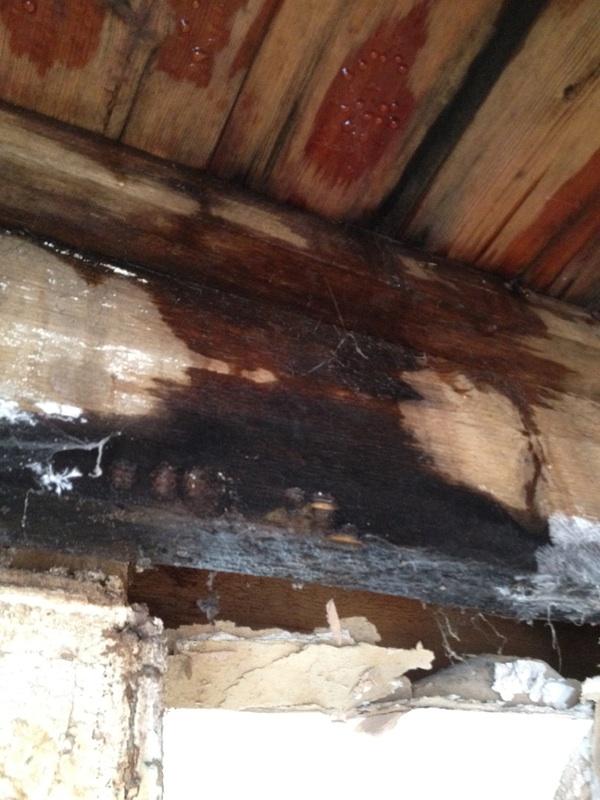


yes, it is rotten and has to come out. You can mend the leaky roof at the same time. It has obviously been wet for a long time.
to me it looks like wet rot, I can't see cracking into cubes, but you don't always see the fruiting bodies and strands of dry rot, look at some online images and descriptions before you start to hack it out. http://lmgtfy.com/?q=dry+rot
the cobwebby stuff at the bottom doesn't look good http://www.wisepropertycare.com/dry-rot/what-is-dry-rot/identify/
if it is dry rot, you need to take extra care to spray, bag up, burn or wash all contaminated material, and to soak the replacement timber in preservative. I use Cuprinoll.
to me it looks like wet rot, I can't see cracking into cubes, but you don't always see the fruiting bodies and strands of dry rot, look at some online images and descriptions before you start to hack it out. http://lmgtfy.com/?q=dry+rot
the cobwebby stuff at the bottom doesn't look good http://www.wisepropertycare.com/dry-rot/what-is-dry-rot/identify/
if it is dry rot, you need to take extra care to spray, bag up, burn or wash all contaminated material, and to soak the replacement timber in preservative. I use Cuprinoll.
It's infected with water
beat me too it,

johnd may well be correct but we are offering an opinion by 1 pic,it mat be ok to stop the inital ingress of moisture and allow it to dry out then inspect it to see how bad any rot is,if it appears to be solid then you could get away with treating the timber/surrounding area.with some preservative.
I have uploaded a second photo of the same joist but viewed from a distance so that you can see problem in context. The wall on the corner is also affected by water ingress. Having read your comments and looked on line, I'm worried by the white cob web looking stuff and worried it might be dry rot.

Thats the beginnings of "dry rot". It doesn't yet require the wood to have begun rotting, or displaying the classic cuboidal pattern. The thin white strands can begin growing and spreading at an early stage.
I would remove the wall plaster board both sides of the outside corner in the second pic, and any ceiling board that shows signs of leaking damage. Examine what is revealed or post pics back to here.
As you already know, you will have to have the roof coverings repaired or stripped and replaced. The whole flat roof installation will require upgrading to modern standards which will involve removing all the ceiling board.
The conditions for dry rot are there:
dark, unventilated space with moisture laden vapour penetrating from below.
Moisture content in excess of 20% and the white hyphae strands. Wet rot hyphae are browny-yellowish; a distinguishing feature from dry rot hyphae.
OP, there's no reason to worry, it's a simple matter to clear up without major work req'd beyond what is already req'd with the roof leaks.
I would remove the wall plaster board both sides of the outside corner in the second pic, and any ceiling board that shows signs of leaking damage. Examine what is revealed or post pics back to here.
As you already know, you will have to have the roof coverings repaired or stripped and replaced. The whole flat roof installation will require upgrading to modern standards which will involve removing all the ceiling board.
The conditions for dry rot are there:
dark, unventilated space with moisture laden vapour penetrating from below.
Moisture content in excess of 20% and the white hyphae strands. Wet rot hyphae are browny-yellowish; a distinguishing feature from dry rot hyphae.
OP, there's no reason to worry, it's a simple matter to clear up without major work req'd beyond what is already req'd with the roof leaks.
Fair enough:
1. If it's not dry rot, what are your reasons for saying that it's not dry rot?
2. What do you guys think it is, and what are your reasons for thinking that?
1. If it's not dry rot, what are your reasons for saying that it's not dry rot?
2. What do you guys think it is, and what are your reasons for thinking that?
google is your friend,
https://www.google.co.uk/search?q=w...QGImohAfg2YHoCg&ved=0CD0QsAQ&biw=1600&bih=754
a quick look and there are a few pics VERY SIMILAR to yours.
it looks to wet to be dry rot,there doesnt appear to be any cuboidal cracking etc
as i and others have said dry out affected area by fixing your leak,keep a close eye on it and then give it a spray with some decent preservative.
https://www.google.co.uk/search?q=w...QGImohAfg2YHoCg&ved=0CD0QsAQ&biw=1600&bih=754
a quick look and there are a few pics VERY SIMILAR to yours.
it looks to wet to be dry rot,there doesnt appear to be any cuboidal cracking etc
as i and others have said dry out affected area by fixing your leak,keep a close eye on it and then give it a spray with some decent preservative.

DIYnot Local
Staff member
If you need to find a tradesperson to get your job done, please try our local search below, or if you are doing it yourself you can find suppliers local to you.
Select the supplier or trade you require, enter your location to begin your search.
Please select a service and enter a location to continue...
Are you a trade or supplier? You can create your listing free at DIYnot Local
Similar threads


- Replies
- 2
- Views
- 2K
