
Hello, hoping an expert can help here with the little information i have. John Lewis JLWM1607 washing machine (914555205/00) wont spin, or conks out on a spin ,motor whirs, panel goes off then off also a bit of clicking. I understand this motor is brushless. Trying to determine if it is an easy repair or a new one required. Drum replaced on it after 2 years back in 2021. I bought in 2019.

You are using an out of date browser. It may not display this or other websites correctly.
You should upgrade or use an alternative browser.
You should upgrade or use an alternative browser.
John Lewis JLWM1607 washing machine not working
- Thread starter Steve Bee
- Start date
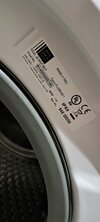

Based on those symptoms, I wouldn't rush out and buy a replacement washing machine just yet. There are a few possible faults here, and some could be relatively straightforward and inexpensive to repair.
The fact that the motor is brushless is useful information because it rules out the usual worn carbon-brush problem found on older washing machines.
Your symptoms are particularly interesting:
One useful discovery: the JLWM1607 is listed in the Electrolux parts system, and there are separate electrical and inverter-related components available in the parts catalogue. So this isn't necessarily a case of replacing the entire motor assembly.
shop.electroluxarabia.com+2
You can see the machine's parts here:
Don't keep repeatedly attempting spin cycles if the control panel is actually losing power. Unplug the machine before any inspection, and leave electrical testing to someone suitably qualified.
I'd be particularly reluctant to replace it without checking the inverter and control electronics first. A failed electronic module could be a repairable fault, although the cost of a replacement board needs weighing against the machine's age.
The manufacturer documentation also includes diagnostic information for communication failures between electronic components and drainage faults.
1. When it attempts to spin, does the drum actually rotate? For example, does it start turning slowly, make a whirring noise and then stop, or does the motor whirr without the drum moving?
2. When the control panel goes off, does it completely reset? In other words, does it come back on displaying the original programme, or does it simply go blank momentarily and resume?
3. Does it complete a normal wash and rinse? Is the problem exclusively when it reaches the final spin?
4. Can you turn the drum by hand easily when the machine is switched off? Does it feel smooth, or is there any resistance, grinding or unusual noise?
My initial suspicion would be an electrical control/inverter issue rather than immediately assuming the motor has failed.
If you can answer those four questions, I can help narrow down which components are worth investigating and, importantly, whether this looks like a sensible repair or whether your money would be better spent on a replacement.
The fact that the motor is brushless is useful information because it rules out the usual worn carbon-brush problem found on older washing machines.
Your symptoms are particularly interesting:
- The motor makes a whirring noise but the machine doesn't complete its spin.
- The control panel switches off and then appears to come back on.
- There is some clicking.
- The drum was replaced in 2021, so the machine has had a significant repair previously.
What I think could be wrong
For this particular machine, I'd investigate the following in roughly this order.| Possible fault | Likelihood / reasoning |
|---|---|
| Motor inverter/control module | Worth investigating. This controls the brushless motor and could cause the motor to attempt to run, then stop. |
| Motor wiring or electrical connection | A loose, damaged or heat-affected connector could interrupt communication or power to the motor. |
| Drain pump or drainage blockage | If water isn't being removed properly, the machine may refuse to enter the spin cycle. |
| Motor itself | Possible, but I wouldn't condemn it just because it whirs without spinning. |
| Main electronic control board or power supply | Particularly worth considering because you describe the control panel going off and restarting. |
shop.electroluxarabia.com+2
You can see the machine's parts here:
- JLWM1607 spare parts – FixPart
- JLWM1607 exploded diagrams – Ransom Spares
- Electrolux parts and technical documentation
A few checks before spending any money
- Does it drain properly? Try a spin cycle with the drum empty. Check whether the water is pumped out first.
- Does the drum turn at all? Does it rotate slowly and then fail when it tries to accelerate, or does it remain completely stationary?
- Does the display completely go blank? Or does it just switch off momentarily before restarting?
- Does it happen immediately? Or does the machine run through the wash and rinse cycles perfectly before failing at spin?
Don't keep repeatedly attempting spin cycles if the control panel is actually losing power. Unplug the machine before any inspection, and leave electrical testing to someone suitably qualified.
My advice: don't replace it until it's been diagnosed
The machine was purchased in 2019, so it's around seven years old. Although that's getting on, it's not necessarily at the end of its useful life.I'd be particularly reluctant to replace it without checking the inverter and control electronics first. A failed electronic module could be a repairable fault, although the cost of a replacement board needs weighing against the machine's age.
The manufacturer documentation also includes diagnostic information for communication failures between electronic components and drainage faults.
Can I ask you four questions?
These will help narrow it down considerably.1. When it attempts to spin, does the drum actually rotate? For example, does it start turning slowly, make a whirring noise and then stop, or does the motor whirr without the drum moving?
2. When the control panel goes off, does it completely reset? In other words, does it come back on displaying the original programme, or does it simply go blank momentarily and resume?
3. Does it complete a normal wash and rinse? Is the problem exclusively when it reaches the final spin?
4. Can you turn the drum by hand easily when the machine is switched off? Does it feel smooth, or is there any resistance, grinding or unusual noise?
My initial suspicion would be an electrical control/inverter issue rather than immediately assuming the motor has failed.
If you can answer those four questions, I can help narrow down which components are worth investigating and, importantly, whether this looks like a sensible repair or whether your money would be better spent on a replacement.
The washing machine wont complete a 14 min spin cycle. The last batch clothes were wet. The panel does turn on but flashed off when trying to push out the spin cycle. Sounded like motor was pushing not not much happening and panel flashed off and then back on once.

Needs a new belt?
Answering questions above.. i can easily turn drum by hand and does not sound like anything is grinding away. It no longer completes a cycle, seems to stall,fight with itself, panel flashes off and then on once, whirring maybe the drum turns and then stops moving. Didnt think to look but think The panel when goes off does not reset although I will check again later.


DIYnot Local
Staff member
If you need to find a tradesperson to get your job done, please try our local search below, or if you are doing it yourself you can find suppliers local to you.
Select the supplier or trade you require, enter your location to begin your search.
Please select a service and enter a location to continue...
Are you a trade or supplier? You can create your listing free at DIYnot Local
Similar threads

- Replies
- 2
- Views
- 2K