Log periodic aerial elements length

Joined
17 Apr 2007
Messages
2,690
Reaction score
144
Country
United Kingdom
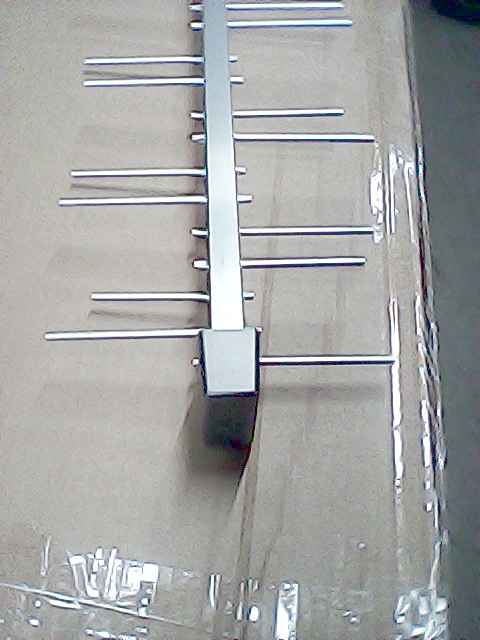
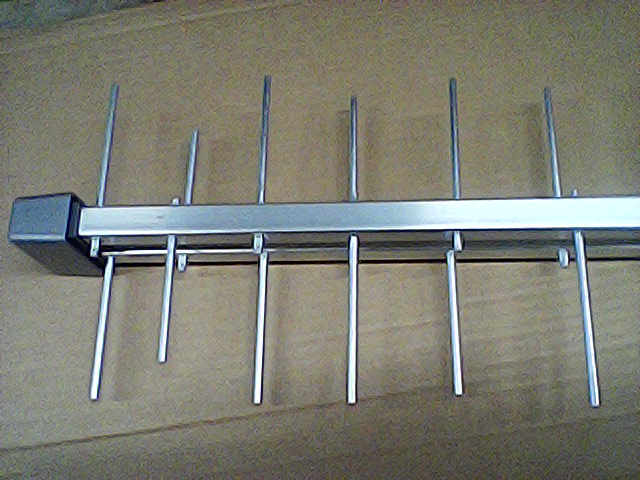
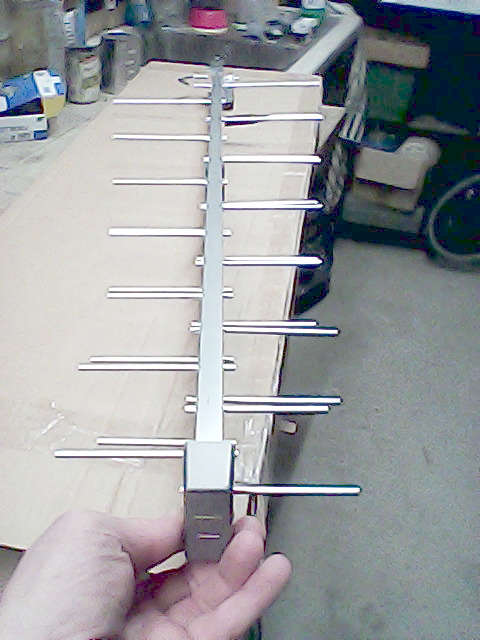
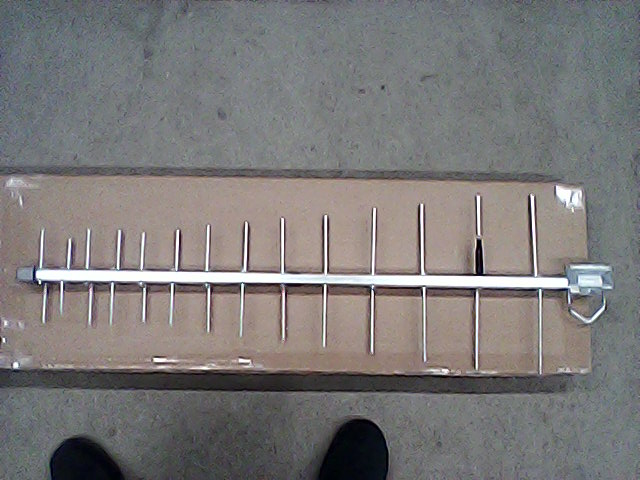
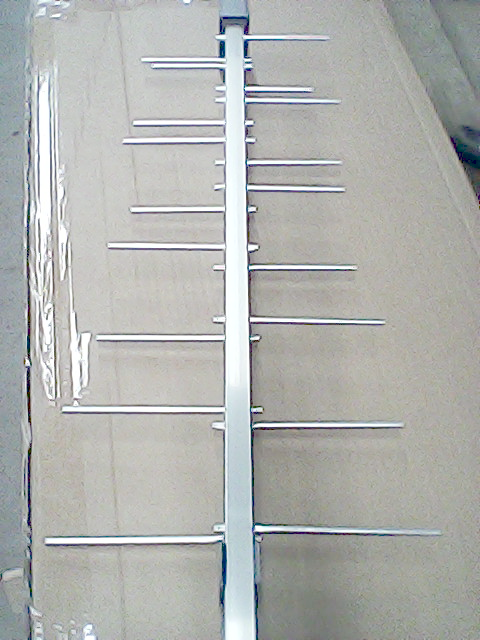
I bought one of these and looking at it, the elements seem odd in that they don't reduce in length uniformly towards the outer end so I'm wondering is this a properly made aerial?

Opinions welcome.
full


full


full
 
Not my area of expertise but I have never seen a Yagi Uda like that before.

I think @Lucid will be able to advise you further.
 
I should defer to someone with antenna building experience, but if I had to hazard a guess (and I emphasise a guess) then I would think this relates to the new shorter band for terrestrial now that the 700MHz clearance is complete.

The 'channels' are now 'squashed' into a smaller range, and so the chances of two muxes being just one or two RF channels apart is much higher. This could be to do with avoiding harmonics in the aerial, and so aiding channel separation.

Ericmark might be able to shed more light on this, or Rodders may too. I've kind of moved on to other areas.
 
Last edited:
What intrigues me about the aerial I've bought is the elements near the outer end don't seem to be the correct lengths.

In photos of log periodic aerials I've seen online, the elements form a uniform taper whereas the one I have, they're a bit staggered in length.
Is this acceptable?

A better photo.

full
 
I think you should ask them:


I can imagine that in principle you might be able to adjust the frequency response in some way by adjusting the lengths - maybe the aim is to impove discrimination from e.g. mobile or something. I've not found anything by searching. It's the sort of thing you might find in a patent search.

Does it work OK?
 
I tested the aerial on transmit, how much signal was reflected, or voltage standing wave ratio (VSWR), I have found that results are surprising, and I have transmitted and received 2 meter (144-146 Mhz) on a long wire, which in theory should not work.

Basic if it works it is OK, if it does not work it's not.
 
My former colleague John Riley of BBC R&D published the theory and plans to make one, a long time ago... albeit that'll have been for frequency channels 21-68 inclusive.
and an earlier report was

From a quick refresh read that parallel boom design is flawed wrt impedance matching (it may or may not matter?). But John also noted that they 'tweaked' the shorter elements' lengths to suit rather than use theoretical calculate lengths. Perhaps that's what this maker has done? The two longer elements at the front are wrapped in blue tape/paint on the makers website pictures but not in this real life sample.
 
I've tried the aerial in the loft which is where I plan to install it.

As a test, I laid it on the insulation and pointed it using a map reading compass to about 318°, the bearing quoted by freeview.co.uk

I did an autotune on the TV which found over 160 channels. I'm getting about 35 for signal strength.

I'll get a signal meter and will mount the aerial as high up as the roof apex will allow.
 
I've tried the aerial in the loft which is where I plan to install it.

As a test, I laid it on the insulation and pointed it using a map reading compass to about 318°, the bearing quoted by freeview.co.uk

I did an autotune on the TV which found over 160 channels. I'm getting about 35 for signal strength.

I'll get a signal meter and will mount the aerial as high up as the roof apex will allow.
Lofts can be weird for aerial positioning. Be prepared to experiment.

Unless you can get hold of a very good meter, one with a display for the bit error rate per mux, then I'd recommend skipping any consumer meter and use a TV signal quality display instead. This isn't perfect. The TV is likely to display the quality after it's had a bit of a go at processing rather than the raw data. That's still better than the typical pocket meter though. They tend to measure average strength across all the muxes received.

I'd add to this one of the 0-20dB variable attenuators. This will give you the the chance to bring the signal down to a threshold level closer to where it's starting to fail. That's useful as it will make the TVs metering more sensitive to aerial positioning.

Don't forget to tilt the Log up at the front. You'll gain a couple of dB, and that's handy in a loft where the roof being wet can change the reception.
 

If you need to find a tradesperson to get your job done, please try our local search below, or if you are doing it yourself you can find suppliers local to you.

Select the supplier or trade you require, enter your location to begin your search.


Are you a trade or supplier? You can create your listing free at DIYnot Local

 
Back
Top