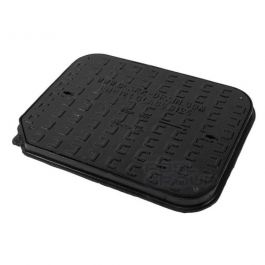
Manhole Cover in Loose Gravel

Joined
23 May 2018
Messages
74
Reaction score
0
Country
United Kingdom
I want to install a vehicle rated Ductile Iron Manhole Cover into a private driveway (4 houses) to replace the current substandard one. The driveway is loose standard gravel, unfancy.

Whats the best type of cover to use and how is the Manhole Cover detailed in terms of the concrete flaunching? It's likely to encounter 10T maximum. It's a narrow drive that larger vehicles cannot turn off the road into. Any help is appreciated.
 
Manhole construction and manhole covers and frames must be constructed to specific safety requirements.
Why not post a pic showing the top, & looking down the manhole?
 
Manhole construction and manhole covers and frames must be constructed to specific safety requirements.
Why not post a pic showing the top, & looking down the manhole?

Hi. Thanks for your reply. I will try and get a photo later. It's a plastic chamber that was bedded into concrete by the groundworks contractor who connected the property to a shared sewer. The concrete ends some below ground and a plastic cover was temporarily fitted over the top.

In reality, I think they should have fitted a vehicle rated cover at the time, but it's my mistake for not picking this up and far too much time has elapsed for me to want to go after them, I'd rather just resolve it. The plastic cover has been in place for a couple of years now and has survived, but I want to do something better. I'm not after a 'highways' compliant level of installation, but something more durable that whats there now.

I had planned to resin fix some rebar into the existing concrete to bond the new layer and bed the new cover into the fresh concrete. I know none of this is ideal, but its a privately owned driveway and all of this is better than what has ever been there before.
 
I'd just sculpt the concrete so it meets the edge of the frame and gently tapers away downwards. Make up some wood formwork that gives about 150mm clearance all round, set it a bit lower than the frame then fill it up. Trowel/float off smooth, sign your initials in the corner then let the neighbour's cat walk on it overnight. Or put a board over it, supported by your wood offcuts on top of the chamber to keep it from pressing into it.. Keep it covered and gently water it for 2-3 days after with a watering can with sprinkler, keep it wet the whole time.

You could be tempted to set all of the concrete perhaps 30mm lower than the frame so the gravel can cover it. But that would leave the frame vulnerable to damage and/or leave a sharp edge that might damage tyres or be a trip hazard. Just accept that the concrete will be visible, it will be bright grey initially but will soon tone down and blend in.
 
I'd just sculpt the concrete so it meets the edge of the frame and gently tapers away downwards. Make up some wood formwork that gives about 150mm clearance all round, set it a bit lower than the frame then fill it up. Trowel/float off smooth, sign your initials in the corner then let the neighbour's cat walk on it overnight. Or put a board over it, supported by your wood offcuts on top of the chamber to keep it from pressing into it.. Keep it covered and gently water it for 2-3 days after with a watering can with sprinkler, keep it wet the whole time.

You could be tempted to set all of the concrete perhaps 30mm lower than the frame so the gravel can cover it. But that would leave the frame vulnerable to damage and/or leave a sharp edge that might damage tyres or be a trip hazard. Just accept that the concrete will be visible, it will be bright grey initially but will soon tone down and blend in.

That's super-helpful. What sort of cover might I use? The ones I've glanced at so far seem to be fairly skimpy, despite being rated for the load.

This one, for example, seems to be man enough, but only has 40mm of height to play with...

 
Try Burdens, if there's a branch near you. They're more civil engineering than building.

If not then that one you've found looks reasonably decent.

I tend to de-rate them all by one rating. The footpath ones are pathetic, I always use driveway rated ones in paths. Similarly I'd use a highway rated one in a driveway. Cost a bit more but you can be certain it won't crack or turn into a bird bath bowl if you drive over it.

I suspect the "driveway" standard was devised when cars were a lot lighter. I don't know what the 12.5 ton thing is about, it's probably some kind of lab-based test with a perfectly evenly distributed load. More likely 1.25 ton in the real world.
 
This one, for example, seems to be man enough, but only has 40mm of height to play with...

Why is 40mm height an issue?

As Windyarris said, dig out around the IC so that you have enough room for say 100mm+ of concrete thickness and shutter around the chamber. Remove the lid from the frame and set your frame onto the concrete, positioning the frame favourably over the round chamber. Then haunch the concrete up the sides of the frame sloping gently down (15mm) to the shutter boards.

Hose away any material that falls in the chamber. Gently place the lid into the fame, once you have trowelled the concrete.
 
I'd take the lid off, put it in a plastic bag then refit it before installing. Then you'll protect the pipe inside and the lid itself from the slops.

The next morning, VERY carefully remove the lid, chuck the bag inside the chamber to catch most of the bits, then very carefully scrape away the slops from the frame. Then wipe it all with a wet cloth in a bucket of water. Remove bag, check for any stray slops, refit the bare lid. Chuck the cementy water on the ground, not down the drain.
 

If you need to find a tradesperson to get your job done, please try our local search below, or if you are doing it yourself you can find suppliers local to you.

Select the supplier or trade you require, enter your location to begin your search.


Are you a trade or supplier? You can create your listing free at DIYnot Local

 
Back
Top