• Looking for a smarter way to manage your heating this winter? We’ve been testing the new Aqara Radiator Thermostat W600 to see how quiet, accurate and easy it is to use around the home. Click here read our review.

Mold/Damp on wall - behind cupboard

Joined
13 Jan 2022
Messages
13
Reaction score
2
Country
United Kingdom
Hi team,
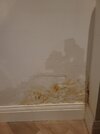
Please see attached image for more detail.

I have patch of what I think damp/mold.
It is located behind a cupboard- since removed.

It is an external wall.
How best to treat this (presuming It mold/damp).

Air circulation would have been limited due to the cupboard, but I have now removed the furniture.

Thanks Tony
 

Attachments

  • 20251104_211852.jpg
    20251104_211852.jpg
    123.1 KB · Views: 35
Check outside, is there damp source eg a leaking gutter or pipe, or a bridged dpc? Once that is sorted chop out the affected plaster plus a few inches more, let it dry out and re plaster.
 
Unvisited "holiday" flats and houses can get that - just lack of circulation of air, a bit of condensation, being a cool place in the house, etc.
Letting warmed air circulate often fixes it.

Bridged cavities, leaky gutters etc etc are obvious to check for.
 
OP,
You appear to have damp that is more than condensation - previous repairs have been attempted & failed.

Why not post a pic of the outside at ground level?
Is the wall solid or cavity? Is the floor solid or suspended?
Is the wall solid plaster or Dot&Dab?
Immediately to the right - is that a chimney breast? The skirting is being pushed out.
 
Hi,
Solid wall (not cavity I believe)
Floor solid too.

Likely old chimney breast there, but would have been sealed for decades.

Yes, skirting some what pushed out.
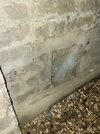
Outside pic attached.
Directly outside is what I believe to be a sealed up cat flap!
 

Attachments

  • 20251107_210429.jpg
    20251107_210429.jpg
    352.5 KB · Views: 24
OP,
A pic of the front of the chimney breast might help?
Redundant flues in chimney breasts need to be ventilated from bottom to top.
Outside there appears to be a large band or bed of mortar with moisture creeping up from the ground.
There's no sign of a DPC.
Without knowing where the DPC or the FFL are I would suggest that the ground level is too high?

Removing & examining the backs of all the skirting shown in your interior pic is needed.
All defective plaster needs hacking back to brickwork.
Renew defective plaster with a 3:1 sand & NH lime mix of render - or say Limelite remedial powder. Dont use gypsum.
 
I have patch of what I think damp/mold.
It is located behind a cupboard- since removed.

It is an external wall.

Its 99% IMO going to be just condensation. Air behind furniture tends to not get replaced by ventilation. Water vapour in the room gradually migrates to the cooler surfaces because warm air has a higher vapour pressure than cooler air (on an outside wall) and the tendency is always to try and seek equilibrium. The still air becomes saturated and then progressively more water vapour condenses to liquid water causing what you see/black mould/mildew etc.

If it's next to a chimney, likely there is some salt contamination too, which the liquid condense will have reacted with to grow crystals.

Hack off the damaged area back to brick and let it dry completely by keeping the room warm or using a little local heat. Seal the brick with some SBR slurry which will help trap any salts in the brick, then re-plaster. When I've done this, and if there is enough depth over the brick, I've patched in some plasterboard in the damaged area fixed with foam to further isolate any salts, then skimmed over. I've found this to be a 100% fix.
 

If you need to find a tradesperson to get your job done, please try our local search below, or if you are doing it yourself you can find suppliers local to you.

Select the supplier or trade you require, enter your location to begin your search.


Are you a trade or supplier? You can create your listing free at DIYnot Local

 
Back
Top