• Looking for a smarter way to manage your heating this winter? We’ve been testing the new Aqara Radiator Thermostat W600 to see how quiet, accurate and easy it is to use around the home. Click here read our review.

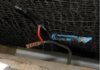
Old figure of 8 BT drop-wire

Joined
1 Jun 2018
Messages
3
Reaction score
0
Country
United Kingdom

Attachments

  • image.jpg
    image.jpg
    24 KB · Views: 306
Short answer - it depends. It's a bit of a mixed bag, as the copper is actually very likely to be much thicker (edit - than the new twisted pair stuff). The downside is of course that it's not twisted, to more susceptible to interference. If it's a quiet RF environment then it's unlikely to be causing an issue, and in fact may even be improving things with the thicker copper.

It may also be a moot point. Although Openreach tend to replace it where practical, whenever they come across it, short sections of it often remain, e.g. bits that are buried in mortar down from the eaves to the master socket (as at my Mum's house). Unless it's causing a quantifiable fault (e.g. noise on the line, intermittent broadband), it's unlikely to be replaced. Even a few megs off the sync speed are unable to warrant a "fault", unless of course the line is marginal to begin with.

Is the phone/broadband service suffering from any issues?
 
Thank you jg321
Broadband is reasonably stable but runs below expected speed at very low SMR margin.
Speed has been progressively slowly falling. Not by drastic amounts but > 10% on one occasion
The phone line is not silent, but i have never heard a silent one. There is Hiss but hardly any crackle.

There is a 15 to 10 to 15m section of this figure of 8 cable, I thought it was a DIY bodge at first, as I can't understand why it wasn't replaced at the same time as the overhead line.
 
The low noise margin is a bit of a red herring. As most services these days are rate-adaptive, it will sync at the highest possible speed for a given *target* margin, which is usually 6dB but if Openreach systems see the line as stable then they'll drop it to as low as 3dB. Noise margin variation is more concerning, so it's a good idea to force a resync by disconnecting the phone cable, and taking note of the noise margin at sync time.

Do you know where the green cabinet you're connected to is? If you don't know what cabinet, put the phone number into http://dslchecker.bt.com and it will tell you. It will also give you estimated speeds, although these seem to update based on the line's current performance.
 
are you able to look along the cable on the outside? I had the old twin grey stuff, it had nicks in it that when wet allowed it to short the cores.

It broke (nudge nudge) on a windy day, they replaced it the next day.
 
For the drop connection, I wouldn't have thought it would make much difference. In general, the wires are close together and not close to other signals - so the lack of twist will not be significant. Twisted pair phone cables aren't heavily twisted anyway, so depending on how the drop wire was unreeled it may have nearly as much twist anyway.
I've be more concerned with the connections.
Firstly, this stuff is not exactly flexible - the cores are (IIRC) copper covered steel and about as flexible as spring wire. For this reason, the cores are not too likely to be kept together at the terminations - and that can impact on performance for the high frequency data signals. As as it's almost certainly been installed before there was any consideration of DSL then there'll have been little attention paid so such matters.
As as it is copper covered steel, if not carefully terminated you have a recipe for corrosion - and a corroded joint can act as a diode and cause major problems with the DSL signal. There should be no crackles or hiss on a silent line test (dial 17070 and select option 2) - if there is then report it as a voice line fault citing "noisy line". I've once come across such a problem - there was a definite noise on the line from the ADSL service.
 

If you need to find a tradesperson to get your job done, please try our local search below, or if you are doing it yourself you can find suppliers local to you.

Select the supplier or trade you require, enter your location to begin your search.


Are you a trade or supplier? You can create your listing free at DIYnot Local

 
Back
Top