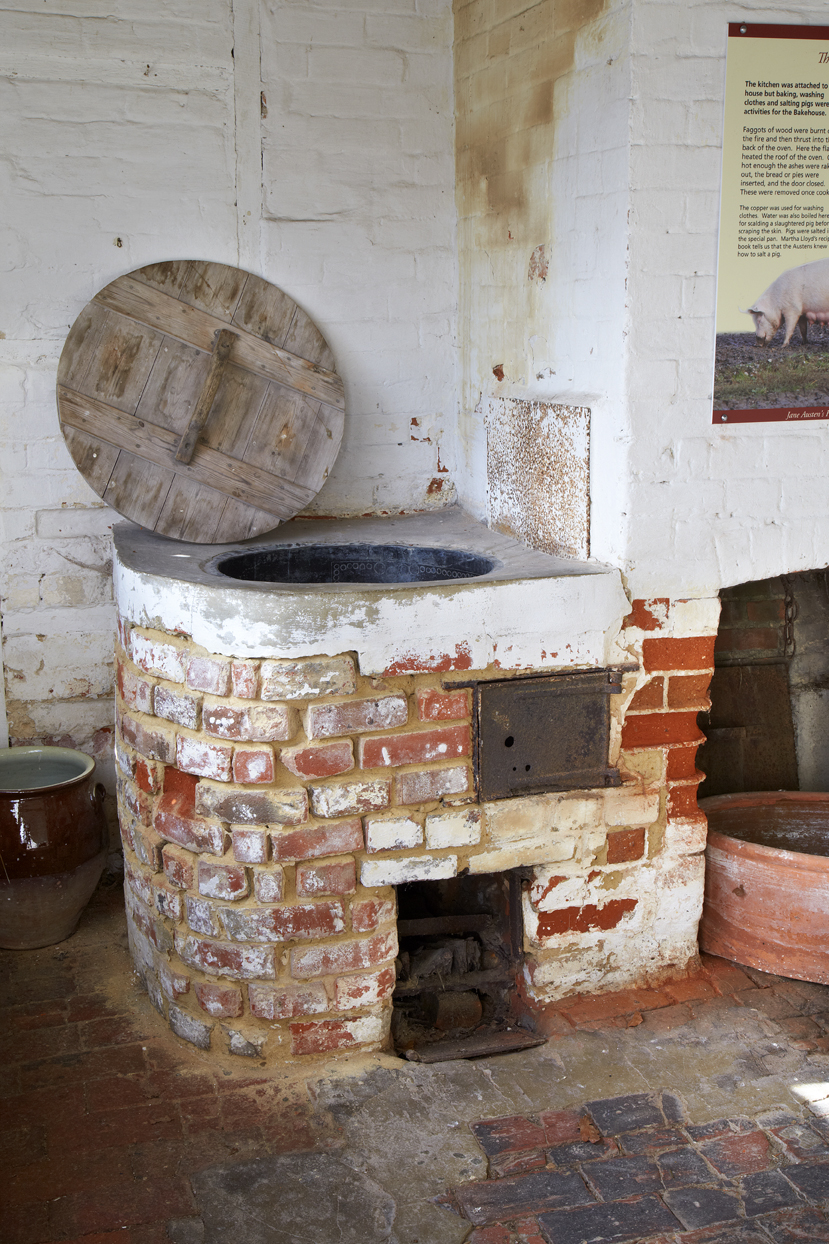
Old house, what would this be?

Joined
30 Dec 2018
Messages
28,674
Reaction score
6,246
Location
Up North
Country
United Kingdom
The first house I lived in, in the scullery kitchen, was a small chimney, in a corner, which had been blocked off close to the ceiling. I had always assumed, the chimney had originally served a fire, and a tub, for boiling washing, back in the day....

On TV, HuH, they had what would seem to be something similar, but with the fireplace, and a tub all still in place. A small brick built fireplace, in the corner, with set above it a large, inset, rusty steel, or maybe cast-iron pot. It was described as a bread oven, or for making a stew in.

Were these things used as ovens, or for washing? I thought all the cooking, was done on a sort of cast-iron range, in the living room?
 
Occasionally also used for boiling a Christmas pudding, depending on the poverty of the household and the scarcity of large cooking vessels used only once a year. In old books you will find occasional references to such food tasting of soap, and shirts smelling of cooking fat.
 
I was wondering about this last night and i think my gramps used one to boil up pig swill from leftovers: It looked something like this -

33.-Bakehouse-Copper.jpg


- and i think he may've repurposed one from the kitchen when times changed and gran could buy a brand new washing machine in the 60s. The old dolly was still there, too, kept in a shed to store firewood, as i recall. I disliked going in there and avoided it if possible...too many dark shadows full of spiders and God-knows-what, it was.

The smell of those veggies boiling away in the copper was a terrible ting, too, but the pigs enjoyed it, so all was well in their world.
 
The smell of those veggies boiling away in the copper was a terrible ting, too, but the pigs enjoyed it, so all was well in their world.

That photo, is near identical to what they had in the program.

My uncle, had a small holding, and he kept pigs. Now you mention it, he used to have something quite similar, to boil up left-overs to feed them.
 
I always thought it'd been there beside the pig shed since the days of black and white. Did your uncle keep a tin of Stockholm Tar handy?
 
Did your uncle keep a tin of Stockholm Tar handy?

Oh, I cannot remember that far back. I was no but a toddler at the time, absolutely terrified of the size of the pigs. All I remember is that he had a yard, and kept pigs, and chickens. He soon bought a small farm up in the Yorkshire Dales, high above Hebden Bridge.

Still not much more than a toddler, I remember spending time living on the farm, and once being attacked by a cockerel.

I'd since forgotten exactly where the farm was, other than it was around Hebden Bridge, and on the left, going out of HB. For work, I made regular visits to Hebden Bridge, and one day got an urgent call, to go somewhere else, set the SatNav, and off I went. On route, I spotted and recognised the farm.
 
I was wondering about this last night and i think my gramps used one to boil up pig swill from leftovers: It looked something like this -

33.-Bakehouse-Copper.jpg
Interesting pic from a masonry point of view, showing internally located bricks, perished, whilst the stronger mortar around them, has survived. Conversely, the brickwork to the left, the opposite has happened. An all within an internal (zero frost/thaw influence) location.
 
Given the hassle of lighting a large fire on one day a week for the copper, why not use it to also provide heat for cooking?
Something that needed slow cooking could be shoved into the small oven, meaning that the day could be entirely set aside for washing. No need to stop for meal preparation. Wash Day when I was a kid (even though my mum had a twin tub) was always a stew or similar.

I worked with a trucker who had been an Edwin Shirley driver in the 70’s and in those days they had shortbread tins/biscuit tins fixed to the engine to heat pies up. No truck mounted microwaves.
 
Given the hassle of lighting a large fire on one day a week for the copper, why not use it to also provide heat for cooking?

I'm just not sure how that would work? You have a single, large pot, full of water and the washing, how would you cook?

I worked with a trucker who had been an Edwin Shirley driver in the 70’s and in those days they had shortbread tins/biscuit tins fixed to the engine to heat pies up. No truck mounted microwaves.

I would do that - popped a pie, or pasty, wrapped in foil, on my Cortinas cylinder head
;)
 
I understood that the chimney had a metal oven-like box in the flue?
So using residual heat for cooking?

I vaguely remember our living room range, had a fire, with a chromed, hot plate shelf in front of it, and a oven on the right of the fire. I remember my mother baking bread in the oven, and at times cooking a delicious rabbit stew.
 
Oh, I cannot remember that far back. I was no but a toddler at the time, absolutely terrified of the size of the pigs. All I remember is that he had a yard, and kept pigs, and chickens. He soon bought a small farm up in the Yorkshire Dales, high above Hebden Bridge.

Still not much more than a toddler, I remember spending time living on the farm, and once being attacked by a cockerel.

I'd since forgotten exactly where the farm was, other than it was around Hebden Bridge, and on the left, going out of HB. For work, I made regular visits to Hebden Bridge, and one day got an urgent call, to go somewhere else, set the SatNav, and off I went. On route, I spotted and recognised the farm.
He'd use S.Tar on a wounded pig, sealing the cut with a sticky goop that looked like the Devil's honey and smelled twice as narsty, so i'd imagine your uncle had it too. It sounds like they had a similar set up, but no cockerels on his patch, so i was saved the indignity of being assaulted. Occasionally a chicken didn't give up her eggs easily but all in a days work. Still have the baskets we used to collect them, only they carry apples these days.
 
Interesting pic from a masonry point of view, showing internally located bricks, perished, whilst the stronger mortar around them, has survived. Conversely, the brickwork to the left, the opposite has happened. An all within an internal (zero frost/thaw influence) location.
Looks to me like the mortar has had a hard time of it with the heat, though. Those things can really kick up the temperature when the fire is high: It works on a similar principle to a medieval bloomery, i think, using a wood/charcoal fuel to maintain temperature only with clothes (or in the case of pig swill; veggies) to 'cook'. They used a clay furnace and it wasn't until the Tudor's came along with their bricks that improved the burn which made the process more efficient.

They could've used Victorian fire bricks in the construction, i suppose, but the laundry would've shrunk in the wash, leaving your great-grandad v. unhappy. :p
 
Back
Top