• Looking for a smarter way to manage your heating this winter? We’ve been testing the new Aqara Radiator Thermostat W600 to see how quiet, accurate and easy it is to use around the home. Click here read our review.

Plastering over a steel embedded in a wall

Joined
30 Oct 2019
Messages
69
Reaction score
0
Country
United Kingdom
I have a plaster concrete block wall which has a steel running through it; this has been plastered over.

Over time the steel, under the plaster, has developed a surface rust and you could see where, even through the plaster and paint, and a crack had formed on the lower edge.

I have stripped off the paint and plaster from the steel. I will remove the surface rust with a wirewheel or prep disk so it is back to steel.

My question is how to proceed after this to stop this happening again, or at least delay it for a long as possible.

My current plan is to:
1. Coat the visible surface of the steel, possibly with epoxy primer (other ideas welcome, is red lead still a thing or are red oxide just normal primers with a red pigment these days?)
2. Scrim tape the existing plaster to the steel.
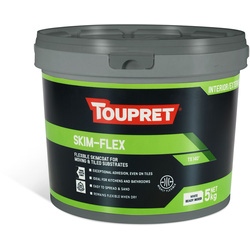
3. Plaster over with flexible plaster like Toupret Skim Flex

Possibly an additional step of coating any steel not covered in scrim with a PVA glue with sand mix.

I'm not wedded to this plan, and I am all ears to more experienced voice.

7e2e82a1-5bb9-4402-8b66-2161d07584ff.jpeg
 
I'm not entirely sure. But the building is a solid stone/rubble wall construction. This particular wall has been turned into a retaining wall (not by me!) and then lined a secondary block wall to effectively retrofit a cavity.

I'm not sure why it needs steels (I think there is one on each floor), but regardless it is there.

I'd rather just plaster over it, rather than boarding. I think if it re-appears after going through the process I outlined above then lining paper/wall paper would be the best option.

Thanks
 
Stick 9.5mm foil backed plasterboard over, extend at least 100mm past the steel.
 
OP,
I cant tell if we are looking at the RSJ flange or web - I think its the flange ie. the RSJ was installed on its side so to speak?

Up to about 1900 thick timber beams called Bonding Beams were sometimes installed in masonry walls - the idea was literally to "bond" the masonry.
It wasn't a bad idea - it worked but wood rot & decay put an end to the practice.
Maybe the RSJ's in your property were installed to act as steel Bonding Beams?
 
I am fairly certain its an I-bean on its side with the 'wings' of the I then straddling the block work above and below. The only reason I think it does that is to stop the "false" cavity from toppling inwards as it has no wall ties with the old stone work (or last I doubt it does) and is just on flat plane - so has nothing to resist forces in that dimension other than wall's own weight (which isn't much as it's thermalite blocks.

Sadly it's not buried deep enough to put plater board over that and I really don't want to needless overboard the whole wall if it can be helped.

The plan today is to chip off 50-100mm of skim and plaster either side of the steel. Mask that off and coat with epoxy primer. My hope is that the epoxy primer will resist corrosion for the longest possible time, and when it does it will just go at the worst bit right in the corner.

Then I'll skim over with a flexible plaster. I'm still deliberating on whether I should scrim tape between the steel an chipped back plaster.

 
Sounds like a good plan. Wire brush it first. I'd then add some kurust type rust converter before the primer. Also something waterproof, the epoxy primer may be sufficient. No shiny paint, but to keep the plaster from reacting with the metal. Never buy a plasterer's van, they're usually completely rotten in the back as plaster attacks steel, which is probably why the plaster got pushed off yours. Texture the surface of the paint by patting with your brush when it's half-set, to give a key.

Definitely scrim tape. Put a thin skim over, flatten plastic mesh tape into it with your float/trowel, let it stiffen then skim over it.
 
Sounds like a good plan. Wire brush it first. I'd then add some kurust type rust converter before the primer. Also something waterproof, the epoxy primer may be sufficient. No shiny paint, but to keep the plaster from reacting with the metal. Never buy a plasterer's van, they're usually completely rotten in the back as plaster attacks steel, which is probably why the plaster got pushed off yours. Texture the surface of the paint by patting with your brush when it's half-set, to give a key.

Definitely scrim tape. Put a thin skim over, flatten plastic mesh tape into it with your float/trowel, let it stiffen then skim over it.
Thanks some good details there.

Epoxy primer will be sprayed on because I've already got said primer and setup to spray (automotive work).

Yeah I could work a rust converter into the pits and then sand the surface one last time (it won't get into the pits but I'd rather the epoxy bond to the clean steel directly where it can.

Good tip about doing a thin skim with a mesh - like reinforcing concrete with steel.

Thanks again.
 

If you need to find a tradesperson to get your job done, please try our local search below, or if you are doing it yourself you can find suppliers local to you.

Select the supplier or trade you require, enter your location to begin your search.


Are you a trade or supplier? You can create your listing free at DIYnot Local

 
Back
Top