Plug in solar, really, is it safe, and what stops anyone doing it, legal or not?

Joined
27 Jan 2008
Messages
27,540
Reaction score
3,328
Location
Llanfair Caereinion, Nr Welshpool
Country
United Kingdom
I was watching YouTube on the TV and dropped off, to wake up to some guy talking about plug in solar panels. It seems not a new idea has been talked about on here in 2022 and the guy did say not legal here yet, and one can't get a G98 for it, and it seems Germany is limiting it to 800 watts, he showed an advert for kit, under £2k with a 2 kWh battery, and inverter, he did point out problems with bidirectional RCD etc, and rules for auto disconnection.

However, I am thinking if I got that kit, it is cheaper than upgrading my existing battery, and as to export, who would know what has come from the legitimate panels, and what has come from plug in solar panels?

And as he points out, it is all aimed for DIY, so the home occupier may be unaware of any dangers, and it is the occupier not the owner, there is nothing to stop this being used with rented accommodation. In fact, that is one of the points being made about it, for the first time people in flats and rented accommodation can get solar.

I personally think 6 kW of panels and a 5 kW inverter, with 6.4 kWh of batteries is enough, so I am not considering running out and buying a kit, for one thing not sure what my existing solar would do if one of these plug-in kits were added, and too much moneys worth, to take a chance.

But I can see the appeal, the adverts do seem to be misleading 1755452976038.png the roof shows 12 panels, but the kit is for 2 panels, it tells one very little about the product
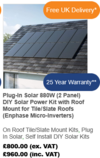
Plug In Solar began as a venture to provide for the growing demand for Do It Yourself (DIY) Solar Systems, without the need for a dedicated installation team, MCS or SEG forms. Just simple Plug and Play Solar. After growing demand (and shipping many of our systems all over the globe) we have now extended to provide New Build Solar Kits, Battery Storage and other equipment. Please browse the website to find out more about our innovative Plug In Solar products.
The video
seems to make one think it is so easy, I do note, not actually plug-in, it shows a FCU. But even so, with not testing after installed, really?
 
I had forgotten about EV's. It seems the modern EV can supply power back to the grid, so we already have plug in inverters, which are portable. OK not a 13 amp plug but an EV plug, but we have plug in inverters already.

I thought, let me read the G98 form, it asks for Accreditation / Qualification which may be a problem, and also a picture of the isolator, and says must apply within 28 days of the installation, so if I unplug on day 27, and plug it back in again, I restart the 28-day count-down?

It would be so easy to fit an EV 13 amp socket on the balcony and simply plug in an extra inverter, sounds daft, is it really that easy? Hang the panels off the handrail?

I have a swing seat on the balcony and I see what it does in the wind, so no I would not do that, but be it EV charging with a 13 amp socket, or solar panels with 13 amp socket, it all seems like an accident waiting to happen.
 
Last edited:
Whilst I wouldn't consider a commercial installation as being worthwhile to me, on a cost benefit basis - a self install, plug in maybe could be, to cover my usually less than 80w base load, sometimes rising to 300w.
 
Whilst I wouldn't consider a commercial installation as being worthwhile to me, on a cost benefit basis - a self install, plug in maybe could be, to cover my usually less than 80w base load, sometimes rising to 300w.
I am still not sure if I did the right thing, when I got solar? We worked out should pay for itself in 7 years, but first 18 months without export payment has resulted now, maybe, looking at a longer time.

But the main thing is it works as a package, not just solar, not just battery, not just uninterruptible power supply, it is when all combined when it makes a difference.

So now on Octopus "Go" which is really for EV users, but it means I charge the battery over-night, so even in December with next to no solar, I am still saving money as using off-peak during the day. Each bit saved does not seem much, 6 kWh at 8.5p instead of 26p (standard) or 30.17p (peak) is only £1. December solar production (6kW panels) is only 97kWh, so 80p per day average. Running the washing machine etc at night can save a little more, but basic saving around £2 a day in the heart of Winter.

Summer different of course, May this year 900 kWh, and still gaining a little moving off-peak to peak time with the battery. Exported over 470 kWh so that's £70 (£2.35 per day) without looking at savings made due to not using electric at peak rate.

But changing rates have not made calculation easy, I was paying around £140 per months, I am now as it stands looking at a minus figure, so seems likely saving £1,500 per year, but we have also altered our lifestyle, if it's a hot day, I will be not hastate putting the AC on. And no more hanging out clothes, that costs in re-washing due to bird lime, they all go in the tumble drier. So our electric use has gone up.

My background is rather high at around 12 kWh, due in the main to 4 freezers running, we did a run out to Sidoli factory shop, and got a load of cheap cakes, it depends on what is going cheap, as to if 3 or 4 freezers running, a chocolate cake takes up a lot of room in a freezer. But when being sold in factory shop they are so cheap.

But it all muddies the water a bit when trying to work out savings, even the immersion heater now used instead of oil for DHW, it all adds up. But will so many freezers running, it is important to have the UPS supply. Plus, in winter my central heating will still work.

If I was going to spend out more on the system, then would get more batteries, but batteries only last around 12 years, so not sure if worth getting any more, but could double up on what I have now without changing the inverter.

But as to DIY solar, not so sure unless you can get paid for export. This month up to now £39.97, last month, £65.55, month before £77.04, and May £73.50, April we were not getting paid for export, so since I already have a MPAN number adding DIY solar I would get paid, but without export payment and panels and battery large enough to make a real difference, not so sure.

800 watt, looking at what my 6 kW produce over 23 months, I would say they will save around £16 a month on average. If you are using all the 800 watts.
 
Whilst I wouldn't consider a commercial installation as being worthwhile to me, on a cost benefit basis - a self install, plug in maybe could be, to cover my usually less than 80w base load, sometimes rising to 300w.
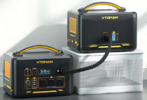
I have considered that base load, if the items which make up that base load, one assumes fridge and freezer, were supplied from something like this
1755855852169.png
which can have solar panels connected to it, then they could be solar-powered without any grid tie.
 
So now on Octopus "Go" which is really for EV users, but it means I charge the battery over-night, so even in December with next to no solar, I am still saving money as using off-peak during the day. Each bit saved does not seem much, 6 kWh at 8.5p instead of 26p (standard) or 30.17p (peak) is only £1. December solar production (6kW panels) is only 97kWh, so 80p per day average. Running the washing machine etc at night can save a little more, but basic saving around £2 a day in the heart of Winter.
Do you have an EV ? I would like to go onto the 'GO' tariff for the winter but we don't have an EV

I would charge my batteries up at 8.5p (which is more like 11p when you factor in losses) but that would be still good for december
 
Do you have an EV ? I would like to go onto the 'GO' tariff for the winter but we don't have an EV
Not unless you count my e-bikes, and I did not lie when I went on the tariff. British Gas not quite as good as Octopus, and their customer service is terrible, but they actually suggested going on their EV tariff.

I looked at Flex, and thought I can't guarantee that between 4 pm and 7 pm I will have battery left, and I am unlikely to still be exporting at 4 pm to get the extra, so the EV tariff seemed a safer bet.
 
Sorry, I just selected one at random,
1755890346761.png
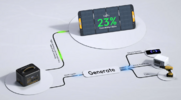
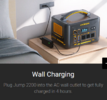
I did not read exactly what it could do, but the 3 input modes means likely it would work. Advert is here but not checked exactly what this one does. It seems you can expand them, 1755890638289.png but this 1755890751350.png does not show solar panels and grid charging at the same time, but can clearly be charged from a socket 1755890960328.png there are many more
1755891050693.png
they are basic the next level to the old jump start battery, I have an old one of these
1755891190387.png
which has a 300 watt inverter built in, and I want to renew the 20 Ah AGM (VRLA) battery so I can continue to use it, just under £40 for a new battery if I collect it from North Wales, mainly used to pump up my bike tyres, a portable cigarette lighter socket is handy. The built-in pump died.

All I was doing was pointing out the inverter and battery pack don't need to be grid tied.

I note my own solar panel inverter can be configured to work with a generator rather than the grid tie mode, and when set up to do that, it can start the generator at a set battery charge level, and it will recharge the battery, then stop the generator, but it is an either/or you can't have both. I looked at these power stations to replace my jump start unit.
1755891975325.png This was from the Screwfix site, but on reflection for me, it would be just a toy, I don't go camping any more, and already have battery back up for freezers etc. The lithium battery pack is often 50 volts, not looked at ones shown, but that means using 12 volts the inverter is running, that is not the case with older lead acid types, so I could place the old lead acid type in my shed to work lights, and just recharge once every couple of months, but with the lithium type the inverter would be discharging the battery, so recharge every couple of weeks, even it lights not used.
 
Not unless you count my e-bikes, and I did not lie when I went on the tariff. British Gas not quite as good as Octopus, and their customer service is terrible, but they actually suggested going on their EV tariff.

I looked at Flex, and thought I can't guarantee that between 4 pm and 7 pm I will have battery left, and I am unlikely to still be exporting at 4 pm to get the extra, so the EV tariff seemed a safer bet.
I think octopus make you prove it now with proof of ownership or commitment to buy.

do you still get the 15p export whilst on 'GO' ?

if so i want on it by October - Agile prices are rarely low
 
I think octopus make you prove it now with proof of ownership or commitment to buy.

Proof of actual ownership, or just having an EV registered to the address?

DVLA don't charge for new V5Cs when "ownership" changes.

Anybody with an EV owning friend or family member who trusts them could get proof of being the keeper of an EV at their home address.....
 

If you need to find a tradesperson to get your job done, please try our local search below, or if you are doing it yourself you can find suppliers local to you.

Select the supplier or trade you require, enter your location to begin your search.


Are you a trade or supplier? You can create your listing free at DIYnot Local

 
Back
Top