The problem with any lead acid batteries used in parallel is one faulty battery can discharge them all. The blocking diode
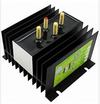
is designed so a number of batteries can be charged from the same source, but if one battery is discharged it will not discharge the others, but it also means each is used independently, which may not be what you want.
As a lead acid discharges it forms sulphur on the plates, as time passes this gets harder and harder, so the aim is every couple of months to ensure every battery is fully recharged, this takes time, and if a battery is in constant use, there are not enough sun light hours in the day to fully recharge it.
So having one battery only charged and not used, in a rotor, can allow them to fully re-charge, but narrow boat users would look for shore power once a month so charge over night as well.
All the batteries can go in parallel if non are faulty, the problem is if one has a fault it can drag the others down. Today we tend to use lithium batteries which don't have the problem of slow charge times.




