The Hive combines the programmer and the thermostat together, as do many of the new controls, but there are so many variations, it is difficult to give a one fits all answer.
There are numerous ways to control the heating, and the first consideration is what will your boiler do when the controls are added?
So some old boilers, mainly today oil fired, as oil boilers seem to last longer, are simple on/off, but most, specially gas boilers, are designed to gain more heat from the flue gases, by condensing them, and to achieve that, the return water temperature is important, so the boiler is designed to modulate (fancy name to turn down output) and there are two main ways it can do that.
One is the return water temperature, the other is an up/down thermostat on the wall.
The early method, and still works, is to use TRVs to control the boiler, as the room warms up, the TRV head closes the TRV valve, and the water pressure raises until the by-pass valve opens, when this happens hotter water is returned to the boiler, which the boiler senses and so turns down the output. Until it can't turn it down any more, then it starts a mark/space ratio (turning boiler off/on) to further reduce the output. But it has no option to totally turn off the boiler, so we put an on/off thermostat where it will only turn off on a warm day.
The other method is for a wall thermostat using the likes of OpenTherm to turn the boiler up/down instead, this will turn boiler fully off on a warm day.
But we can link the TRV heads to the boiler, this gives best of both, and with Hive, Wiser, EvoHome, Tado, Kasa etc, we can select the method used. All the modern systems will allow the TRV head to talk to the boiler in some way, so boiler can modulate as required.
But they can also simply turn an older boiler on/off. It all depends on how it is all set up.
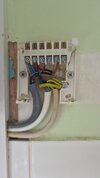
So how to replace LP111Si with Hive Mini, to make it work the same as before, is not the same as to replace it so it works both giving a better temperature control and more economical.
I looked at mothers old Bosch boiler, and although it would modulate, there was no option to use the likes of OpenTherm, it needed the wall thermostat and the TRV to be very carefully matched. As time has gone on, some boilers have developed their own special system, and some have used the universal OpenTherm, and some thermostats/programmers work better with some makes to others. There are some conversion modules to convert boiler own special to OpenTherm, but often it is down to careful set up.
Three homes, not one the same, and this is where the heating and ventilation engineer earns his money. I am only an electrical engineer, but I know enough, to realise how little I know, and simply fitting a more modern thermostat without matching it to the system is really a waste of money.
But it is down to as I call it, near enough engineering, is it worth the extra to gain a little better control, and it all depends on your home, and what you want. Only reason I looked into it, was mothers house and this house where not heating the rooms when I wanted warm enough, still not A1, but a heck of a lot better.