• Looking for a smarter way to manage your heating this winter? We’ve been testing the new Aqara Radiator Thermostat W600 to see how quiet, accurate and easy it is to use around the home. Click here read our review.

Rotating chrome pipework: would it leak?

Compression fitting are not ideal under floors if they are not easy accessible.

That obviously never occurred to the chap who fitted this one, then added a tiled floor over the top of it. I’ll make sure that the new floor allows better access.

 
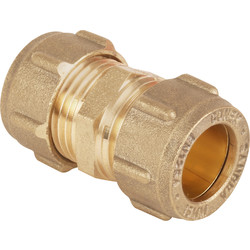
Conex compression fittings used to be readily available and arguably look better than fittings with ordinary spanner flats. They were the go-to standard back in the 1970s and 1980s. However, they seem to be increasingly hard to find these days.
 
Conex compression fittings used to be readily available and arguably look better than fittings with ordinary spanner flats. They were the go-to standard back in the 1970s and 1980s. However, they seem to be increasingly hard to find these days.
Not seen one for quite some time, which I suppose is why I described this one as "old". Mind you, probably still got one or two underneath the dust in the bottom of my tool box.
 
All the Wickes Compression fittings used to be Conex, and reasonably priced if you bought 10.
So I checked. They aren't any more, and they're over 3x the price I remember paying!.
 
All the Wickes Compression fittings used to be Conex, and reasonably priced if you bought 10.
So I checked. They aren't any more, and they're over 3x the price I remember paying!.
Ooh. Reckon I’d better go rootin’ in my toolbox. Might have something valuable to leave the kids after all!
 
Further help needed, folks.

I've noticed that the boiler pressure is dropping slowly, so naturally suspected that the underfloor joint about which I've been fussing has indeed started leaking. So I got my endoscope, shoved it through a tiny hole that I've made in the floor and left it in situ pointed at the fitting. Lo and behold yes, after about three or four minutes a definite drip formed on the bottom of the fitting and fell. Given that we're unlikely to be refitting the bathroom for a couple of months at least, I need to address this problem by either tightening the old fitting or preferably, replacing it ( and the chrome radiator tails). Thing is, the floor is laid with ceramic tiles ( which we'll be getting rid of) and I'll have to remove at least one, perhaps two of those so I can cut and lift the boards and access the fitting. Pretty basic stuff I know, but till we're actually tackling the bathroom I don't want to make too much mess of the floor.. How best to remove just a couple of ceramic floor tiles without damaging their neighbours? Wall tiles will easily crack with a blow from a hammer but these I think will be much tougher. I do have a couple of spare tiles that I can lay in the gaps temporarily once the fittings are leak-free.

Any logical/ helpful suggestions very welcome, thanks.
 
You need to remove all the grout from around the tiles that are going to be removed. Effectively "isolating" them from those around them. If they are ceramic tiles ,not porcelain for instance, they should break out with a hammer. Wear protective goggles and gloves ,tiles will have razor sharp edges.
 
Stick some leak sealer in should sort out a weep like that
Thanks for that. I've more or less decided now that I'll renew the fitting, then long term I should be able to rely on the joint remaining dry. But I'll make sure there's access in the floor for maintenance purposes.
 
Last edited:
You need to remove all the grout from around the tiles that are going to be removed. Effectively "isolating" them from those around them. If they are ceramic tiles ,not porcelain for instance, they should break out with a hammer. Wear protective goggles and gloves ,tiles will have razor sharp edges.
Many thanks. My first thought was indeed to isolate them as you do with wall tiles, but being perhaps more robust then I thought maybe there was a different technique. Can't do anything now till Friday, but I'll be sure to get togged up with safety gear before I tackle the job. I don't know whether they're ceramic or porcelain because they were here when we moved in. Are there any visual clues to the difference, or is it just a case of "hit with a hammer and see what happens"?
 
Thanks for that. I've more or less decided now that I'll renew the fitting, then long term I should be able to rely on the joint remaining dry. But I'll make sure there's access in the floor for maintenance purposes.
it was only as a get by till you were ready to do the bathroom properly
 
it was only as a get by till you were ready to do the bathroom properly
Thanks again.

Quick update. I managed to break up one of the floor tiles and, using the plunge saw blade of my new multi tool to make a nice square hole in the wooden floor, accessed the leaking Conex joint. Having opened a rad connection and allowed the entire contents of the CH system to drain harmlessly into the subfloor I spent an afternoon replacing the fitting with a new 10mm/ 15mm compression connector. Had some trouble with the 10mm joint because to my horror I discovered that I didn't have a 10mm pipe slicer nor an adjustable cutter either, so to save time I had to commit the cardinal error of cutting the pipe with a hacksaw. 30 minutes later after working on the butchered pipe end with a file, wire wool and sandpaper and then gradually tightening the joint I managed to make a dry connection. No PTFE tape was used in the making of the joints, just a dab of LSX.

After spending half an hour breaking up one of the ceramic floor tiles I realised that the floor is laid on a sheet of plywood, so hopefully when I come to take up the lot, I'll be able to get a scraper underneath the ply and raise the tiles rather than having to painstakingly hack each one of them to bits. Needless to say I'll make sure those underfloor connectors are accessible when we lay a new floor.
 
Last edited:

If you need to find a tradesperson to get your job done, please try our local search below, or if you are doing it yourself you can find suppliers local to you.

Select the supplier or trade you require, enter your location to begin your search.


Are you a trade or supplier? You can create your listing free at DIYnot Local

 
Back
Top