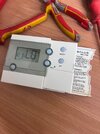
Salus thermostat - LO

Joined
30 Mar 2015
Messages
4,694
Reaction score
95
Country
United Kingdom
I have one of these working with the combo boiler and it keeps displaying “LO”

IMG_9264.jpeg

I’ve replaced the battery. No avail.
I can increase/decrease temperature but it keeps coming back to LO.

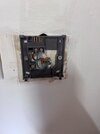
It has these two wires behind it:

IMG_9265.jpeg

I joined the two cables together and heating works!

I did also try resetting the thermostat.

I assume the above means that I have a dodgy wall thermostat?
 
1791827744596.png
From the manual found here page 26

From general use of temperature senders, if the chip goes faulty i.e. short circuit is tends to show zero, I know the PLC controlled machines I worked on would turn off if it showed zero degrees, as that was a indication that the sensor had failed, so to show LO this time of year, seems likely you need a new thermostat. Sorry.
 
View attachment 424125 From the manual found here page 26

From general use of temperature senders, if the chip goes faulty i.e. short circuit is tends to show zero, I know the PLC controlled machines I worked on would turn off if it showed zero degrees, as that was a indication that the sensor had failed, so to show LO this time of year, seems likely you need a new thermostat. Sorry.
No probs. What do you suggest as a replacement that is easy to wire and use. It’s for my folks and want it be simple.
 
A quick search brings up some ideas, which is to change the batteries, which you have done, hopefully with good quality alkaline ones? Another is the sensor at fault, which may indicate a new stat. Your existing is a 2 wire battery operated type, so will need to be this type or wireless - but that will require a receiver wiring in.

Plenty available, just keep away from Salus, Secure and cheap Amazon/Chinese crap.

Esi, EPH, Drayton, Neomitis to name a few that I would consider.
 
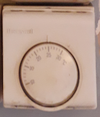
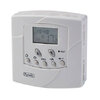
The easy to adjust presents a problem, these 1791880569938.png are easy to adjust, but have some drawbacks, and this ae235.jpgis programmable and far more accurate, but I had to keep the instructions tucked under the corner. As you move to wireless, this 84067_P.jpg was easy to use but designed for a on/off boiler, where this one Bacteria Prevention.jpg is designed for a modulating boiler, but has no ability to connect to TRV heads, so I went for this 1791880993249.png which is easy to use, and is all singing dancing.
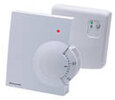
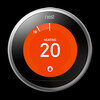
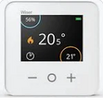
Much depends on where it is, size of house, and type of boiler. Today we are looking at saving money on fuel, so the ability to set each room independent is becoming more important. So with a large house, looking at a hub and many thermostats, in the main the TRV head, so rooms only heated as an when required, and the Wiser seem to be very adaptable to suit most homes, and one can add a bit at a time, it does not need to be all done at the same time.

But one is starting at around £200, if we look at the first one I show, £15 with no programming. There are some cheap thermostats on the internet 1791881896132.pngwhich look good, and may work fine, but no plumber/electrician can wait for internet deliveries and mess around, he wants a known good unit held in stock by local supplier.
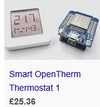
And the DIY guy will have only used 2 or 3 in his life. I found a cheap wireless lost its coms, and had to be mounted closer and closer to the hub, and had no safety features, so it could stick on, which if the TRVs are set is not too much of a problem, but this one, 84067_P.jpgauto shuts down if no coms in ½ hour, but designed for on/off boiler, it would start using a mark/space system as it got near the set temperature so it would not over shoot, but this does not work with a modulating boiler.

The Nest Gen 3 will not connect to TRV heads, so don't like it, but it can be set to work with oil, gas etc, and has OpenTherm, so for the room it is in it works great, but does not control rest of the house.

At the moment in Autumn I am using a oil filled radiator, as only want one room heating every so often on a cold day, I have not fired up my oil heating, I will when it gets colder, but although oil is 1/3 of the price of electric, with oil I have losses, and the losses reduce the longer it runs for, so until likely wanting an hour a day, it will stay off.

 
The easy to adjust presents a problem, these View attachment 424183 are easy to adjust, but have some drawbacks
This feels like the easiest and simplest to me. It's only a small flat and they will never use the programmer anyhow. It's a combi boiler so no need to schedule or activate hot water. I assume they come as a 2 wire option.
 
Some do, the neutral is sometimes used to reduce the hysteresis, but the mechanical thermostat will work without it, and there is some debate, as to if a high droop is good or bad.

With a condensing boiler, the less it turns on/off the better, we want the boiler to modulate (turn down) rather than turn off. The TRV will set the temperature of each room, together with the lock shield valve, but it would cause the boiler to continue cycling on/off all summer, unless we do something to stop it, so the wall thermostat is designed to turn off the heating when no heating is required.

To do this, the TRV and the thermostat needs setting to complement each other, and the mechanical TRV is not particularly accurate, set at around 2.5 it will likely be wide open at 18°C but not fully closed until 21°C so if the wall thermostat turns off at 21°C and back on at 19°C then the boiler will only turn off on warm days, which is how it should work, and will not restart too early allowing the TRV to do most of the work.

But great in theory, in practice, to set the wall thermostat and TRV to work together not so easy, but with the neutral connected a mechanical thermostat likely has a droop of 0.5°C, with it disconnected it may be 1.5°C but it still works.

I use electronic TRV heads, and there are far more accurate and can be programmed, so when a room is not in use, it is not heated, the display showing target and current can be used to set the lock shield valve, so I used one to set the lock shield valve in room with wall thermostat then swapped it back for the mechanical type. And used it in the living room after, which had bay windows and the sun could easy overheat the room, use of the electronic resulted in room set to 22°C could hit 26°C with the sun, before with mechanical TRV head it was hitting 32°C.
 

If you need to find a tradesperson to get your job done, please try our local search below, or if you are doing it yourself you can find suppliers local to you.

Select the supplier or trade you require, enter your location to begin your search.


Are you a trade or supplier? You can create your listing free at DIYnot Local

 
Back
Top