
Should I have used knotting?

  • Thread starter Thread starter nauseous
  • Start date Start date
N

nauseous

Just painting a pine bed that has been in a natural varnish state. Have undercoated it but
suddenly realise, should I have Knotted it first or will the thin layer of varnish act as a barrier?
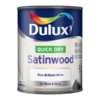
 
Which one of these do you think will do the job well or are they all a bit of a muchness. All £10-£12 delivered off ebay.
leyland-quick-dry-satin-750ml-egyptian-stone-2648-p.jpg

product-6543-6838-crown-quick-dry-satin-pure-brilliant-white-750ml.jpg
 

Attachments

  • 127633_1.jpg
    127633_1.jpg
    85.7 KB · Views: 268
Many tradesmen use shellac as a knotting solution. Unfortunately nothing is guaranteed to work. Shellac is probably better than nothing though.

If the bed has already been varnished, you need to give it a very, very thorough sanding, otherwise any paint that you apply will be prone to chipping (sorry).

With regards to the paints, neither is the trade version of Leyland or Crown, so I can't comment other than adding that I would not want to use either. As a professional, I don't buy cheap paints. Why save £10 if you need to spend another £180 on extra labour. That said if you are using either in your "free time" (and that free time is rated at very little) then go for either if you don't mind having to apply 2 or more coats than the trade version.

Sorry the previous remark isn't intended to seems as snarky as it might.
 
Just painting a pine bed that has been in a natural varnish state. Have undercoated it but
suddenly realise, should I have Knotted it first or will the thin layer of varnish act as a barrier?
Ive only ever used knotting on new wood where the knots my be live. Ive painted pine beds/ furniture but never considered using knotting as the knots looked ok and have never had a bleed through.
 
Yes the varnish will act as a barrier to prevent knots staining so when you sand don't break through the varnish. If your using water based finishes on this bed then make sure you use a bridging primer first, most acrylic primer/undercoats will suffice.
 
Thanks all for your replies. So far I've used an oil based white primer/undercoat (Dulux trade) that a neighbour let me have. Saved buying it, yay! Wasn't much left in tin and was quite thickish, tried a little w/spirit in it but It didn't go on as well as I'd liked as was outside and a hot day so is a bit patchy but plan on giving it 2 top coats, first coat watered down.
The local indy diy, come paint shop recommended Crown quick dry gloss as she said she has used it and it isn't too glossy, hadn't considered gloss so still thinking about it. Just a bit concerned with these other wb satin paints might be a bit stodgy to put on and end up with heavy brush marks. Shall prob buy a new synthetic brush if can't find one in garage/shed or maybe a small roller would be better, idk. Decisions decisions, sigh. :confused:
 
So far I've used an oil based white primer/undercoat (Dulux trade)

?

I have never seen any such paint. Can you post a photo of the tin?

If you need to "thin" WB paints use an additive such as Floetrol. It does actually thin the paint, it helps it flow and thus reduces brushmarks.

You can use a roller if you want but IMO it's a bit "DIY". That said, you could use a roller and lightly drag a brush over it- that's how I used to paint MDF wardrobes before I discovered the Anza (foam free) paint pads.
 
I have never seen any such paint. Can you post a photo of the tin?
Apologies, you are quite right, not sure where that came from tbh, have been looking at so many tins of paint they are morphing in my head. Just had a quick look and it's Dulux professional undercoat.

Regarding using Floetrol, thanks, but it seems a bit pricey (cost more than the paint) and it's only a small project so not economically viable imo. I was reading some reviews on Amazon to get an idea of it and someone who had used it suggested it was possibly a mixture of PVA and summat else so has given me an idea as i have a smallish tub of that kicking around. Hmm, I wonder?

Are you not supposed to stir WB satin paints? This would be a problem if I were to add either PVA or just water no?
 
There are some pretty dumb people on Amazon. Floetrol is not PVA. AFAIK, one of the key ingredients is propylene glycol (it is a humectant- it slows down the rate at which moisture is lost) .

https://www.eastman.com/Literature_Center/Misc/Paper_Low_VOC_Additives.pdf

I did once purchase some propylene glycol to test it but, erm, kinda forgot all about it. You can get 1L from Amazon for a tenner.

I have long wondered if adding hair conditioner to WB paints will extend the wet edge.

Not sure which WB satinwood you are planning to buy but most of them recommend stirring the paint thoroughly prior to use.

_____________ edit________________

https://www.amazon.co.uk/Owatrol-Li...ie=UTF8&reviewerType=all_reviews&pageNumber=4

I suspect that the amazon user than mentioned PVA is using pouring the paint on to canvas for artistic reasons, rather than using the PVA in a decorating capacity.
 
Last edited:
There are some pretty dumb people on Amazon. Floetrol is not PVA. AFAIK, one of the key ingredients is propylene glycol (it is a humectant- it slows down the rate at which moisture is lost) .
Useful to know. PG and VG (vegetable glycol) is also used in e-gig juice which i think I have seen in a shop near me that sells virtually everything (bar wood paint!) and can be bought in small quantities like 10/30/50/100ml neat, ie no nico or flavourings. At least we're getting somewhere regarding Floetrol's (one) possible active ingredient.
It does beg the question why do they make/sell certain paints that don't always work that well or only perform under ideal conditions?!
I have long wondered if adding hair conditioner to WB paints will extend the wet edge.
Lol. I'm not falling for that!

I still haven't made up my mind which paint to buy atm but won't be risking adding pva in any case.
 
I was serious about the hair conditioner, it contains propylene glycol. I haven't used hair conditioner for years but IIRC most don't have foaming agents (which means you wouldn't need to worry about bubbles forming in the paint).

why do they make/sell certain paints that don't always work that well or only perform under ideal conditions?!

Not sure. Maybe the products would separate in transit and require more mixing? Maybe it reduces the shelf life of the (wet) paint? I doubt that it is a cost thing, PG isn't expensive. Maybe it makes the paint take too long to dry when used in cold conditions, it is easy to add PG in hot environments but impossible to remove it in cold environments.
 

If you need to find a tradesperson to get your job done, please try our local search below, or if you are doing it yourself you can find suppliers local to you.

Select the supplier or trade you require, enter your location to begin your search.


Are you a trade or supplier? You can create your listing free at DIYnot Local

 
Back
Top