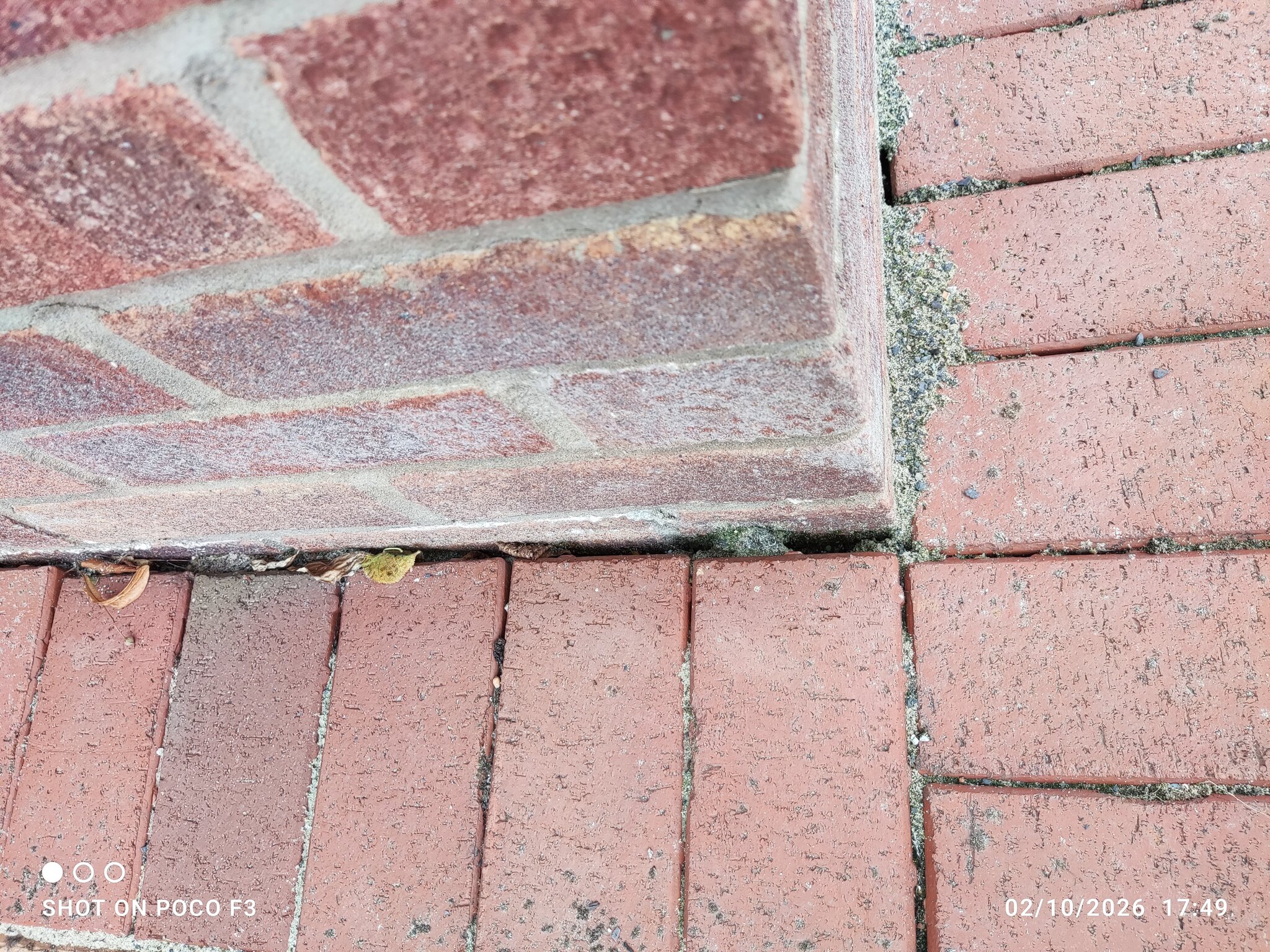
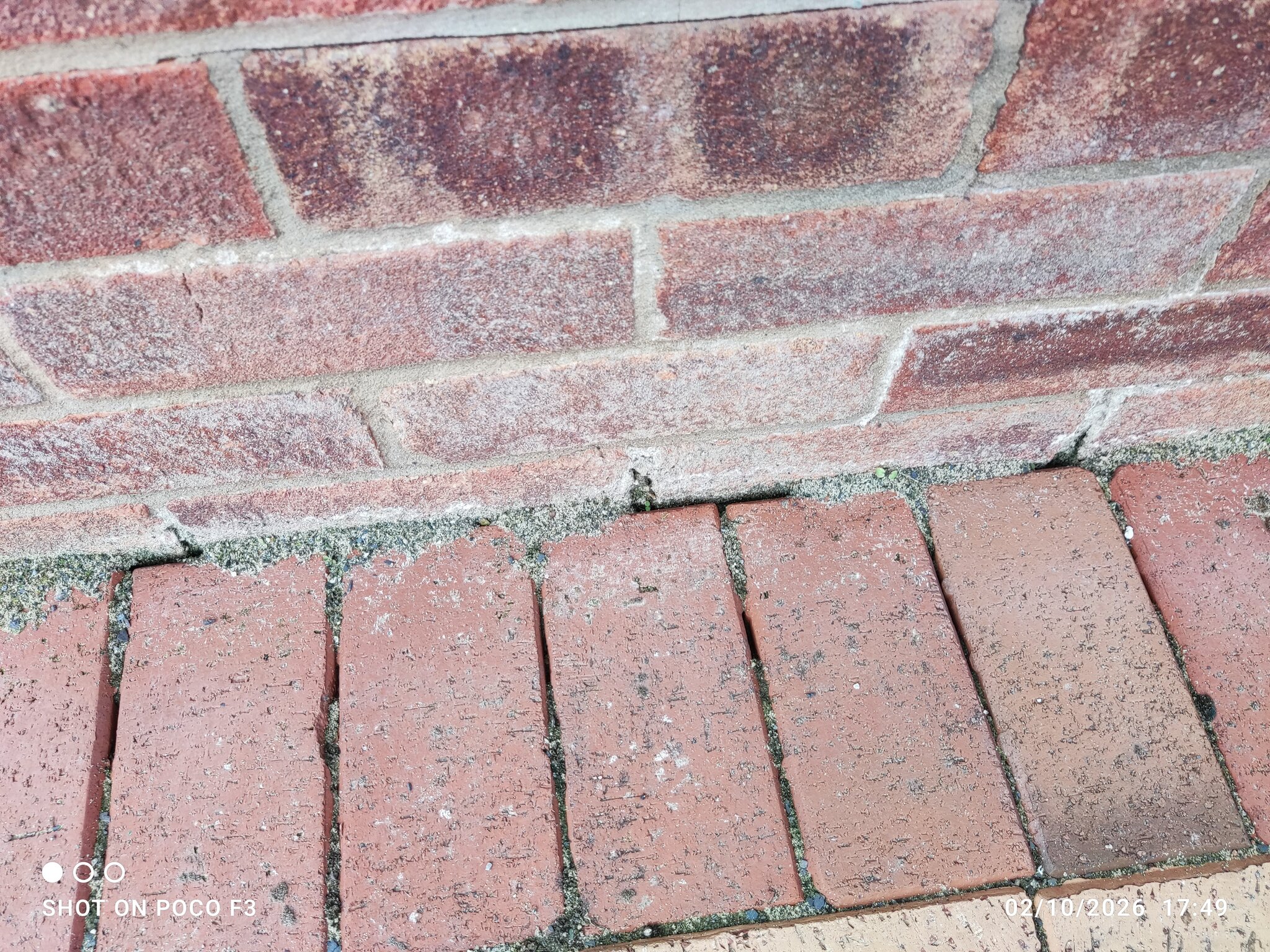
Space between patio tiles and walls

Joined
2 Nov 2025
Messages
9
Reaction score
0
Country
United Kingdom
The seems to be space between the bricks and outside patio tiles. I am not sure if this is deliberate as it's almost all around the house. I just at the floor next to the areas where there is gap and damp meter readings seem higher but might just be a conincidence. Anyone know if these gaps are deliberate or should they be filled?
1000443312.jpg


1000443311.jpg
 
The seems to be space between the bricks and outside patio tiles. I am not sure if this is deliberate as it's almost all around the house. I just at the floor next to the areas where there is gap and damp meter readings seem higher but might just be a conincidence. Anyone know if these gaps are deliberate or should they be filled?
View attachment 425805

View attachment 425804
Block paving units have nibs to create deliberate gaps, yes. These are usually filled with kiln dried sand.

It matters not whether there is a gap between your paving and the house, as long as the paving is laid correctly - i.e. height below (150mm) DPC and falls away from the house or is drained correctly.
Is the kiln dried sand loosely sitting between the gap? Because this sand like material as you can see in first photo is quite patchy. It's loose and present in some areas and absent from other areas. Also what is the purpose for the loose sand?
 
Does it slope away from the building? Check with a spirit level. If so then nothing to worry about, if it tips towards then there's a problem. But it's all a bit academic, as block paving isn't watertight anyway.

Ideally there should be a 100mm gap with gravel between the paving and house. As you've found, it's just not possible to seal paving up to a building. You now have a one-way valve, where rain running down the wall can get in, it gets held captive against the wall by the block and can't evaporate back out. It relies only on it seeping away in the soil, which will only happen very slowly.

A band of gravel will still allow the rain in, but it will flow through the gravel down and away from the wall and air can circulate.

But ultimately, none of this should matter if you have a DPC in your walls. Provided there are no damp patches in your walls or floods under your floors there isn't actually a problem to fix. Lots of houses look just like yours, you only need to worry if there's an actual problem!

 
Needs topping up. Bag of kiln dried sand and a dry day. The sand binds the blocks together.
 

If you need to find a tradesperson to get your job done, please try our local search below, or if you are doing it yourself you can find suppliers local to you.

Select the supplier or trade you require, enter your location to begin your search.


Are you a trade or supplier? You can create your listing free at DIYnot Local

 
Back
Top