• Looking for a smarter way to manage your heating this winter? We’ve been testing the new Aqara Radiator Thermostat W600 to see how quiet, accurate and easy it is to use around the home. Click here read our review.

Sub Floor Airflow (damp hall walls) (Ed.)

Joined
19 Jan 2025
Messages
1
Reaction score
0
Country
United Kingdom
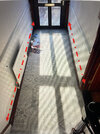
Having issues with damp along dotted line in hallway of 100 year old mid terrace house. Problem is this area is suspended whereas the rest of the downstairs is solid, as you can see from the other picture the door is at ground level too which isn't ideal either. Would poor ventilation be typical of the damp issue in this area and would anyone know how to get better ventilation into this area? Thanks
 

Attachments

  • IMG_1753.jpg
    IMG_1753.jpg
    441.9 KB · Views: 58
  • IMG_1754.jpg
    IMG_1754.jpg
    511.5 KB · Views: 58
Damp has risen in both walls (no dpc), the joists suspending the floor may also be affected but are not the cause as such.

There are a number of remedies for rising damp including s physical membrane and chemical injections or applying a bitumen paint to contain it.

Is next door also affected?
 
Why does the hallway only have a suspended floor when all of the other rooms are solid?

Pull a floorboard out and take a picture of the void below. Ventilation is key for a wooden floor.

Outline where your DPC is and take a picture of it. In your photo, I can't see a dpc. There may have been an air brick but some nutter has raised the floor level, making it obsolete.

Either convert the floor to concrete or get in a builder to channel the concrete from the other floors from outside and add a duct following a 110mm soil pipe venting to the floor under the hallway.
 
The external walls appear to have damp and moss at the base, and the external asphalt (?) looks high against the doorstep, and I think probably bridges the original DPC. Is it your own, or a council pavement?

Pour a bucket of water on the ground and see if it runs towards the house or away

Stand back and take a wider pic, all the way up to the roof and gutter and including all downpipes, overflows, drains and manholes.

Wet all along the internal hall walls suggests a bad source of water.

Hundred-year old houses often have leaking waterpipes. In terraced houses the supply is pretty sure to run in a straight line between the external stopcock (where the front gate used to be when the house was built) and the internal stopcock (where the kitchen sink used to be when the house was built). Have you got a water meter?

Be aware that silicone injections and new plaster do not repair leaking pipes, broken drains, or building defects. Do not allow anyone who sells silicone injections near your house.
 
If the solid floors in the rest of the house were added more recently that may have contributed to the damp. as would a solid floor in the adjoining property's hallway.
 
If the solid floors in the rest of the house were added more recently that may have contributed to the damp. as would a solid floor in the adjoining property's hallway.

Sometimes people with damp cover it up with concrete without rectifying the cause.
 

If you need to find a tradesperson to get your job done, please try our local search below, or if you are doing it yourself you can find suppliers local to you.

Select the supplier or trade you require, enter your location to begin your search.


Are you a trade or supplier? You can create your listing free at DIYnot Local

 
Back
Top