
You are using an out of date browser. It may not display this or other websites correctly.
You should upgrade or use an alternative browser.
You should upgrade or use an alternative browser.
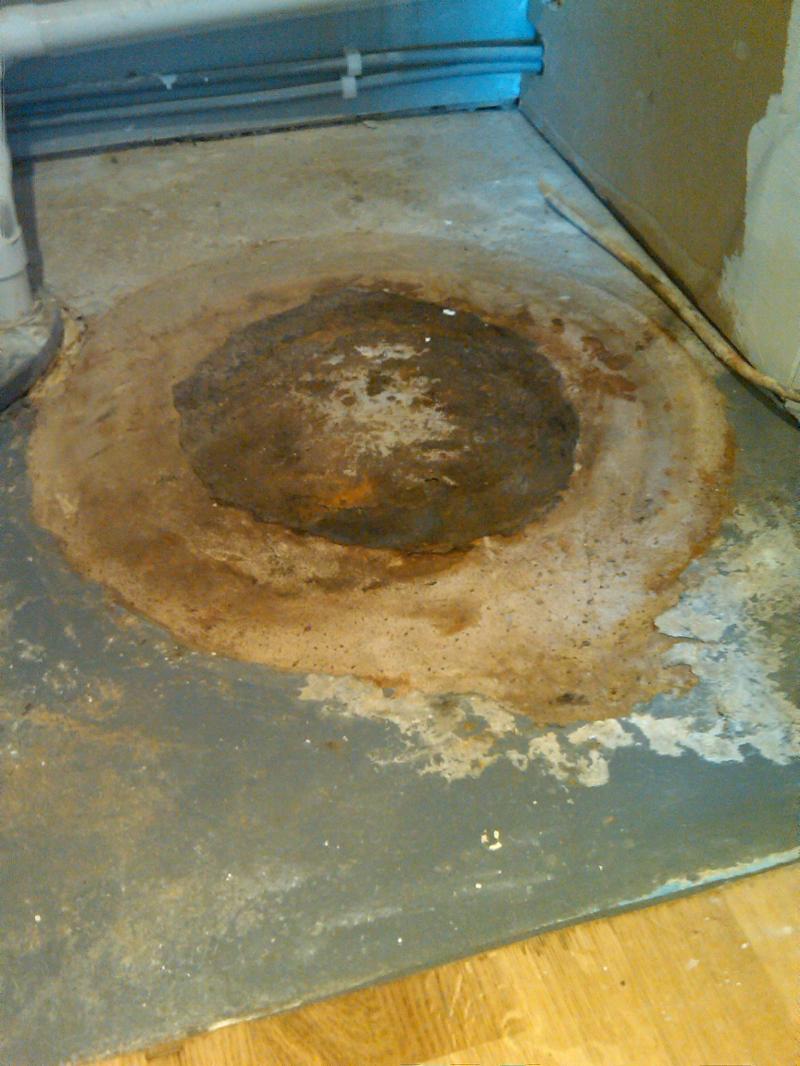
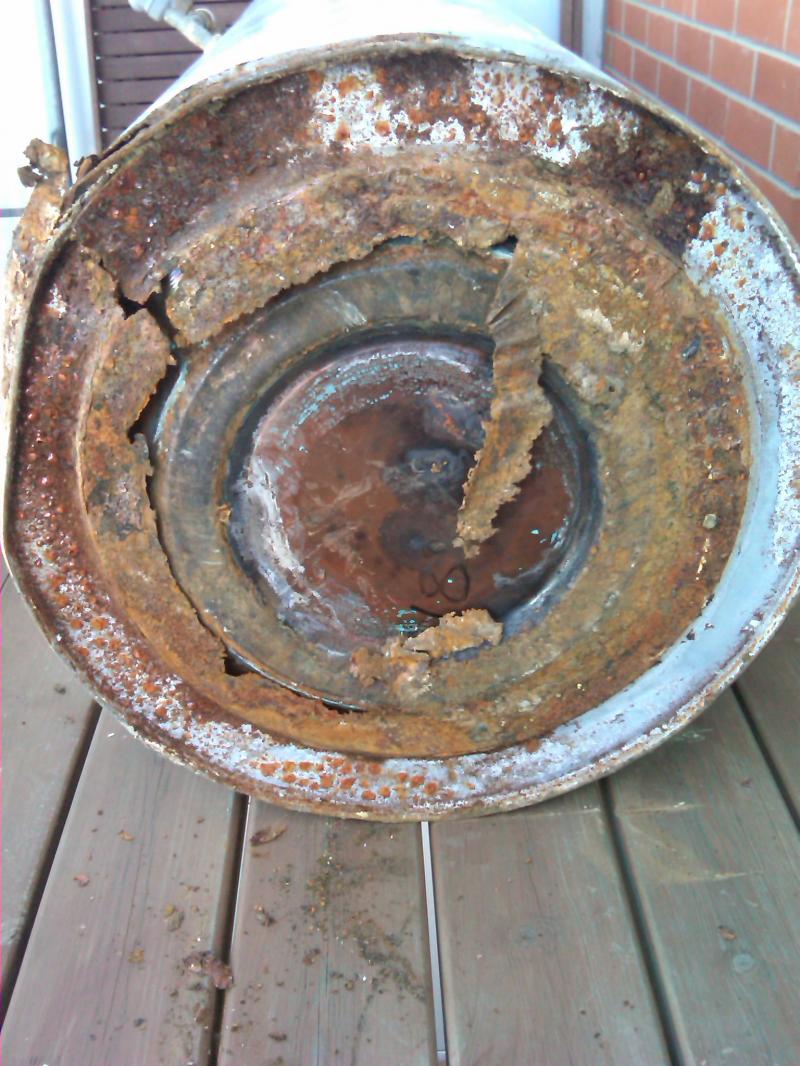
This is why you should never stand a cylinder on concrete !
- Thread starter gasbanni
- Start date

H
Hot&Cold
Really hate when they corrode away at the base,less scrap in valve 
As a layman (i.e. non-plumber) it seems to me that the corrosion is because the cylinder or one of its connections was leaking, with the lagging masking the fact because it was absorbing the water. Would it really have been any better on plywood?


I've heard you shouldnt take a laxative and a sleeping tablet at the same time.Bob
I've heard you shouldnt take a laxative and a sleeping tablet at the same time.Bob
That sounds like good advice.
There’s also a treatment for piles called “Anusol”!

- Joined
- 7 Jan 2007
- Messages
- 8,816
- Reaction score
- 1,231
- Country

As a layman (i.e. non-plumber) it seems to me that the corrosion is because the cylinder or one of its connections was leaking, with the lagging masking the fact because it was absorbing the water. Would it really have been any better on plywood?
It's irrelevant how it seems to you, with all due respect you are in error Under the gas regulations copper gas carrying pipes should not be in contact with concrete or masonry it attacks the copper and causes it to corrode, that's why copper pipes that need to be buried in concrete have to be factory sheathed.
I've been to numerous instances of copper that wasn't sheathed and buried in concrete that's corroded and leaked, the copper is covered in excessive verdigris as it's been attacked :http://www.cement.org/learn/concrete-technology/durability/corrosion-of-embedded-materials
Gas carrying pipes should be on stand off clips rather than touch any masonry.
The cylinder wasn't leaking I noticed the corrosion all around the base and recommended it be swapped when I moved it I was suprised how bad it was, had the floor been painted prior to the cylinder been installed it might have helped.
Look at the first image ( thats the concrete floor )....where's the majority of the corrosion ? It's not around the periphery where the wet lagging according to your theory would have been. It's in the centre where the weight of water in the cylinder was forcing the steel in to firm contact with the concrete.
Is it really better on plywood you ask, believe me a million percent. This doesn't mean all plumbers put plywood down.....because they'll be long gone before a problem raises it's head.......but if your'e conscientious you just do it.
Nice thought on your part but wrong.
Thanks for the explanation. I wasn't aware of the reaction between concrete and copper but, now that I think about it, I do remember a friend having an underfloor central heating pipe leak because it wasn't properly lagged (in the days before factory sheathing, I presume).. . . Under the gas regulations copper gas carrying pipes should not be in contact with concrete or masonry it attacks the copper and causes it to corrode, that's why copper pipes that need to be buried in concrete have to be factory sheathed.
I've been to numerous instances of copper that wasn't sheathed and buried in concrete that's corroded and leaked, the copper is covered in excessive verdigris as it's been attacked :http://www.cement.org/learn/concrete-technology/durability/corrosion-of-embedded-materials
Gas carrying pipes should be on stand off clips rather than touch any masonry.
The cylinder wasn't leaking I noticed the corrosion all around the base and recommended it be swapped when I moved it I was suprised how bad it was, had the floor been painted prior to the cylinder been installed it might have helped.
Look at the first image ( thats the concrete floor )....where's the majority of the corrosion ? It's not around the periphery where the wet lagging according to your theory would have been. It's in the centre where the weight of water in the cylinder was forcing the steel in to firm contact with the concrete.
Is it really better on plywood you ask, believe me a million percent. This doesn't mean all plumbers put plywood down.....because they'll be long gone before a problem raises it's head.......but if your'e conscientious you just do it. . . .
I note from the article in your link that the chemical reaction which causes the corrosion requires water in the concrete. That can be from fresh concrete, which hasn't fully dried out; from atmosphere if the concrete is not dense enough to exclude it; or from other sources such as floor-washing, spillages, or leaks. So any non-concrete base -- including a good layer of paint, as you suggest -- is the answer, and plywood is maybe the simplest.
We put cylinders on ply in lofts - after bracing joists and spanning over a supporting wall(s), but it’s mainly just as it’s the best load bearing and support.
UV cylinders we use have a robust plastic base on them so should protect metals from contact with other surfaces that could corrode.
I can envisage a problem with putting it on ply on a concrete floor, in that there could be a leak or flood that, even when mopped up, would leave damp under the cylinder and could result in that rotting the ply over time... it’d never fully dry out.
Maybe some tiles or rubber matting would be better?!
UV cylinders we use have a robust plastic base on them so should protect metals from contact with other surfaces that could corrode.
I can envisage a problem with putting it on ply on a concrete floor, in that there could be a leak or flood that, even when mopped up, would leave damp under the cylinder and could result in that rotting the ply over time... it’d never fully dry out.
Maybe some tiles or rubber matting would be better?!
- Joined
- 7 Jan 2007
- Messages
- 8,816
- Reaction score
- 1,231
- Country
I always use marine ply. I've been back to service some of the cylinders always bone dry .....you can't beat jet blue on compression joints.We put cylinders on ply in lofts - after bracing joists and spanning over a supporting wall(s), but it’s mainly just as it’s the best load bearing and support.
UV cylinders we use have a robust plastic base on them so should protect metals from contact with other surfaces that could corrode.
I can envisage a problem with putting it on ply on a concrete floor, in that there could be a leak or flood that, even when mopped up, would leave damp under the cylinder and could result in that rotting the ply over time... it’d never fully dry out.
Maybe some tiles or rubber matting would be better?!
Seen loads of unvented leaning at an angle from what you describe. They were on chipboard and inadequately supported at that.
Wood or ply is a hydroscopic material and it will dry out under a warm cylinder.
- Joined
- 7 Jan 2007
- Messages
- 8,816
- Reaction score
- 1,231
- Country
Thanks for the explanation. I wasn't aware of the reaction between concrete and copper but, now that I think about it, I do remember a friend having an underfloor central heating pipe leak because it wasn't properly lagged (in the days before factory sheathing, I presume).
I note from the article in your link that the chemical reaction which causes the corrosion requires water in the concrete. That can be from fresh concrete, which hasn't fully dried out; from atmosphere if the concrete is not dense enough to exclude it; or from other sources such as floor-washing, spillages, or leaks. So any non-concrete base -- including a good layer of paint, as you suggest -- is the answer, and plywood is maybe the simplest.
The article was mainly talking about re enforced concrete and carbonation ......That's when you see the steel rods rusting through the surface of concrete when it's not embed deep enough on external surfaces.
My experiance is that copper corrodes excessively when buried in concrete no moisture is present,you get a thick layer of verdigris this then can protect the copper underneath from further corrosion ......normally ( I believe there is a copper roof on a temple in India that's 1,600 years old and is still sound ) but the copper
underneath concrete is still attacked. Lots of houses with solid floors built in the 50's and 60's have copper buried in concrete without protection.
The problem appears not to have been known about back then.

DIYnot Local
Staff member
If you need to find a tradesperson to get your job done, please try our local search below, or if you are doing it yourself you can find suppliers local to you.
Select the supplier or trade you require, enter your location to begin your search.
Please select a service and enter a location to continue...
Are you a trade or supplier? You can create your listing free at DIYnot Local
Similar threads


- Replies
- 14
- Views
- 2K