
• Looking for a smarter way to manage your heating this winter? We’ve been testing the new Aqara Radiator Thermostat W600 to see how quiet, accurate and easy it is to use around the home. Click here read our review.

Tiling over chipboard to meet existing tiles and wood floor – to understand before hiring someone

Joined
12 Jun 2025
Messages
4
Reaction score
1
Country
United Kingdom
Hi all, I’m new to the forum and really hoping for some advice - apologies if i'm posting in the wrong place!

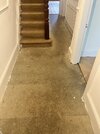
I’ve moved into a house where the hallway still has exposed chipboard flooring. The previous owner had a damp-proof course done but never finished the floor.

We had parquet laid in the living/dining rooms by a great installer and a different contractor tiled the kitchen (concrete subfloor). He was supposed to extend the tiling into the hallway but left it unfinished, and the edge where the kitchen tile meets the hallway is not straight. We paid extra for the hallway, but he never did it, and we ended up sacking him (for a number of botched jobs, not just the floor).

Now the hallway has:
  • Bare chipboard flooring
  • Parquet coming from the living and dining rooms, ending neatly at the hallway doorway
  • A messy edge where the kitchen tiles meet the hallway
I’ve got no DIY experience and will need to hire someone, but I’d like to understand what should be done so I don’t get taken advantage of again.
  • Can you tile over chipboard?
  • Will the potentially different floor levels or surfaces cause any issues?
  • What should I ask a tiler to make sure it’s done properly?

I guess the biggest question I have before putting the job out to trades is what kind of price I should be expecting. The hallway’s in two parts - one wider section before the stairs that’s about 3.45m long by 1.30m wide, and a narrower bit running from the bottom of the stairs to the kitchen that’s roughly 3.8m long by 88cm wide.

I’ve already got the tiles, so I’m just looking for a rough idea of what the labour and additional materials might cost. Based in East Yorkshire if that helps.

Thanks so much in advance for any help
 

Attachments

  • IMG_3858.JPG
    IMG_3858.JPG
    445 KB · Views: 50
Hi all, I’m new to the forum and really hoping for some advice - apologies if i'm posting in the wrong place!

I’ve moved into a house where the hallway still has exposed chipboard flooring. The previous owner had a damp-proof course done but never finished the floor.

We had parquet laid in the living/dining rooms by a great installer and a different contractor tiled the kitchen (concrete subfloor). He was supposed to extend the tiling into the hallway but left it unfinished, and the edge where the kitchen tile meets the hallway is not straight. We paid extra for the hallway, but he never did it, and we ended up sacking him (for a number of botched jobs, not just the floor).

Now the hallway has:
  • Bare chipboard flooring
  • Parquet coming from the living and dining rooms, ending neatly at the hallway doorway
  • A messy edge where the kitchen tiles meet the hallway
I’ve got no DIY experience and will need to hire someone, but I’d like to understand what should be done so I don’t get taken advantage of again.
  • Can you tile over chipboard?
  • Will the potentially different floor levels or surfaces cause any issues?
  • What should I ask a tiler to make sure it’s done properly?

I guess the biggest question I have before putting the job out to trades is what kind of price I should be expecting. The hallway’s in two parts - one wider section before the stairs that’s about 3.45m long by 1.30m wide, and a narrower bit running from the bottom of the stairs to the kitchen that’s roughly 3.8m long by 88cm wide.

I’ve already got the tiles, so I’m just looking for a rough idea of what the labour and additional materials might cost. Based in East Yorkshire if that helps.

Thanks so much in advance for any help
Never tile direct onto chipboard flooring or floorboards. Fix 5.5mm plywood down with 25mm screws at 100mm centres. Draw a grid and put the screws in. An 8b4 sheet will take 288 screws. The size of your flooring will need 3 sheets and best part of 800 screws.

Tile labour depends on type of tile because of the tools required to cut and drill porcelain v ceramic, size of tile, and pattern (straight, brickwork, 3rd brickwork, Victorian etc..)

Meeting existing tiles at the doorway, it's a case of joining in with a threshold. Either buying a wooden or metal threshold, or making one out of oak, elm etc..

So just best to get 3 or 4 quotes and go with your guy feeling. I would say over £200 per day labour, some charge £300. So the shape, complexity etc.. makes it tricky to say how much you would pay. Obviously takes longer to tile to skirting as opposed to firing cuts in and fitting skirting on top.
 
Last edited:
Hi ‘ Hac’. This will stir things up a bit ……
Never ever put down Plywood of anything thinner than 9mm, and never ever use screws! If my memory serves me, British Standards state it should be 12mm, but in practice 9mm is practical and what is used. In place of screws use 25mm Ringshank nails, hammered in with a 6” grid pattern all over. Coat with SBR and allow to dry.
At least, that’s the way I was taught’back in the day’.
For the last few years ‘Hardibacker’ cement board has surpassed Ply; these are only 6mm thick, and at 1200 x 800 board size are easy to handle, cut, and lay. SBR the floorboards, 6mm notched trowel of adhesive, lay and screw down brickbond pattern, using 25mm Turbo gold screws. It’s great stuff to use and leaves a really good substrate for tiling onto - tiling adhesive loves it and will stick solid.

In your scenario above, yes, there will be a height difference between your kitchen and hall tiles. Not a massive one, and easily hidden/cleanly defined by whatever floor bar/threshold is used. I’m guessing your tiler had already started doing the kitchen before the hall was ‘added ‘ ?

Re pricing :-
There are just far too many variables and unknowns for a tiler to give you a quote on here - it’s not what this forum is designed for, and any tiler worth his salt wouldn’t do it.
 
Cheers, both! Really helpful stuff - Sounds more complicated than I'd hoped tbh but I’ve got a much clearer idea of what to ask for now.

Thanks for taking the time to lay it out.
 

If you need to find a tradesperson to get your job done, please try our local search below, or if you are doing it yourself you can find suppliers local to you.

Select the supplier or trade you require, enter your location to begin your search.


Are you a trade or supplier? You can create your listing free at DIYnot Local

 
Back
Top