

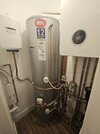
Bought a house where the previous owner had done a lot of work back in 2023. Along with the rear and side fill ground extension, One of the things was fitting a 2 zone ufh downstairs and removing the rads. 1st floor and loft still only have rads. He's also put a wb 8000 35kw life boiler, kingspan 300l cylinder, heatmiser ufh4, nest gen 3 and heatlink (for the radiator and hot water control)
With the cold approaching, I've recently turned on the ufh for the last few days. I've never had it before but have read that it should be left on constantly with only a degree or two set back. Currently both zones are set to 20.5 when not in use and 22 for when in use. I think the neostats v2 have a 1 degree differential which I've not touched.
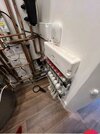
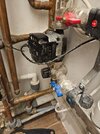
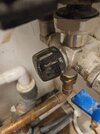
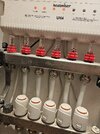
What I'm not sure about is the flow rates and mixer temp. Boiler rad temp is set to 65. However the ufh mixer seems to be set to 55 which reading online seems quite high. Ive verified it by leaving it on and looking at the dial above the valve. Also the manifold flow tubes seem to vary. 2 of them are at 5l/m. Again that seems quite high based on what I've read online
I don't have any diagrams or installation details so have no idea how long the pipes are. I also don't know if it's screed or suspended timber below. Based on the level 3 survey it indicates the extension is solid floor but the living room (the other ufh zone is suspended timber) Should I assume it was set correctly or should I be messing about with it.
Lastly, it's a 1909 property with solid walls except for the rear ground extention. Even at 22 degrees it doesn't feel toasty which I assumed it would. Today for example it managed to reach the set temps in both zones just fine after an hour or so but the has used about 30kwh of gas based on my octopus mini (excluded the 32 mins of radiator heating and the 1hr of cylinder heating). Total gas use today was 42. Its been about 11 degrees outside.
Pics attached if it helps. Any advice would be greatly appreciated.
With the cold approaching, I've recently turned on the ufh for the last few days. I've never had it before but have read that it should be left on constantly with only a degree or two set back. Currently both zones are set to 20.5 when not in use and 22 for when in use. I think the neostats v2 have a 1 degree differential which I've not touched.
What I'm not sure about is the flow rates and mixer temp. Boiler rad temp is set to 65. However the ufh mixer seems to be set to 55 which reading online seems quite high. Ive verified it by leaving it on and looking at the dial above the valve. Also the manifold flow tubes seem to vary. 2 of them are at 5l/m. Again that seems quite high based on what I've read online
I don't have any diagrams or installation details so have no idea how long the pipes are. I also don't know if it's screed or suspended timber below. Based on the level 3 survey it indicates the extension is solid floor but the living room (the other ufh zone is suspended timber) Should I assume it was set correctly or should I be messing about with it.
Lastly, it's a 1909 property with solid walls except for the rear ground extention. Even at 22 degrees it doesn't feel toasty which I assumed it would. Today for example it managed to reach the set temps in both zones just fine after an hour or so but the has used about 30kwh of gas based on my octopus mini (excluded the 32 mins of radiator heating and the 1hr of cylinder heating). Total gas use today was 42. Its been about 11 degrees outside.
Pics attached if it helps. Any advice would be greatly appreciated.
Attachments
Last edited:

