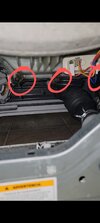
I'm pretty new to this so please forgive my lack of correct vocabulary or knowledge. I have a GE front load washer that has started leaking. I'm fairly handy and I was hoping I could fix it myself as buying a new washer wasn't really in my budget right now. I was hoping I could get some help understanding what's causing this issue and how I should handle it. So far, I've remove both the bottom front panel and the top panel. The leak is coming from the bottom of the machine and it seems to me like the bolts that hold the outer drum together is where the leak is happening. I've tried tightening the bolts but that has not worked.

You are using an out of date browser. It may not display this or other websites correctly.
You should upgrade or use an alternative browser.
You should upgrade or use an alternative browser.
Washer leaking
- Thread starter justadad
- Start date
- Joined
- 13 Mar 2019
- Messages
- 1,323
- Reaction score
- 340
- Country

Total guess here, but probably the rubber seals have started to degrade, so won't seal properly. Tightening the bolts isn't enough, you would need to dismantle and replace the seals.

The leak is coming from the bottom of the machine and it seems to me like the bolts that hold the outer drum together is where the leak is happening. I've tried tightening the bolts but that has not worked.
Are you sure the outer drum is bolted together? Those bolts look as if they simply bolt the pump outlet in place.
I'm assuming that it's not an easy fix by the sounds of it?Total guess here, but probably the rubber seals have started to degrade, so won't seal properly. Tightening the bolts isn't enough, you would need to dismantle and replace the seals.
I'm fairly certain. The bolts are pretty uniform. They got all the way around the outside of the drum in a line.Are you sure the outer drum is bolted together? Those bolts look as if they simply bolt the pump outlet in place.
- Joined
- 13 Mar 2019
- Messages
- 1,323
- Reaction score
- 340
- Country
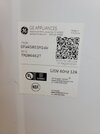
Sorry, all I'm doing is guessing. I don't know this model of washer.I'm assuming that it's not an easy fix by the sounds of it?
The theory of domestic appliance repair is: dismantle it, replace the faulty component and reassemble. Job done.
The reality is trickier, you may not have the correct tools, you might break something else whilst dismantling it, there may be single-use fasteners you have to replace, the faulty components might not be available, etc.
I'm fairly certain. The bolts are pretty uniform. They got all the way around the outside of the drum in a line.
I now agree! There are a lot of the bolts, you would need to go round all of them, to get them evenly tight. On mine - Hotpoint, when I replaced the drum bearing, the seal rubber, was very robust, and quite thick, unlikely to leak. If you pull it apart - worth replacing the drum bearings at the same time, but....
I wouldn't expect the leak to be from the outer drum, unless it has developed a crack. I would be looking elsewhere first, such as the fill compartment splashing over, onto the drum, due to too high a flow rate..
Thanks for the insight! I was hoping it might be something else. I removed the top and bottom panels to check for leaks but didn’t find anything. I looked all around the drum and didn’t see any cracks, and there aren’t any water trails coming from the top down. The issue seems to start right at those bolts. From what I’ve read and what’s been recommended, it looks like the seal is gone and needs to be replaced.I now agree! There are a lot of the bolts, you would need to go round all of them, to get them evenly tight. On mine - Hotpoint, when I replaced the drum bearing, the seal rubber, was very robust, and quite thick, unlikely to leak. If you pull it apart - worth replacing the drum bearings at the same time, but....
I wouldn't expect the leak to be from the outer drum, unless it has developed a crack. I would be looking elsewhere first, such as the fill compartment splashing over, onto the drum, due to too high a flow rate..
I agree. Like you said, dismantle it, replace the faulty component, and reassemble. It’s not rocket science, but the devil’s in the details. It’s all good, and I appreciate your input. I’ll do a bit more research and then decide whether it’s worth tackling or if I should just bite the bullet and buy a new one.Sorry, all I'm doing is guessing. I don't know this model of washer.
The theory of domestic appliance repair is: dismantle it, replace the faulty component and reassemble. Job done.
The reality is trickier, you may not have the correct tools, you might break something else whilst dismantling it, there may be single-use fasteners you have to replace, the faulty components might not be available, etc.
Thank you for this! It does feel like the tub seal is the issue.
I’ll do a bit more research and then decide whether it’s worth tackling or if I should just bite the bullet and buy a new one.
I took me around a leisurely 5 hours, to strip mine down, replace the drum bearing, and rebuild it, removing the drum, in a very tight awkward working space. Then with the drum outdoors, to strip.
Thanks again for the insight Harry! I'll be sure to let you know how things go.I took me around a leisurely 5 hours, to strip mine down, replace the drum bearing, and rebuild it, removing the drum, in a very tight awkward working space. Then with the drum outdoors, to strip.

DIYnot Local
Staff member
If you need to find a tradesperson to get your job done, please try our local search below, or if you are doing it yourself you can find suppliers local to you.
Select the supplier or trade you require, enter your location to begin your search.
Please select a service and enter a location to continue...
Are you a trade or supplier? You can create your listing free at DIYnot Local
