


Hi all,
I've recently bought a small house to renovate and one of the things that I've been working on is removing all of the 1970s wallpaper (from every room).
In the dining room the wallpaper came down at the weekend, it was really thick and multi-layered stuff, and I found some areas where the plaster appeared damp (visually and to the touch).
You can easily see this in the picture here... it's in each corner. This wall shown adjoins the next house in the terrace (the terrace is on an incline) and the house next to the wall where the damp can be seen is higher than this house.
I have a damp meter - Brennenstuhl gadget that I have faith in - that reads 12% in the non-damp bits above, and a humongous 25% in the damp corners that you can easily discern!
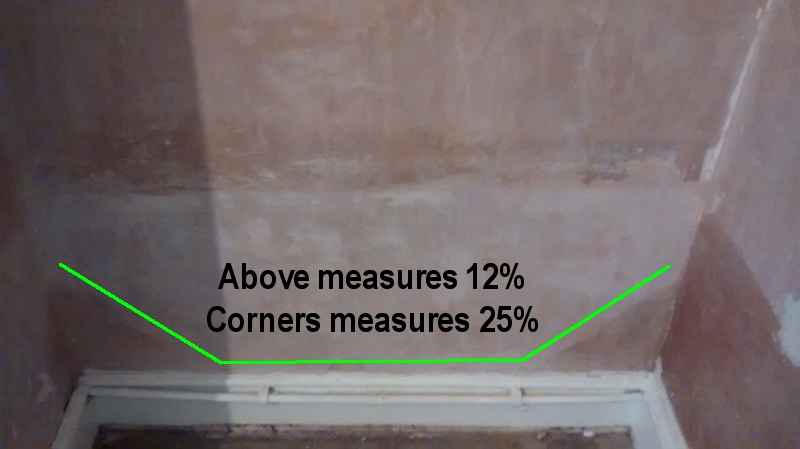
12% on the scale is "low".
25% on the scale is "high".
Is it time for me to call the Ghostbusters (some kind of damp experts)?
I'd add this following information, which I hope might also be useful - the house has been unoccupied since early May 2015 and the heating will have been off all that time. There is some ventilation in the house, via a vent or two, but there won't be much. I've had the heating on a fair bit since taking ownership a couple of weeks ago.
I'm not against spending £s to rectify this, I want to pass on a good home for someone when this project is done, I'm just curious what my next sensible steps should be. Any advice will be appreciated.
I've recently bought a small house to renovate and one of the things that I've been working on is removing all of the 1970s wallpaper (from every room).
In the dining room the wallpaper came down at the weekend, it was really thick and multi-layered stuff, and I found some areas where the plaster appeared damp (visually and to the touch).
You can easily see this in the picture here... it's in each corner. This wall shown adjoins the next house in the terrace (the terrace is on an incline) and the house next to the wall where the damp can be seen is higher than this house.
I have a damp meter - Brennenstuhl gadget that I have faith in - that reads 12% in the non-damp bits above, and a humongous 25% in the damp corners that you can easily discern!
12% on the scale is "low".
25% on the scale is "high".
Is it time for me to call the Ghostbusters (some kind of damp experts)?
I'd add this following information, which I hope might also be useful - the house has been unoccupied since early May 2015 and the heating will have been off all that time. There is some ventilation in the house, via a vent or two, but there won't be much. I've had the heating on a fair bit since taking ownership a couple of weeks ago.
I'm not against spending £s to rectify this, I want to pass on a good home for someone when this project is done, I'm just curious what my next sensible steps should be. Any advice will be appreciated.

