• Looking for a smarter way to manage your heating this winter? We’ve been testing the new Aqara Radiator Thermostat W600 to see how quiet, accurate and easy it is to use around the home. Click here read our review.

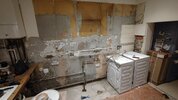
What do I do with this wall!?

Joined
22 Jan 2025
Messages
9
Reaction score
0
Country
United Kingdom
Hello.

First time poster and, to a degree, first time DIYer.

I am tearing out the old and installing a new kitchen.

All going alright at the moment but I have a question about one of the walls.
It is an internal party wall on a 1970s extension. The original extension didn't have planning permission so I suspect it was a quick job with a breeze block wall.

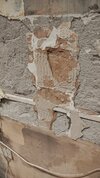
I have attached a photo to the thread to give you a sense of the condition of the wall.
With this mix of materials and condition what should I be using to fill the gaps and make the wall good for a mix of tiles and wood cladding?

Would I need to use a mix of British Gypsum bonding and hard wall?

Any tips or guidance very gratefully received!

Thanks so much.

GJC
 

Attachments

  • IMG_20250122_182343289_HDR.jpg
    IMG_20250122_182343289_HDR.jpg
    437 KB · Views: 69
  • IMG_20250122_170643572_HDR.jpg
    IMG_20250122_170643572_HDR.jpg
    252.8 KB · Views: 69
Watch. On the trowel.... YouTube.
See similar plastered..

Could seal and bond and skim.
Or
Dot and dab plasterboard over
 
I can't see the gaps, but if you mean in the blockwork, sand and cement mortar has a longer working time, and IMO is much easier for a beginner. It also has more strength, which you will appreciate when you are screwing cabinets or something to the wall.

Spray the wall with water first to prevent the cement drying out too fast before it cures.

If you can apply it fairly flat, you can skim over with finish plaster. This is done in my area as a local traditional technique.
 
OP,
Before any making good you should have a firm, dimensioned lay-out for that wall (for the whole kitchen) - cu pipe runs, work top(?), outlets, appliances & units(?) or you might end up going back over your work?
All cables runs are best sunk in metal channels - all runs to be in Safe Zones - all elec device boxes to be exactly positioned. Appliance sockets should be easily accessible.
What is on the upper wall - lining paper?
If you intend to cover the wall with tile & cladding there is no need for skimming - just a plumb & flat surface.
You've already returned onto the far wall &, presumably the sink wall is next to be worked on - so dont jump the gun on patching plaster until all the walls surfaces are exposed.
 

If you need to find a tradesperson to get your job done, please try our local search below, or if you are doing it yourself you can find suppliers local to you.

Select the supplier or trade you require, enter your location to begin your search.


Are you a trade or supplier? You can create your listing free at DIYnot Local

 
Back
Top