Which cleaner would you recommend ?

Joined
27 Jul 2006
Messages
518
Reaction score
8
Country
United Kingdom
So for sometime, I’ve been replacing some of the radiators in my house
I now have five new Stelrads fitted over the last six months and three older K1 radiators that have been on the system for probably six or seven years which were purchased from Wickes
My boiler is a Worcester Greenstar that was installed approximately 14 years ago and it’s running perfectly fine
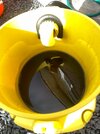
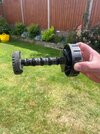
So yesterday I drained the system to put the latest radiator on and the water was running pretty clean however when I used my wet dry Vac you will see from the attached photos. The water was pretty muddy.
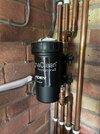
My Adey Magna clean pro 2 had minimal magnetite residue on it

So it’s worth mentioning at this point that the system hasn’t been blessed with having regular inhibitor in the system for quite some time so I am now contemplating running a cleaner through before adding some inhibitor

Based on the number of new radiators I have fitted, is the general thought to use Sentinel instead of the Adey products ?

I did notice a previous post from @Madrab where he talks about a previous experience with older radiators on a system whereby the water kept going murky as they were clearly already corroding but once replaced and system cleaned, the water is squeaky clean

Any thoughts would be welcomed
 

Attachments

  • IMG_4057.jpeg
    IMG_4057.jpeg
    951.7 KB · Views: 5
  • IMG_4059.jpeg
    IMG_4059.jpeg
    534.3 KB · Views: 5
  • IMG_4058.jpeg
    IMG_4058.jpeg
    926.7 KB · Views: 5
When I cleaned my system, I removed each rad, shook them up, drained, refilled with a hose, shook, drained, refilled and repeated until it was running clear. Then treated the system with a cleaner, run for a few weeks, drained, refilled, drained and then added inhibitor and fitted a magnetic filter. It’s been clean as a whistle ever since.
 
When I cleaned my system, I removed each rad, shook them up, drained, refilled with a hose, shook, drained, refilled and repeated until it was running clear. Then treated the system with a cleaner, run for a few weeks, drained, refilled, drained and then added inhibitor and fitted a magnetic filter. It’s been clean as a whistle ever since.
What cleaner did you plump for @Mottie ?
Also, were they new radiators or existing system and has it had inhibitor in there regularly?
I’m not looking to take the radiators off to clean. I’m looking to run a chemical through and then drain and flush as I’ve got a number of drain offs that I’m looking to utilise.
 
What cleaner did you plump for @Mottie ?
Also, were they new radiators or existing system and has it had inhibitor in there regularly?
I’m not looking to take the radiators off to clean. I’m looking to run a chemical through and then drain and flush as I’ve got a number of drain offs that I’m looking to utilise.
Sentinel x400
Mixture of new and 40 year old rads
Trouble with just draining is that you get a lot of sediment settle and semi-harden at the bottom of the rads that will not come out with just using a flush additive. That sediment will only come out with a proper power flush that involves power flushing (obviously) whist using a special vibrating tool on each rad to loosen the sediment.
 
I sometimes wish I had the equipment to be able to cut open old rads and see what's going on. The system I had that problem with had been leaking underfloor for such a long time and the client had just constantly added water to re-pressurise, this had been going on for a long time and the system got so bad that the pump started to go, the boiler started kettling badly and the system was as black as tar, no filter etc. I cleaned and flushed that system about 6 times over 2 years and eventually had to say enough as it always went back to black and ended up renewing the whole system.
I have only had that issue twice in all my days of doing this. Usually a good run with cleaner and then a good flush and the system can be made to behave and will condition properly. I have had such filthy systems that the rads were flushed individually, then filled, cleaned and flushed, then inhibited a number of times before it would then started to behave itself. The only thing I could put it down to was that the rads were so bad internally, no amount of inhibitor was going to stop it corroding.
 
Thanks for all the replies
I may doublecheck and see if wickes still stock the same radiators and sizes that I need and price up just replacing the final three and be done with it but obviously didn’t wanna get into redoing any change in pipework
I just want to knock this on the head now and what with the decent temperatures we’re having it’s the perfect time to get it done and then I can get onto something else from my ever increasing list ☺️
 
Thanks for all the replies
I may doublecheck and see if wickes still stock the same radiators and sizes that I need and price up just replacing the final three and be done with it but obviously didn’t wanna get into redoing any change in pipework
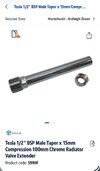
When I changed my system to a sealed one, I had a few pinholes leaking in the oldest rads. I changed them but obviously they were imperial measurements and the new ones were metric although a lot more efficient. I just bought the next size down and added extension tails to the rads to reach the rad valves. Didn’t have to touch any of the system pipework. Something like this:

IMG_9281.jpeg
 
The only other thing I would mention is that if a system refuses to settle down after repeated attempts and constantly corrodes and the pipe is plastic it may be time to check the class of the pipework. Some earlier systems may have been piped up with non barrier pipe. The pipe is gas permeable and will let in O2 into the system accelerating corrosion, the only option, if that is found, is to replace the pipework.
 
The only other thing I would mention is that if a system refuses to settle down after repeated attempts and constantly corrodes and the pipe is plastic it may be time to check the class of the pipework. Some earlier systems may have been piped up with non barrier pipe. The pipe is gas permeable and will let in O2 into the system accelerating corrosion, the only option, if that is found, is to replace the pipework.
Thanks @Madrab and you have actually just reminded me of something that I forgot to do

Basically 10 years ago, we had an extension and there is a radiator at the far end
The builders tapped off my copper work in the back upstairs bedroom and ran two lengths of plastic through the ceiling and then it was copper down the wall
As part of this exercise, I replaced the radiator at the end of the extension as it was one of them 1800 high Verti rads and the output was rubbish but where they tapped off the copper work they used HEP20 connectors between copper and plastic
I took the opportunity to replace those connectors even though I know they have a supposed 50 year guarantee and I meant to check whether the plastic was double barrier but I would have had to have taken the pipe insert out which I tried briefly but it was difficult, so I left it as I had already checked with Wavin the manufacturers as I noticed that the inserts are now slightly different
They did confirm that the inserts are fully compatible with all new HEP20 connectors

The dirt in my system I put down to myself having not had inhibitor in there so I think I’m going to take it on the chin and replace the three old radiators one of which the paintwork has started to go on anyway so I know all radiators are new and then it will only be the pipework which hopefully the chemicals will sort
As mentioned earlier, I’ve got no performance problems with the boiler

Again, thanks all for inputs
 

If you need to find a tradesperson to get your job done, please try our local search below, or if you are doing it yourself you can find suppliers local to you.

Select the supplier or trade you require, enter your location to begin your search.


Are you a trade or supplier? You can create your listing free at DIYnot Local

 
Back
Top