I don't know the earth requirements for a DNO supply. I know it took between 3 and 8 x 1.2 meter earth rods to get an 8 Ω reading in Point of Ayr gas terminal so for most homes we are likely looking at around 60 Ω but even with a 0.5 Ω earth mat, to work out current one would have to add the resistance of the DNO earth so in real terms a TT installation today is unlikely to be better than 1 Ω.
Although we can measure the resistance of an earth rod, using two probes, in the main we measure the combined resistance of consumers and DNO's earth rods, or the earth loop impedance.
Today we do have a true TT supply, but back when my parents house was built (1954) homes were joined with water pipes, and so it was likely in real terms it was a TN-S supply.
The changing of cast iron pipes to plastic, both with water and gas, resulted in homes often having no real earth, often the earth rod found, with a light bare copper wire to it, was nothing to do with the power supply, but for party line phone lines. So we still find every so often a home with no earth. However, the home is likely still bonded, so the only danger is when moving from the bonded area (equipotential zone) to a non-bonded area.
However, when a bit of equipment goes faulty, specially with an earth fault, we would like it to auto disconnect, so with a 32 amp supply, with no more than 50 volts to true earth, ohms law tells us 50/32 = 1.5625 Ω and it is unlikely we can get a reading that low.
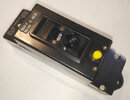
So either we need an earth supplied by the DNO, or some other method to detect we have a fault, the first idea was to measure 50 volts to a true earth, the ELCB-v (earth leakage circuit breaker - voltage operated) but the problem was the sensing coil could easily be short-circuited with some other earthed device, so we moved to measuring the imbalance in the current in the live wires instead ELCB-c, we still use the ELCB-v in some places, like the EV charging point, but it is now used to detect a loss of the earth connection, rather than an earth fault in the equipment, referred to as loss of PEN detection.
The problem with the ELCB-c or RCD as it is now called, is using an AC supply, there is always some leakage due to capacitive and induction linking, so we need to allow some leakage to occur, and the amount depends on how much wiring is after the RCD. But to protect personal, we want to limit it to below 30 mA.
The RCD is never perfect, and the installation is never perfect, so we have set limits which should be measured, so we say the background leakage should not exceed 30% or with a 30 mA RCD that's 9 mA, and the RCD should not trip below ½ its rated valve so 15 mA and should trip at rated valve so 30 mA, and at 5 times the rated valve it must trip in less than 40 mS, there is also a time for 30 mA but offhand can't remember it.
In practice, doing a ramp test, we expect a 30 mA RCD to trip at around 24 to 28 mA, but one of the reasons to test them, was that strain on the casing caused by the cables in the terminals could stop early versions from working, so we need to test after it has been installed, with a RCD and MCBs turning off the MCBs reduced the imbalance on the circuits to a minium, so testing with MCBs off was reasonable enough. However, with RCBOs one can't remove the circuit, and even with MCBs we did not disconnect the neutral, so to test the RCD/RCBO we should also measure the back-ground leakage. We should also measure both the positive and negative half cycles, so to fully test a RCD it needs 7 tests.
But the powers that control us, have said we do not really need to test so toughly, after all we don't test MCBs at all. The 7 tests now are only done when we have a problem with an RCD/RCBO tripping. I have not got the new test procedure to hand, it came out after I had retired.
In the early days, finding a clamp on ammeter with will measure in 1 mA increments was hard, I know until a few years ago mine only measured in 10 mA increments, so I had no idea if within the 9 mA limit. But if it did not trip at 15 mA and did trip at 30 mA likely close enough anyway.
I have found cracked earth rod clamps, nuts and bolts have worked loose, mainly with plant which vibrates, and poor installation were someone has not removed paint, or not used grease etc, after removing paint, so there is corrosion, even no attention paid to the electrochemical series and the earth has been eaten away. Also, odd readings where diodes have been placed in the earth to stop problems with the electrochemical series. (Mainly canal boats)
I have also worked in IT supplies, not really allowed in the UK, in my case a tunnel boring machine which had a delta secondary to the supply transformer, and believe me that was shocking. I walked around with neon screwdriver to test any metal before touching.
The USA does have some odd ways to earth, and also use delta secondary on transformers, so one has to be careful reading anything from USA, as not the same as UK, or nearly anywhere else on the earth, I assume they were the first and we learnt from their errors?



 ) into account and calculate that figure using a voltage of 218.5 V (230 x 0.95), not 230 V. The correct calculations would therefore have led to a minimum current for guaranteed magnetic tripping (In x 5) of 80 A, hence a maximum Zs of 2.73 Ω (218.5 / 80).