
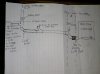
Any comments on these drains?

Joined
17 Apr 2015
Messages
3,630
Reaction score
754
Country
United Kingdom
Hi
Obviously going to speak to bco but always appreciate any comments on this forum as to any obvious issues with how I'm planning on doing the drains for my extension. The drop just before man hole isn't ideal I know but it's so I can avoid breaking out the existing run encased in concrete and lay above it. Thanks for any advice as ever
Cheers
John
 

Attachments

  • IMAG1095.jpg
    IMAG1095.jpg
    96 KB · Views: 165
The first two 45° bends should be a single rest bend, and the second two 45° bends should be omitted and the pipe sloped to connect to the existing.
 
Check height on connection to ground floor WC, you may need to lower the drain to get the required distance in. Must be a minimum of 450mm between the lowest connection, and the invert of the drain, (if your stack is going higher than 4 storeys' this distance needs to be increased. ;) )

I would suggest you break out the existing drain, and get the new pipe in lower down, you don't want too sharp a fall on it. 1:40 is rule of thumb.

You know you'll need to lintel over where it passes through the wall?
 
Thanks Hugh, the ground floor wc is going into a separate stub stack which is about 3m away and joints the main stack where shown.
Due to the distance away and the fact that it's a separate stub stack I didn't realise the 450 rule applied, and if it does I may have to branch it in lower down then after the slow bend

It will be shuttered off and foundations poured either side then lintelled over like you say
 
Is that rodding access inside? Think about whether you can have a rodding point downstream, what happens if the blockage is around the base of the stack. Our architect drew an external rodding point downstream, to avoid having to open a soil pipe in the kitchen!
 
PS we have a very similar arrangement and the wc branch is about 3m long, it connects into the stack directly above the rest bend and seems fine, bco didn't complain about it. Cross flow seems minimal from the upstairs loo.
 
Thanks John, yes it's inside rodding access (in a utility room) but also accessible from manhole where it can be jetted/rodded easily
 
Rodding points should be at the end of a run. You don't want to be rodding or jetting back into the house.
 
I would avoid having the 45 bends in the footings. You could put 15 or 20 bends further apart to reduce the step and allow you to have a single piece of pipe through the concrete.

Having said that a camera or jetter would have no problem passing the 45's if you did have a blockage upstream of the manhole. In the unlikely even you did have a blockage, I wouldn't dare open the access cap on the stack ha ha!!! I've done that before :(
 
Thanks guys I will look at breaking out the existing run and going deeper and avoiding the bends before the manhole.
Just means the pressure is on to dig it out, break into the cast iron stack and renew it all before anyone needs to answer a call of nature:D
 
PS we have a very similar arrangement and the wc branch is about 3m long, it connects into the stack directly above the rest bend and seems fine, bco didn't complain about it. Cross flow seems minimal from the upstairs loo.

Crossflow isn't the issue, the concern is the pressure created by falling waste from above can cause back pressure in the ground floor appliances.
 
Crossflow isn't the issue, the concern is the pressure created by falling waste from above can cause back pressure in the ground floor appliances.
Ah fair enough, I assumed it was cross flow because they put the restriction in that section of the building regs approved document! I'll have to check the pressure once the WC is in so thanks for the heads up. Maybe do a "dry run" first before I properly fit it!
 
Crossflow is more regarding the area opposite the WC branch, but can be a factor in waste connections if not though out very well. Ground floor WC's are usually either directly connected to the drain, or connected via a stub stack with an AAV fitted, so either way there is no opportunity for any excess pressure to escape.
 

If you need to find a tradesperson to get your job done, please try our local search below, or if you are doing it yourself you can find suppliers local to you.

Select the supplier or trade you require, enter your location to begin your search.


Are you a trade or supplier? You can create your listing free at DIYnot Local

 
Back
Top